
Everyone is watching the Strait of Hormuz right now. The burning tankers, the oil price ticking above $100, the White House press conferences. That’s understandable. However while that drama plays out, something arguably more consequential is happening in the background and it’s barely getting a line of coverage. Russia is dismantling the Western sanctions architecture. Quietly. Methodically. And with considerable success.
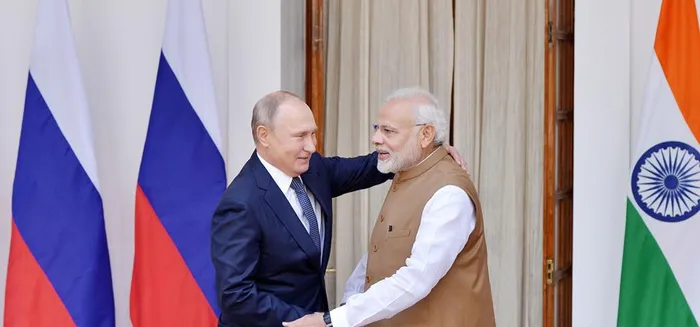
When the West sanctioned Russia in 2022, the logic was straightforward, cut Russia off from the dollar system, freeze it out of SWIFT, cap its oil revenues, and eventually the economic pain would force a political reckoning. 4 years later, that logic has a serious problem. India and Russia have shifted roughly 90% of their bilateral trade into rupee-rouble settlements, bypassing the dollar system almost entirely. Trade turnover between the two countries has gone from approximately $13 billion in 2021 to $68 billion in 2024-25.
The architecture behind this matters. India’s Reserve Bank has streamlined Special Rupee Vostro Accounts, allowing Russian oil exporters to hold rupees directly in Indian banks with no dollar conversion, no SWIFT dependency, no Western compliance exposure. The International North-South Transport Corridor, a 7,200km multimodal network linking Russia to India via Iran and Central Asia, has reduced transport costs by $2,500 per 15 tons compared to traditional routes.
Dubai has become Russia’s primary Western-facing financial hub, the node through which money moves, contracts clear, and sanctions are quietly absorbed. Tens of thousands of Russians have relocated to the UAE. Emirates NBD, Dubai’s main government-owned bank, recruited Russian bankers to set up a dedicated unit for managing money from wealthy Russians. UAE exports of electronic components to Russia grew more than sevenfold in the first year after sanctions were imposed. Washington has been trying to negotiate with Dubai to stop this. It has not stopped.
What the Iran war did (and this is the part nobody is discussing), is stress-testing this architecture under real pressure. When the Strait of Hormuz shut down and global energy markets went into freefall, Russia’s alternative financial plumbing didn’t collapse. The rupee-rouble corridor kept moving. Dubai kept clearing. The shadow fleet kept sailing. In December 2025, Russia and Iran formally signed a three-year coordination programme to align their resistance to Western sanctions. While everyone was watching the bombs fall, Moscow and Tehran were signing paperwork. This is what winning a sanctions war looks like. Not a dramatic victory. A slow, structural erosion of the other side’s tools.
The uncomfortable reality for Western policymakers is that sanctions work best when they’re total, fast, and have no viable off-ramps. Russia’s sanctions were none of those things. They were broad but leaky, applied against a country with enormous natural resources, a massive nuclear deterrent, and several willing trade partners who had their own reasons to find alternative systems. India needed cheap oil. China needed a geopolitical counterweight. The UAE needed capital inflows and international relevance. Russia needed all three of them, and offered each what they wanted in return.
The BRICS+ summit in 2025 focused heavily on blockchain-based cross-border payment systems as a dollar alternative. That’s not a fringe discussion anymore. That’s a coordinated institutional project. The 2026 BRICS+ summit is in India, the country that has done more than any other to make the rupee-rouble corridor functional. The agenda will almost certainly deepen that work.
None of this means the sanctions have achieved nothing. Russia’s economy has paid real costs. Inflation, brain drain, technology shortfalls. But the theory of sanctions, that economic pain would translate into political capitulation has not materialised. What has materialised instead is a parallel financial architecture that will outlast this particular conflict and will make the next round of sanctions harder to impose.
The Iran war is real and urgent and deserves coverage. But the story that will matter in five years is the one playing out in bank accounts in Mumbai, free-trade zones in Jebel Ali, and corridors stretching from St Petersburg to the Persian Gulf. Russia isn’t winning on the battlefield right now. But in the sanctions war? It’s not losing.
Written by:
*Dr Iqbal Survé
Past chairman of the BRICS Business Council and co-chairman of the BRICS Media Forum and the BRNN
*Chloe Maluleke
Associate at BRICS+ Consulting Group
Russia & Middle East Specialist
**The Views expressed do not necessarily reflect the views of Independent Media or IOL.
** MORE ARTICLES ON OUR WEBSITE https://bricscg.com/ (https://bricscg.com/)
** Follow @ (https://x.com/brics_daily)brics_daily (https://x.com/brics_daily)on Twitter for daily BRICS+ updates and instagram @brics_daily (https://www.instagram.com/brics_daily?igsh=bmhvbTd0YzA4a2wx)