
There is an old saying in trade: every disruption is somebody else’s opportunity. Right now, as two of the world’s most critical maritime chokepoints face closure or active threat, that opportunity is sitting directly off the southern tip of Africa. The question is whether South Africa and the continent more broadly, can actually pick it up.
With the Strait of Hormuz effectively closed and the Bab al-Mandeb once again under threat from Houthi-aligned forces in Yemen, the world’s major shipping companies have no good options. But they do have one old one: the Cape of Good Hope. The waters around the Cape have always been one of the world’s most important maritime crossroads. During the age of exploration, it served as the primary link between Europe and Asia before the Suez Canal opened in 1869. More than 150 years later, history is repeating itself. Maersk, MSC, CMA CGM, and Hapag-Lloyd have all suspended operations through the Strait and rerouted vessels south. During the 2024 Red Sea crisis, it was estimated that as much as 66% of shipping sailed south along the Cape sea route at its height. The numbers today are heading in the same direction.
So far, so promising. But here is where the honest trade analysis has to cut through the excitement.
The Cape route adds roughly 3,500 kilometres and up to 14 days to shipping times compared to the traditional Suez Canal passage. It also adds approximately 30% more fuel consumption, costs that ultimately flow through to shippers. For time-sensitive cargo like perishables, pharmaceuticals, just-in-time manufacturing components, those extra two weeks are not simply a cost line item, they are a structural problem. Some cargo categories will simply not reroute. For bulkier, less time-sensitive commodities like raw materials, grain, or energy, the Cape route is far more viable. This distinction matters enormously if Africa wants to position itself strategically rather than just passively benefit from ships sailing past.
And that is precisely the gap in the current moment. The Transnet National Ports Authority has confirmed it is operationally ready should volumes increase — but the rerouting has not yet translated into a surge in port calls along South Africa’s coastline. Ships are going around us. They are not stopping with us. Persistent operational challenges, including port congestion, ageing infrastructure, and logistical inefficiencies, mean that many vessels are simply passing South Africa without stopping. The economic dividend only materialises if ships refuel, repair, transship, and crew-change here. Right now, many are not.
This is the structural gap that no amount of maritime traffic can close on its own. Port expansion at Durban and Richards Bay, deeper berths, expanded container terminals, modern bunkering infrastructure with low-sulphur fuels, and streamlined landside logistics connecting ports to hinterland destinations, are the investments that turn passing traffic into captured revenue. The Western Cape Premier has spoken about maximising this opportunity. The harder conversation is about how quickly Transnet and the government can move, given the authority’s well-documented financial and operational constraints.
There is also a longer-term strategic lens worth applying here. Analysts studying the Cape route argue that the constant rerouting events of 2021, 2024, and now 2026 call for less ad hoc decision-making and more of a fundamental rethink about how the route is viewed, managed, and invested in. Each crisis has been treated as temporary. But the pattern is no longer temporary, it is structural. The northern Indian Ocean corridors are becoming permanently unreliable at a geopolitical level that no single peace agreement will fully reverse.
If tensions persist, Southern Africa may consolidate its role as a resilient maritime alternative and the present disruption, while externally driven, could accelerate structural gains in logistics capacity and regional integration.That optimistic read is only realised through deliberate action. Because here is the trade reality: carriers are ruthlessly rational. The moment northern corridors reopen, the Cape route becomes a footnote again, unless South Africa has made itself genuinely indispensable in the interim.
This means that government cannot treat this as a windfall. It has to treat it as a tender notice.
Several interventions are worth prioritising. First, bunkering infrastructure. South Africa needs to aggressively position itself as a competitive refuelling hub, particularly for low-sulphur and alternative fuels as the IMO 2030 decarbonisation targets begin to bite. Carriers choosing between bunkering in Durban versus Singapore will need a compelling cost and efficiency case. Right now, that case is weak.
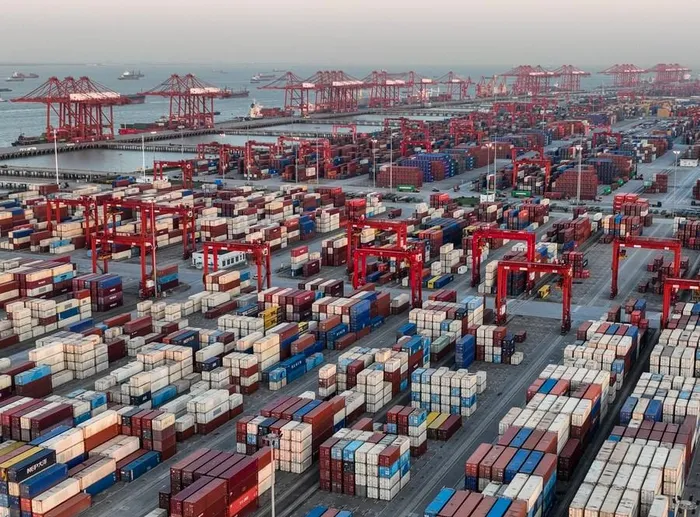
Second, transshipment capacity. The Durban Container Terminal handles significant volumes but consistently underperforms against regional competitors on turnaround times. A deliberate investment programme, in berth depth, crane capacity, and digital port management would allow South Africa to capture cargo destined for East and West Africa that currently bypasses the continent entirely in favour of Colombo, Tanjung Pelepas, or Salalah.
Third, the Coega Special Economic Zone and Richards Bay Industrial Development Zone need to be explicitly marketed to energy-intensive industries whose supply chains have just been structurally disrupted. Companies reassessing their Gulf-dependent logistics architectures are making relocation and nearshoring decisions right now. South Africa should be in that conversation with a clear value proposition, not a brochure published in 2019.
Fourth, and most importantly, regional integration. A Cape route that only benefits South Africa is a missed strategic opportunity. Connecting Namibia’s Walvis Bay, Mozambique’s Nacala, and Tanzania’s Dar es Salaam into a coherent Southern African maritime corridor, coordinated under SADC frameworks, creates a network effect that no single port can replicate. The AfCFTA’s transport annexes provide the legal scaffolding. What’s missing is political will and financing architecture, where the Development Bank of Southern Africa and African Development Bank need to be far more aggressive.
Geopolitics is not becoming more predictable. The crises of 2021, 2024, and 2026 are not anomalies, they are the new rhythm of a multipolar world where choke points are weaponised as readily as sanctions or tariffs. South Africa sits at a geographic intersection that no political crisis can relocate. That is a permanent structural asset. What is not permanent is the window to build the capacity that turns geography into lasting economic value.
Written by:
*Dr Iqbal Survé
Past chairman of the BRICS Business Council and co-chairman of the BRICS Media Forum and the BRNN
*Chloe Maluleke
Associate at BRICS+ Consulting Group
Russia & Middle East Specialist
**The Views expressed do not necessarily reflect the views of Independent Media or IOL.
** MORE ARTICLES ON OUR WEBSITE https://bricscg.com/ (https://bricscg.com/)
** Follow @ (https://x.com/brics_daily)brics_daily (https://x.com/brics_daily)on Twitter for daily BRICS+ updates and instagram @brics_daily (https://www.instagram.com/brics_daily?igsh=bmhvbTd0YzA4a2wx)