
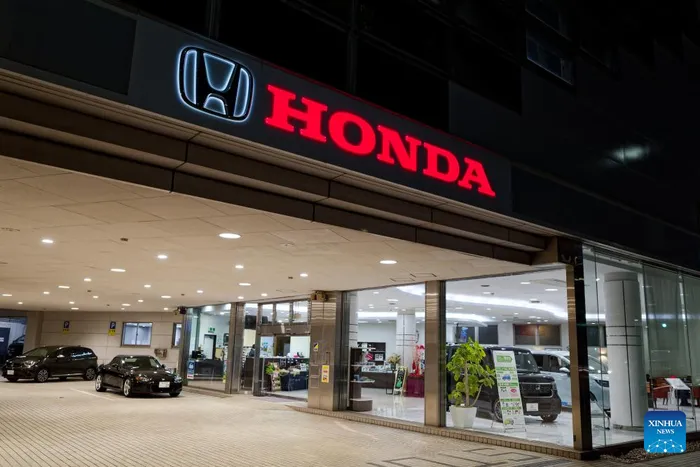
On 12 March 2026, Honda Motor Company did something its shareholders had not seen since the company listed on the Tokyo Stock Exchange in 1957: it announced the likelihood of its first-ever annual net loss, the result of a single strategic bet that unravelled in several directions simultaneously.
Honda cancelled three planned EV models, the Honda 0 SUV, the Honda 0 Saloon, and the Acura RSX, all of which were scheduled for production in North America. Total losses associated with the reversal could reach $15.7 billion. For context, Honda had posted an operating profit of ¥1.21 trillion just last fiscal year. In a single year, the company’s profitability swung by roughly ¥1.8 trillion.
This is not simply a Honda story. It is a diagnostic of where the global automotive industry actually stands and the distance between where the industry said it was going and where it is.
The American Policy Reversal
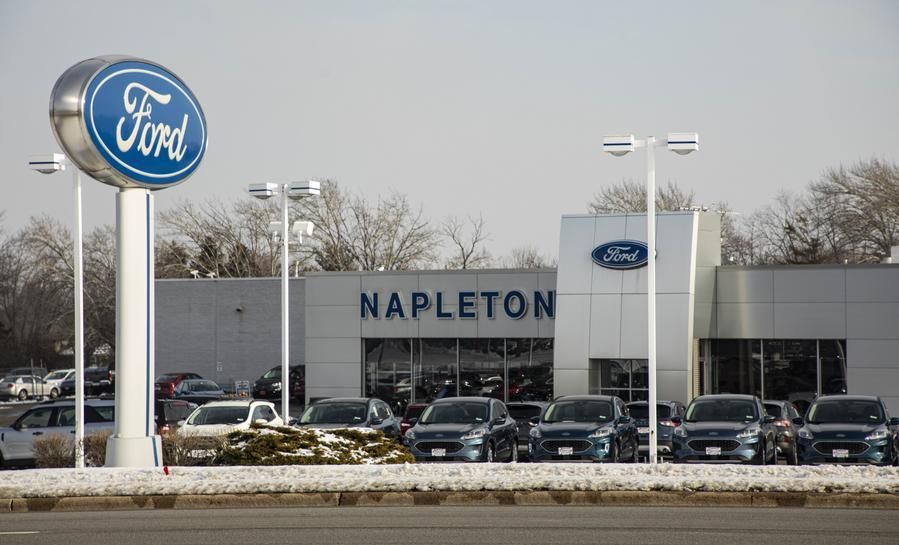
Honda’s profitability has declined primarily because of the unfavourable impact of changes in U.S. tariff policies on its gasoline and hybrid vehicle business, and a decline in competitiveness in Asia caused by over-allocation of resources to EV development. The Trump administration removed the $7,500 federal EV tax credit and eased fuel efficiency regulations, two policy pillars that the entire industry had built forward-looking investment cases upon. As the EV market was growing, we saw the federal tax credit end in late 2025. Honda was not the only company caught. Its estimate puts it alongside Stellantis, which is taking more than €22 billion in charges linked to reversing its EV strategy, and Ford’s $19.5 billion hit from its own overhaul. Between these three companies alone, the combined cost of the EV miscalculation exceeds $50 billion.
The China Problem Nobody Fixed In Time
If the American market punished legacy OEMs through policy withdrawal, the Chinese market punished them through competition. Honda acknowledged in its own statement that it was unable to deliver products offering better value for money than newer EV manufacturers pointing directly to the rapid emergence of rivals with short product development cycles and strengths in software-defined vehicle technologies.
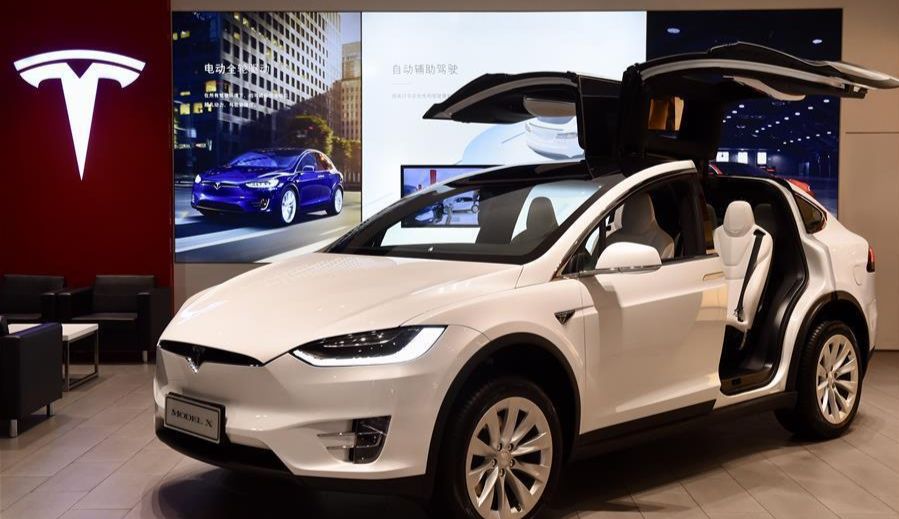
That rival is, above all, BYD. BYD now leads the IMD Future Readiness Indicator for the global automotive industry with a score of 100, ahead of Tesla at 98.1. Traditional manufacturers including Stellantis, Volkswagen, BMW, and Mercedes-Benz have all reported declining revenues, while BYD, XPeng, and Li Auto have demonstrated substantial growth. The competitive dynamic in China has structurally shifted. Geely has now overtaken Volkswagen to claim the number-two position in China’s passenger vehicle market, trailing only BYD, a result that would have been unthinkable a decade ago.
Honda’s numbers in China are blunt: it sold only 17,000 EVs in China last year, 2.5% of its total Chinese sales of around 677,000 vehicles. In a market where electrification and software integration are now the baseline expectation rather than a premium feature, that is not a competitive position. It is a withdrawal.
The Toyota Vindication
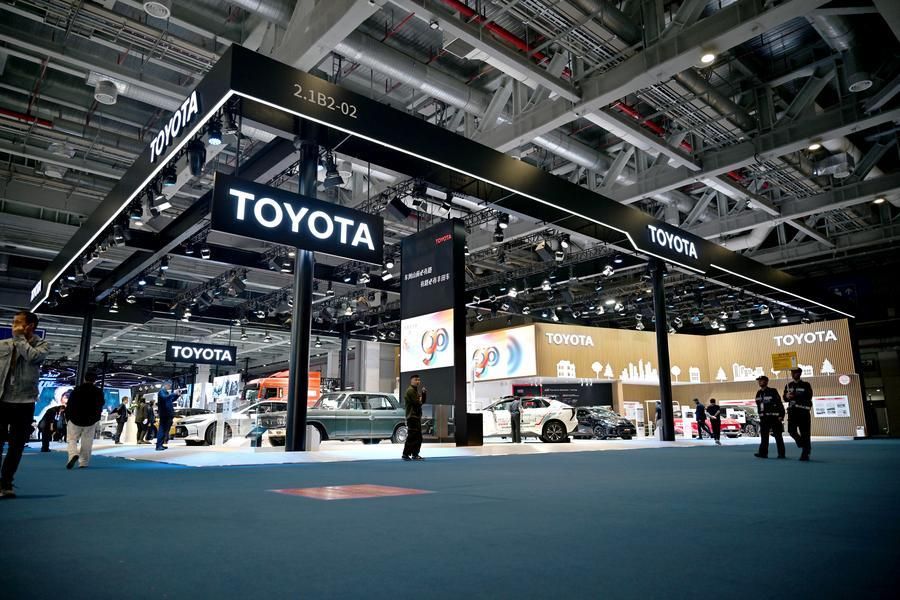
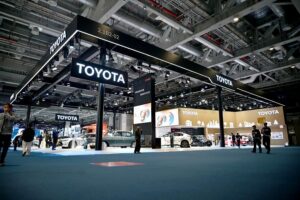
Honda’s collapse has, almost inadvertently, validated the strategy Toyota spent years being criticised for. Honda’s dramatic reversal has once again validated Toyota’s much-debated multi-pathway approach, developing hybrids, plug-in hybrids, hydrogen fuel cell vehicles, and EVs simultaneously, rather than betting everything on battery electric vehicles. Toyota was heavily criticised in recent years for being too slow on EVs.
It was not slow. It was hedged. Toyota’s most affordable EV in China, the bZ3X, starts at just ¥109,800, around $15,000 and from September 2025 through January 2026 it was the best-selling new energy vehicle among joint-venture brands in the country. Toyota got to competitive Chinese EV pricing by doing something counterintuitive: it adopted Chinese technology rather than fighting it. Nearly 90% of the bZ3X’s components are locally sourced. The lesson that competing in China means building inside China’s supply chain ecosystem, is one Honda accepted too late.
The Software Gap: The Real Competitive Divide
Behind the EV numbers is a deeper structural issue: software. Tesla and Chinese rivals are currently leading in software-defined vehicles. Honda’s partnership with Sony is a direct attempt to close this gap. But closing a software gap through a partnership is a very different proposition from having built the capability organically. According to Publicis Sapient research, 58% of automotive leaders are now scaling over-the-air updates beyond pilots, with 34% achieving maturity where these capabilities drive significant recurring revenue. Cars are no longer products that depreciate toward obsolescence, for companies that have built the architecture correctly, they are platforms that improve over time, generating subscription and service revenue across the ownership lifecycle. Honda does not yet have that architecture at scale.
CEO Toshihiro Mibe acknowledged that Honda’s pledge of 100% EV and fuel cell sales by 2040, the "zero engine" commitment he announced upon taking office in 2021, is now "realistically difficult to achieve." That admission is significant. An OEM CEO publicly withdrawing a flagship strategic commitment is not a recalibration. It is a recognition that the foundational assumptions of the strategy were wrong.
What Comes Next
Honda will strengthen its hybrid models and enhance its competitive position in India, where market expansion is expected. A full strategic reset is scheduled for announcement in May 2026. The hybrid pivot makes commercial sense in the near term, Honda’s hybrid lineup set North American sales records earlier this year but it cannot be the destination. BYD aims to sell 6.5 million vehicles in 2026, with 1.5 million in overseas markets. If it succeeds, it will likely overtake GM and Stellantis to rank third globally. A company retreating to hybrid strength while its primary competitor is scaling global volume at that pace is not building a long-term competitive position. It is buying time.
The $15.7 billion question for Honda and the $50 billion question for the industry, is whether that time is being used to build the software capabilities, the manufacturing flexibility, and the regional supply chain integration that the next competitive cycle will require. The answer will be announced in May. The market already has its suspicions.
*Chloe Maluleke
Associate at BRICS+ Consulting Group
Russia & Middle East Specialist
**The Views expressed do not necessarily reflect the views of Independent Media or IOL.
** MORE ARTICLES ON OUR WEBSITE https://bricscg.com/ (https://bricscg.com/)
** Follow @ (https://x.com/brics_daily)brics_daily (https://x.com/brics_daily)on Twitter for daily BRICS+ updates and instagram @brics_daily (https://www.instagram.com/brics_daily?igsh=bmhvbTd0YzA4a2wx)