
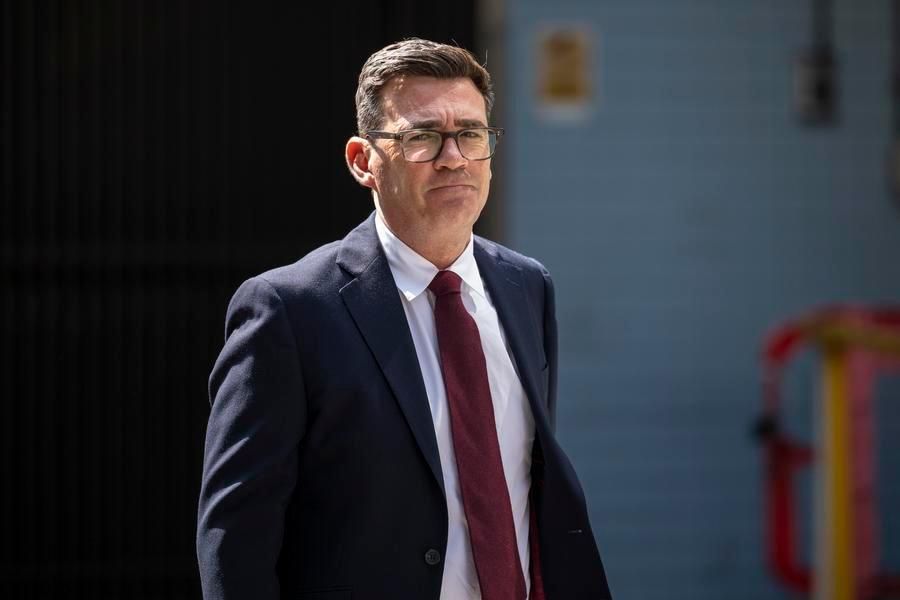
Andy Burnham was confirmed as the United Kingdom’s Prime Minister on 20 July 2026, securing one of the fastest political rises in recent British history. He left Westminster in 2017 to become Mayor of Greater Manchester, only returning to Parliament weeks ago via a by-election win, and was crowned Labour leader just three days before entering 10 Downing Street. He becomes Britain’s 7th Prime Minister in a decade, a statistic that says as much about the UK’s domestic turbulence as it does about Burnham himself.
For observers in the Global South, though, the more pressing question isn’t how he got here. It’s what, if anything, changes for them now that he has.
The honest answer, so far, is: not much has been said. Burnham’s campaign and his first speeches as PM have been almost entirely domestic in focus, welfare reform, the North Sea oil and gas debate, and the existential fight to stop Reform UK’s Nigel Farage from capitalising on Labour’s collapse in the polls. Analysts at the European Council on Foreign Relations have noted it remains genuinely unclear whether Africa, or the wider Global South, will be a priority for his government at all. That silence is itself telling.
It matters because Burnham inherits a UK-Africa relationship that was already losing momentum. In December 2025, the outgoing Starmer government unveiled a seven-point framework meant to reposition Britain from "donor to investor" across the continent. In practice, the ambition faded fast. As the UK economy stagnated, ministers gravitated toward faster, more familiar wins with the European Union and Gulf states, and the Africa strategy slid down the priority list. UK aid spending, meanwhile, has fallen to just 0.3% of gross national income, making the "investor, not donor" pitch a hard sell to governments that have heard promises like it before.
Yet the geopolitical backdrop has shifted in ways that could work in the Global South’s favour, regardless of what Burnham personally intends. The clearest example is South Africa. Relations with Washington have been deteriorating for over a year: Trump imposed a 30% tariff on South African exports in August 2025, later struck down by the US Supreme Court in early 2026 and a fresh 12.5% tariff is now being proposed under a separate forced-labour investigation. Diplomatically, things are arguably worse still. Trump boycotted the G20 leaders’ summit South Africa hosted in Johannesburg last November, the first time the gathering had ever been held on African soil, over unsubstantiated claims that the government was persecuting its white Afrikaner minority. He has since said South Africa won’t be invited to the 2026 summit in Miami and that US payments to the country would be halted, a threat Ramaphosa has rejected, insisting South Africa "is and will remain a full, active and constructive member of the G20." Against that backdrop, UK-South Africa trade has kept climbing, recently estimated at around £12.6 billion, and Britain’s High Commissioner in Pretoria has publicly pushed back against South Africa’s treatment in US-led G20 processes, a notable break from London’s usual deference to Washington. With the United States turning openly hostile toward a G20 founding member, and China and Russia continuing to deepen their own footholds across the continent, there is a real opening for Britain to position itself as a steadier partner. Whether Burnham’s government seizes it is another matter entirely.
The stakes sharpen further in 2027, when the UK takes over the G20 presidency from the US-hosted 2026 cycle. How Burnham’s government handles South Africa’s participation and whether it helps fully reintegrate a founding member Washington has tried to sideline, will be an early test of whether his government treats the Global South as a genuine strategic partner, or simply "deprioritises" it again in favour of easier relationships with Europe.
That optimism, though, rests on inference rather than commitment. Burnham has no personal track record on Africa or Global South policy, nearly a decade of his career went into running Greater Manchester, not shaping foreign policy. His early approach will likely be driven by Foreign Secretary Yvette Cooper and Foreign Office officials rather than any strong personal conviction of his own. For now, the Global South is reading the same tea leaves as everyone else: watching what Burnham does, because he’s said almost nothing about what he plans to do.
Written by:
*Dr Iqbal Survé
Past chairman of the BRICS Business Council and co-chairman of the BRICS Media Forum and the BRNN
*Chloe Maluleke
Associate at BRICS+ Consulting Group
Russia & Middle East Specialist
**The Views expressed do not necessarily reflect the views of Independent Media or IOL.
** MORE ARTICLES ON OUR WEBSITE https://bricscg.com/ (https://bricscg.com/)
** Follow @ (https://x.com/brics_daily)brics_daily (https://x.com/brics_daily)on Twitter for daily BRICS+ updates and instagram @brics_daily (https://www.instagram.com/brics_daily?igsh=bmhvbTd0YzA4a2wx)