

If you want to see what BRICS expansion actually produces in practice, look at a $76 million milk powder deal between Belarus and Indonesia, two countries that, eighteen months ago, had barely any trade relationship to speak of.
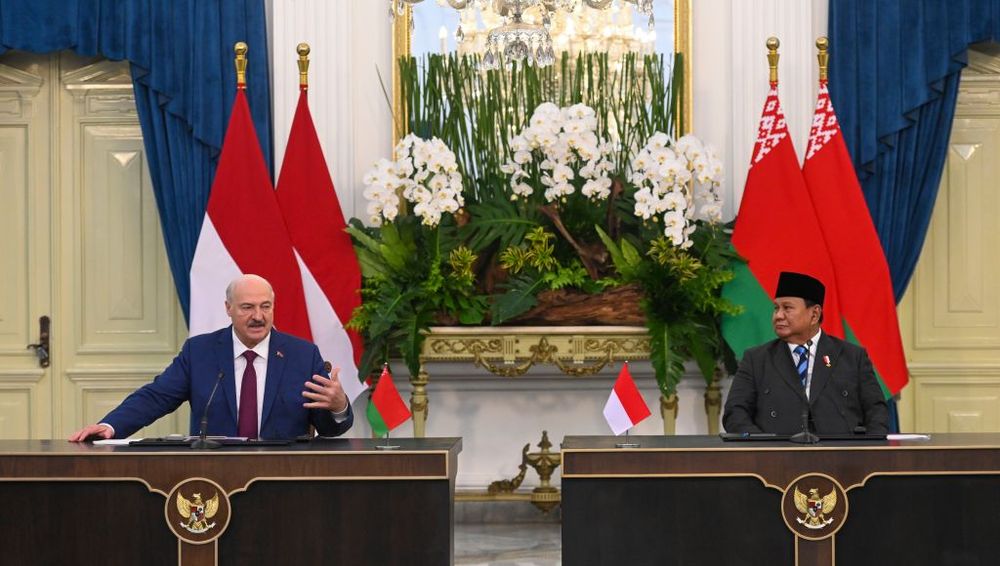
Belarus has signed contracts to supply 20,000 tonnes of milk powder to Indonesia by the end of 2026, with part of that supply feeding directly into Indonesia’s flagship Free Nutritious Meal programme, the government’s national school feeding initiative. The agreements were signed during Belarusian President Aleksander Lukashenko’s state visit to Indonesia, and deliveries under the first contract are already underway. Belarus’s Deputy Agriculture and Food Minister, Aleksander Yakovchits, says the country is well placed to keep scaling supply: national milk production hit 9.25 million tonnes in 2025 and is projected to reach 12 million tonnes in 2026.
Why this pairing isn’t as random as it looks
Belarus and Indonesia sit at opposite ends of the map with wildly different economies, so a dairy-for-nutrition-programme deal between them might seem like a one-off. It isn’t. Both countries are now formally inside the BRICS architecture: Indonesia became a full BRICS member in January 2025, while Belarus joined the same year as one of the bloc’s first ten "partner countries" — a new tier created at the 2024 Kazan summit that gives non-member states a formal seat at BRICS meetings without full membership. That shared membership is now translating into real commercial activity: alongside the dairy contracts, Belarus and Indonesia have also agreed a visa-free travel regime, direct flights, and a 2026–2030 roadmap covering trade, industry, agriculture and investment, signed during the same presidential visit.
That’s the part worth paying attention to. BRICS is often discussed as a geopolitical counterweight to the G7, and the numbers back that framing up — the bloc’s eleven full members and ten partner countries now account for roughly 55% of the world’s population and around 41% of global GDP on a purchasing-power basis, ahead of the G7’s 28%. But underneath the macro statistics, expansion is quietly generating exactly the kind of bilateral deal-making this milk powder contract represents: countries that previously had few obvious economic ties using BRICS-linked summits and diplomatic visits as the occasion to strike new trade agreements.
The bigger trade story
The dairy deal is also part of something larger. The state visit’s bilateral business forum reportedly generated around $500 million in potential agreements across sectors beyond food, including farm machinery and local manufacturing collaboration — a sign Belarus is using its dairy surplus as an opening wedge into a much broader Indonesian relationship. Current bilateral trade between the two sits at roughly $221 million; officials on both sides are explicit about wanting that figure to grow substantially.
For Belarus specifically, this fits a clear pattern. Largely cut off from traditional European export markets amid ongoing Western sanctions, Belarus has spent the past few years actively courting BRICS members and partners as alternative buyers for its agricultural surplus. Indonesia, the world’s fourth-most populous country and a major dairy importer, is about as attractive a replacement market as exists, especially with a national school meals programme that needs a reliable, large-scale supply of milk powder.
Why it matters beyond the two countries involved
Individually, a milk powder contract isn’t headline-grabbing. But multiply this kind of deal across ten partner countries and eleven full members, each looking to route trade through the same expanding network rather than traditional Western-aligned channels, and a pattern emerges: BRICS expansion isn’t just a diplomatic talking point, it’s actively rewiring who trades with whom. A school lunch in Jakarta made partly with Belarusian milk powder is a small, concrete example of a much bigger shift already underway.
Written by:
*Dr Iqbal Survé
Past chairman of the BRICS Business Council and co-chairman of the BRICS Media Forum and the BRNN
*Chloe Maluleke
Associate at BRICS+ Consulting Group
Russia & Middle East Specialist
**The Views expressed do not necessarily reflect the views of Independent Media or IOL.
** MORE ARTICLES ON OUR WEBSITE https://bricscg.com/ (https://bricscg.com/)
** Follow @ (https://x.com/brics_daily)brics_daily (https://x.com/brics_daily)on Twitter for daily BRICS+ updates and instagram @brics_daily (https://www.instagram.com/brics_daily?igsh=bmhvbTd0YzA4a2wx)