
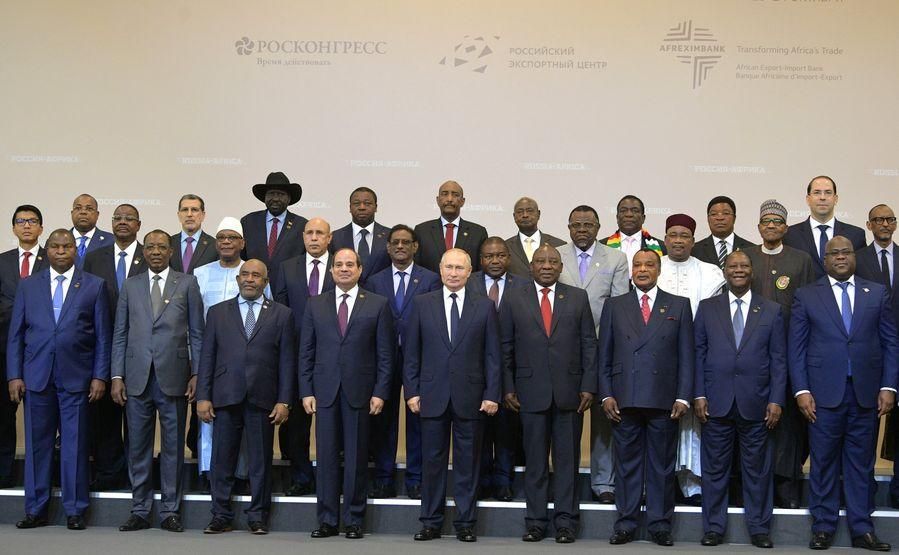
As the Third Russia–Africa Summit and Economic and Humanitarian Forum open in Moscow today, the real question is not what will be signed but what will be built. Moscow expects at least 17 African heads of state, and the agenda covers security, energy, infrastructure, finance and humanitarian cooperation. The economic test is whether a relationship founded on commodities can mature into one founded on production.
The trade base is sizeable. Turnover exceeded $27 billion in 2025, led by Russian grain, fertilisers, energy and metals, while Africa sends back coffee, cocoa, tea, fruit and some minerals. Russia supplies fertilisers to 21 African nations. In South Africa, fertilisers make up more than two-thirds of Russian supplies in a trade worth about $908 million. Such figures show demand, but also a ceiling: selling bags and bushels does not build factories.
African governments are increasingly clear about this. A push for greater control over resources, longer value chains and local processing is reshaping what they ask of foreign partners. Continental integration strengthens the case. Intra-African trade reached $220 billion in 2025, and the AfCFTA secretary-general projects $250 billion this year. Yet such trade is still only 15 to 18 per cent of the continent’s commerce, against over 60 per cent in Europe. Poor infrastructure, costly logistics and fragmented regulation hold it back. Africa is not one market, and membership of a bloc does not guarantee access to all of it.
Where could partnership produce lasting returns? Agricultural processing and storage lead the list. Milling, edible oils, animal feed and cold chains turn imported grain and fertiliser into local added value, and Ethiopia is a natural candidate. Energy is a second pillar. Rosatom is building the 4,800 MW El Dabaa plant in Egypt, and has preliminarily confirmed the potential of a lithium project in Mali and launched a uranium project in Tanzania. The most grounded gains, though, may come from servicing. Maintaining and repairing industrial and energy equipment alongside local manufacturers, as South Africa’s case suggests, builds on capabilities already present rather than pretending to start from zero. Pharmaceuticals offer another route, provided Russian producers join joint procurement schemes that pool demand across countries.
Localisation, however, is no panacea. Options range from exporting equipment with technical support, to local assembly, to joint production with regional reach, and each carries trade-offs. Zambia’s mining supply chain shows the pitfall. Local firms lose to foreign suppliers because of electricity shortages and a lack of long-term capital, not merely because quotas are absent.
Finance is the hardest problem, with Russia’s Economic Development Ministry offer concessional lending of up to $100 million per project, yet commentators argue that Moscow has still not worked out financial mechanisms to support its investments across Africa. Currency mismatches between local-currency revenues and dollar-denominated equipment costs can erode returns even when sales hold up. Africa also accounts for under 2% of global supply-chain finance, which points to a niche for banks willing to do the due diligence. Multilateral lenders such as the New Development Bank and Afreximbank are widely seen as necessary partners for capital-intensive projects.
Skills may decide the outcome. About 37,000 African students now study at Russian universities, and Rosatom has trained more than 300 specialists for nuclear programmes in countries including Egypt, Ghana and Nigeria. South African analyst Raymond Matlala argues that the real benchmark should be how many Africans can independently run and expand these industries, not how many scholarships are awarded. Branch campuses of Russian universities and the planned Russian-African Network University could help, if training is tied to real jobs.
The summit is expected to move toward a new action plan for 2027–2029. Russia and the African Union Commission have said they intend to adopt it, to address existing gaps and deepen cooperation. Its value will depend on converting broad priorities into bankable projects with identified customers, financing and clear risk allocation. The yardsticks are simple: operating joint ventures, the local share of production, participation of national suppliers, and capacity utilisation. If those numbers climb, the partnership will have moved from rhetoric to reality. If not, Moscow’s gathering will join a long list of summits remembered mainly for their promises.
Written by:
*Dr Iqbal Survé
Past chairman of the BRICS Business Council and co-chairman of the BRICS Media Forum and the BRNN
*Chloe Maluleke
Associate at BRICS+ Consulting Group
Russia & Middle East Specialist
**The Views expressed do not necessarily reflect the views of Independent Media or IOL.
** MORE ARTICLES ON OUR WEBSITE https://bricscg.com/ (https://bricscg.com/)
** Follow @ (https://x.com/brics_daily)brics_daily (https://x.com/brics_daily)on Twitter for daily BRICS+ updates and instagram @brics_daily (https://www.instagram.com/brics_daily?igsh=bmhvbTd0YzA4a2wx)