

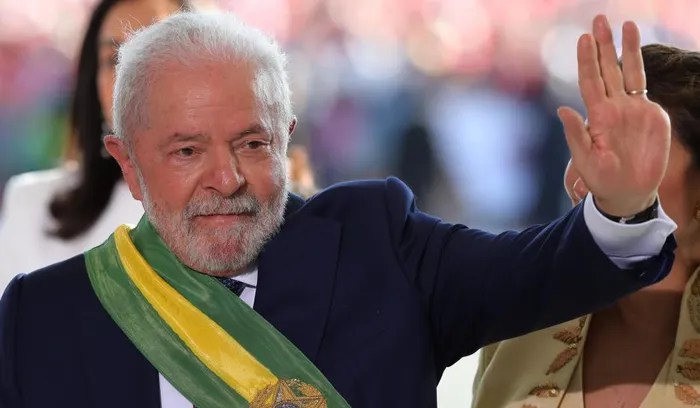
Brazil has the 11th largest economy in the world, with a GDP of around $2.3 trillion. Brazil’s political landscape has been particularly contentious. Brazil has suffered an attempted coup in 2022 after former president Jair Bolsonaro allegedly initiated a coup in order to nullify the election result in favour president Luiz Inácio Lula da Silva. In lieu of his legal battles he now faces as a result, his son, Senator Flávio Bolsonaro has emerged as a worthy candidate against president Lula. The geopolitical upheavels globally, particularly in Latin America, with tensions between Meico and the US; the US and the kidnapping of Moduro from Venezuela. Early polls suggest a tight race between the two candidates, however, continuing external influences may cause major changes in the electoral outcome in October.
Key Players and Current Polling Trends
Brazilian elections take place in a Two-Round Runoff System. In other words a candidate that receives more than 50% of valid votes in the first round wins outright. When no candidate has a majority, the top two candidates have a second runoff. The one with the majority in this round wins.
In the runup to this election, there is a clear competition indicating heightened political polarisation in terms of the ideological left and right. Representing the left candidate is president Luiz Inácio Lula da Silva. What is predicted to be on the ballot, is multilateralism. Lula has stressed the diversification and deepening of diplomatic and trade relations. His position clearly intends to expand Latin America’s largest nation to the rest of the world.
On the right, Senator Flávio Bolsonaro, the son of former President Jair Bolsonaro, camps in the sphere of multilateralism toward the United States (US) and its allies. He is expected to defend multilateralism in favour of the US. This results from the belief that Brazil’s current path under president Lula is seeped in an alliance toward the BRICS block, seen as unnecessarily provocative toward the Trump administration.
Current polls indicate a tie between president Lula and Senator Flávio at 46.2% and 46.3%, respectively.
Candidate Strengths and National Contradictions
Senator Flávio serves as an extension of the political strife following his father’s subsequent loss in the 2022 elections. Accused of planning a coup in Brazil to nullify election results, Flávio’s father faces multiple legal challenges resulting from this. The appetite for a right-wing leader, however, still needs to be appeased. Flávio filled a vacuum for the right, thus early polls suggest the projection of a polarised electorate. Many in this camp may believe that the US has its best interestsat heart and alignng with US policies should be prioritise for the good of the people.
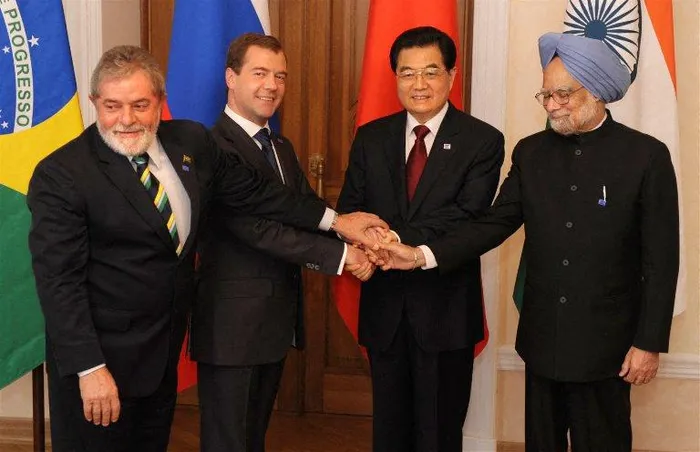
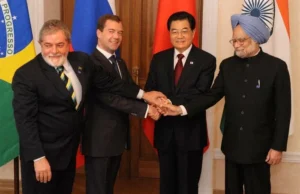
President Lula has actively positioned himself as a global leader and through his interactions displayed seriousness and efficacy in building diplomatic, economic, and trade relations with countries outside of the US, often aligned with BRICS. The Brazilian electorate may be careful of its complete support for this move, however, realise its importance as the question of sovereignty and respect for sovereignty from the US comes into question, considering the US and its kidnapping of Venezuelan president Nicolás Maduro. This caused tensions across Latin America and beggs the question: Who is next?
The Future
As Brazil approaches its October 2026 presidential election, the political environment has become highly competitive and deeply polarised, with President Luiz Inácio Lula da Silva and Senator Flávio Bolsonaro emerging as the two leading contenders. Recent national polls show Lula running ahead in first-round scenarios, frequently commanding around the mid-40s percentage points while Bolsonaro trails but remains competitive, particularly in run-off simulations where the two are now statistically tied at approximately 46.2% and 46.3% respectively in head-to-head matchups, indicating an extremely close race within the margin of error.
Lula’s campaign emphasises continued multilateral diplomatic engagement and economic diversification, including stronger ties with BRICS partners and Latin American neighbours, while Bolsonaro’s candidacy, buoyed by his family’s political base, capitalises on right-wing sentiment and scepticism toward Lula’s foreign policy direction. The persistence of such narrow polling reflects both structural divisions within the Brazilian electorate and the potential influence of external geopolitical tensions in shaping voter attitudes, suggesting that the electoral outcome remains uncertain and could shift significantly as the campaign unfolds.
Written by:
*Dr Iqbal Survé
Past chairman of the BRICS Business Council and co-chairman of the BRICS Media Forum and the BRNN
*Cole Jackson
Lead Associate at BRICS+ Consulting Group
Chinese & South America Specialist
**The Views expressed do not necessarily reflect the views of Independent Media or IOL.
** MORE ARTICLES ON OUR WEBSITE https://bricscg.com/ (https://bricscg.com/)
** Follow @ (https://x.com/brics_daily)brics_daily (https://x.com/brics_daily)on Twitter for daily BRICS+ updates and instagram @brics_daily (https://www.instagram.com/brics_daily?igsh=bmhvbTd0YzA4a2wx)