

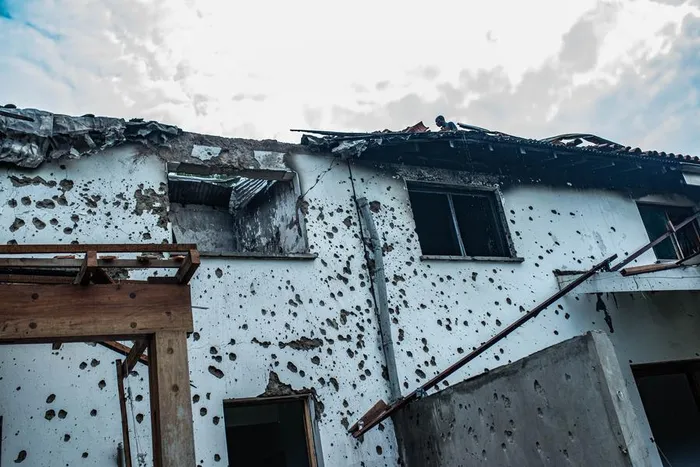
The Eastern Democratic Republic of Congo is once again in the middle of a very familiar but evolving conflict, one where minerals, militias, and geopolitics intersect with renewed intensity. Recent data from Armed Conflict Location & Event Data Project (ACLED) shows a sharp escalation: the highest number of monthly drone and air strikes ever recorded in the DRC. This is not just a battlefield shift, it shows a transformation in how the war is being fought and, more importantly, why.
From proxy war to precision warfare
The Congolese military’s targeting of March 23 Movement (M23) positions, reportedly including a strike that killed spokesperson Willy Ngoma near the strategically vital Rubaya mining zone illustrates a turn toward more technologically sophisticated warfare. Rubaya is not any other battleground; it sits atop coltan reserves that supply approximately 15% of global demand, a mineral essential for electronics and defence industries.
This shift repeats patterns seen in other resource-driven conflicts, such as the use of drone warfare in Libya or Nagorno-Karabakh, where external interests and local grievances fuse into technologically mediated violence. In eastern Congo, however, the stakes are uniquely global because of the critical mineral supply chains involved.
Rwanda, sanctions, and plausible deniability
The role of Rwanda Defence Force (RDF) remains central. While Rwanda has consistently denied direct involvement, mounting evidence, and now sanctions from the United States Treasury, suggest otherwise. The March 2 sanctions against RDF officials mark a big escalation in diplomatic pressure, transforming what Kigali has long framed as a security buffer into a liability on the global stage.
Yet sanctions alone are unlikely to alter Rwanda’s strategic calculus. For Kigali, Eastern Congo is representative of both a security frontier and an economically lucrative sphere of influence. The ambiguity of “support” to M23 allows Rwanda to maintain plausible deniability while benefiting from instability that facilitates mineral flows.
Minerals-for-Security: A new scramble
Perhaps the most consequential development is the re-emergence of the United States as an active broker. Washington’s hosting of DRC–Rwanda talks signals more than conflict mediation, it reflects a strategic pivot. Reports that Kinshasa is offering access to tantalum deposits in M23-controlled areas in exchange for security guarantees evoke a modernised version of Cold War-era resource diplomacy.
This “minerals-for-security” framework is one that is not unprecedented. China’s infrastructure-for-resources deals across Africa set the template; now the US appears to be recalibrating its approach, particularly as global competition over critical minerals intensifies. The difference, however, lies in the context: the US is entering an active conflict zone where governance is fragmented and sovereignty contested.
SADC’s credibility on the line
For the Southern African Development Community (SADC), the escalation introduces a stark test. The bloc has historically positioned itself as a stabilising force in the region, yet its response to the DRC crisis has been cautious and, at times, fragmented.
Compare this to ECOWAS’ assertiveness in West Africa (despite its own challenges), and the contrast is clear: SADC risks appearing reactive rather than decisive. If external actors,whether the US or others, become the primary arbiters of security in the DRC, it will further erode regional ownership of African conflicts.
A war about more than territory
What is unfolding in eastern Congo is not simply a territorial dispute or a rebellion. It is a layered conflict shaped by historical grievances, regional rivalries, and now, intensifying global competition over critical minerals. The introduction of drone warfare, the imposition of sanctions, and the re-entry of major powers all point to a conflict that is becoming more internationalised, not less.
The uncomfortable reality is that peace in the DRC may increasingly depend not on local resolutions, but on how global powers choose to balance their strategic interests. And in a world hungry for coltan and tantalum, that balance is unlikely to favour stability anytime soon.
Rethinking due diligence for an AI eraCorporate intelligence in Africa has to move from static verification to dynamic risk monitoring. This requires three fundamental shifts.
First, verification must become multi-layered. Independent confirmation channels, secure digital signatures, and behavioural analytics have to replace reliance on voice or visual recognition. Second, organisations have to prioritise investing in AI-assisted fraud detection tools capable of identifying linguistic anomalies, synthetic image artefacts, and unusual transaction patterns. Third, cross-sector intelligence sharing is important and highly critical. Banks, telecom operators, regulators, and corporates must collaborate to track emerging tactics in real time.
The African response cannot simply replicate Western compliance models. Solutions must account for mobile-first communication habits, informal business networks, and varying digital literacy levels. Training executives and staff to recognise AI-enabled deception is as important as deploying new software.
Beyond prevention: Protecting trustFraud in Africa has always evolved beside opportunity. What makes the current moment different is that AI allows deception to scale faster than traditional oversight mechanisms. Corporate due diligence is no longer a background compliance function; it is central to safeguarding capital flows, investor confidence, and institutional credibility.
In the coming years, African companies that treat AI-powered fraud as a strategic governance issue , rather than an IT problem, will be better positioned to ensure and protect stakeholder trust. The challenge is not merely detecting what is fake, but rebuilding verification frameworks in a continent where digital growth and digital risk are advancing side by side.
Rethinking due diligence for an AI era
Corporate intelligence in Africa has to move from static verification to dynamic risk monitoring. This requires three fundamental shifts.
First, verification must become multi-layered. Independent confirmation channels, secure digital signatures, and behavioural analytics have to replace reliance on voice or visual recognition. Second, organisations have to prioritise investing in AI-assisted fraud detection tools capable of identifying linguistic anomalies, synthetic image artefacts, and unusual transaction patterns. Third, cross-sector intelligence sharing is important and highly critical. Banks, telecom operators, regulators, and corporates must collaborate to track emerging tactics in real time.
The African response cannot simply replicate Western compliance models. Solutions must account for mobile-first communication habits, informal business networks, and varying digital literacy levels. Training executives and staff to recognise AI-enabled deception is as important as deploying new software.
Beyond prevention: Protecting trust
Fraud in Africa has always evolved beside opportunity. What makes the current moment different is that AI allows deception to scale faster than traditional oversight mechanisms. Corporate due diligence is no longer a background compliance function; it is central to safeguarding capital flows, investor confidence, and institutional credibility.
In the coming years, African companies that treat AI-powered fraud as a strategic governance issue , rather than an IT problem, will be better positioned to ensure and protect stakeholder trust. The challenge is not merely detecting what is fake, but rebuilding verification frameworks in a continent where digital growth and digital risk are advancing side by side.
Written by:
*Dr Iqbal Survé
Past chairman of the BRICS Business Council and co-chairman of the BRICS Media Forum and the BRNN
*Sesona Mdlokovana
Associate at BRICS+ Consulting Group
Africa Specialist
**The Views expressed do not necessarily reflect the views of Independent Media or IOL.
** MORE ARTICLES ON OUR WEBSITE https://bricscg.com/ (https://bricscg.com/)
** Follow @ (https://x.com/brics_daily)brics_daily (https://x.com/brics_daily)on Twitter for daily BRICS+ updates and instagram @brics_daily (https://www.instagram.com/brics_daily?igsh=bmhvbTd0YzA4a2wx)