

Western governments have spoken about Iran’s military posture with a tone that oscillates between dismissal and alarmism. In official statements and media narratives, Iran is either portrayed as a technologically backward state relying on “primitive” systems, or as a reckless actor whose innovations somehow appear out of thin air. This contradiction has long obscured a more uncomfortable truth for Washington. Iran has spent years building an unconventional, cost-effective, and resilient defence ecosystem that the West neither fully predicted nor adequately understood.
The latest example is the United States’ deployment of a new squadron of one-way attack drones in the Middle East, drones designed by reverse-engineering the very systems that US officials once openly dismissed: Iran’s Shahed-range platforms. For years, American and European analysts described the Shahed drones as crude and imprecise, although these same systems have reshaped conflicts from the Gulf to Eastern Europe, compelling both Israel and NATO states to reassess their understanding of “low-cost” warfare.
The US military’s unveiling of Task Force Scorpion Strike (TFSS) and the deployment of the new LUCAS drones, built on the blueprint of the Shahed-136, reveals an unspoken acknowledgment that Iran’s drone programme is not only real but effective enough for the world’s most powerful military to study, copy, modify, and adopt.
Iran’s Unconventional Strength
Iran’s defence strategy has never been about matching Western firepower platform for platform. Instead, its strength lies in asymmetry, investing in systems that are inexpensive, adaptable, and difficult to counter. In the absence of access to Western weapons markets and under decades of sanctions, Iran built an industrial base focused on self-reliance, improvisation, and reverse engineering. Where Western militaries prioritise cost-intensive precision aircraft and missile systems, Iran has developed technologies that exploit the vulnerabilities of those systems.
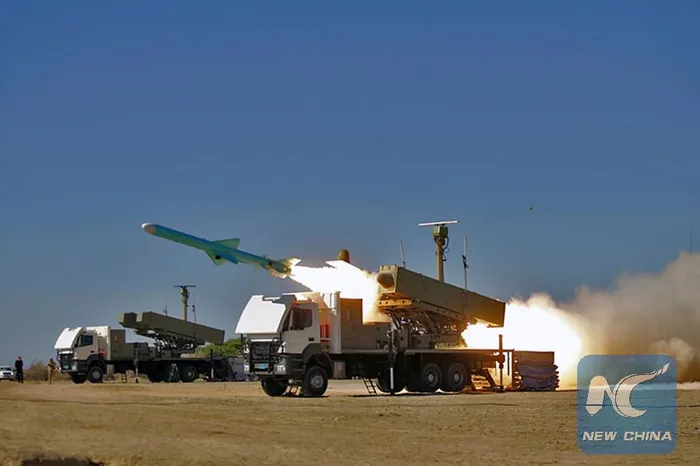
The Shahed drones are a clear example. Their simplicity makes them durable; their affordability makes them scalable. They can travel long distances, carry substantial payloads, and overwhelm defenses through saturation tactics. This combination has challenged missile defence systems costing tens or hundreds of millions of dollars per interception. In conflicts where Iran or its partners have deployed these drones, whether in the Red Sea basin, the Gulf, or further afield, the message has been consistent: deterrence does not always require advanced fighter jets or billion-dollar platforms.
Why the West Downplays Iranian Capability
Western downplaying of Iranian military capabilities serves strategic and political purposes. Acknowledging Iran’s advancements would force policymakers to admit that years of sanctions, covert sabotage operations, and diplomatic isolation have not prevented Tehran from expanding its technological base. It would also complicate Western narratives that portray Middle Eastern military actors as inherently inferior or dependent on foreign sponsors.
Moreover, admitting the effectiveness of Iranian systems would require military planners in Washington and Brussels to rethink doctrines built around costly air power and high-precision munitions. Low-cost drones undermine traditional Western advantage by making the battlespace more unpredictable and more accessible to non-Western actors. In this context, Western commentary often defaults to characterizations of Iranian weapons as crude or easily countered, until they are not.
When the West Copies What It Criticises
The emergence of the U.S. reverse-engineered drone squadron exposes the contradictions in that narrative. The new drones, reportedly priced around $35,000 each, remarkably low for US standards, mirror the fundamental logic of Iran’s own systems: cheap to produce, easy to transport, and operable from a variety of platforms. The decision to place these drones under a special operations unit instead of a traditional service branch also suggests the U.S. is experimenting with the very same flexibility Iran has used to its advantage.
The irony is stark: Washington now seeks “drone dominance” using designs derived from the country it spent years claiming was technologically behind.
A Shifting Balance in Military Thinking
None of this is to romanticize or endorse Iran’s force posture. Rather, it highlights how global military thinking is shifting. The age of dominance through expensive weaponry is being challenged by nations that innovate out of necessity. Iran is not a superpower, but it has become a reference point in modern drone warfare—whether the West is willing to publicly admit it or not.
The US deployment of Shahed-inspired drones signals a deeper recalibration: the West is finally learning from the very actors it once underestimated. And in a multipolar world, that acknowledgment, implicit as it is, marks a significant turning point.
Written By:
*Dr Iqbal Survé
Past chairman of the BRICS Business Council and co-chairman of the BRICS Media Forum and the BRNN
*Chloe Maluleke
Associate at BRICS+ Consulting Group
Russian & Middle Eastern Specialist
** MORE ARTICLES ON OUR WEBSITE https://bricscg.com/ (https://bricscg.com/)
** Follow https://x.com/brics_daily (https://x.com/brics_daily) on X/Twitter for daily BRICS+ updates