

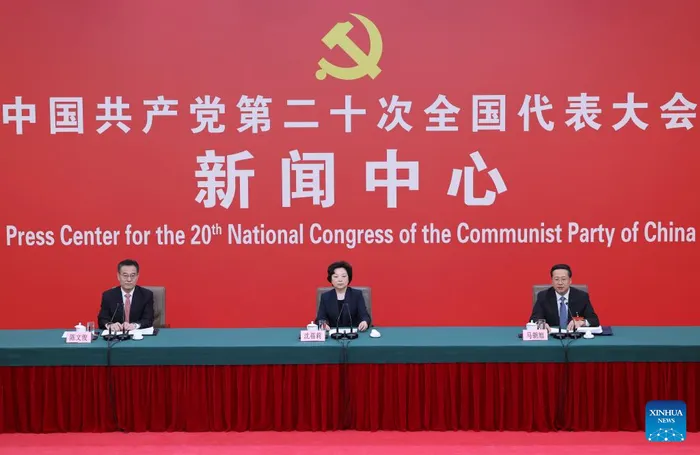
The Communist Party of China’s (CPC) leadership has emphasised multiple frameworks to ensure the success of China’s five-year plans. The frameworks emphasise a collective effort to ensure national progress. These were emulated in China’s 20th National CPC Congress. The concept of national rejuvenation has become a defining theme in contemporary political discourse in China. Presented as both a historical mission and a forward-looking strategy, Chinese modernisation is not merely economic development but a comprehensive civilisational project integrating governance reform, ideological continuity, and international engagement. Under the leadership of Xi Jinping, this vision has been articulated as a collective national undertaking in which all ethnic groups participate in building a prosperous, stable, and globally influential state.
Collective Progress as National Foundation
Central to the narrative of rejuvenation is the idea that unity among the population forms the backbone of national strength. Development is portrayed as a shared endeavour requiring cooperation across regions, classes, and ethnic communities. This collective ethos emphasises that national progress is inseparable from global development. The assertion that China cannot develop in isolation, and that the world equally benefits from China’s growth, positions the country’s rise as mutually beneficial rather than competitive. Within this framework, modernisation is depicted as contributing to global prosperity, technological advancement, and stability.
This perspective introduces the notion of shared human values and a common future for humanity. By framing its national trajectory as aligned with universal interests, China presents its development model as internationally relevant and ethically grounded. This reinforces legitimacy domestically while promoting soft power abroad.
Ideological Continuity and Party Leadership
The political architecture supporting this modernisation project rests on the authority of the Communist Party of China. Party leadership is portrayed as indispensable to stability, strategic planning, and policy coherence. A key ideological pillar is the “Three Represents” theory formulated by Jiang Zemin, which asserts that the Party must represent advanced productive forces, advanced culture, and the fundamental interests of the overwhelming majority. This doctrine reframes the Party not merely as a political organisation but as a representative institution embodying national progress and societal aspirations.
Within this ideological framework, national interest is defined as the welfare of the majority rather than sectional groups. Policies are therefore justified as expressions of collective will and long-term development needs. The emphasis on ideological continuity, from earlier socialist principles to contemporary governance theories, serves to link present leadership with historical legitimacy, reinforcing the perception of a consistent national path.
A Distinct Path to Development
Chinese modernisation is consistently described as a model tailored to national conditions rather than a replication of foreign systems. The state emphasises the importance of designing economic, social, and cultural strategies suited to domestic realities, arguing that development models must reflect historical experience, demographic structure, and institutional capacity. This insistence on autonomy underscores a broader principle: that each country has the right to pursue its own path to prosperity without external prescription.
In practical terms, this approach prioritises long-term planning, state coordination, and incremental reform. Challenges and obstacles are seen as inevitable stages in a transformative process rather than signs of systemic weakness.
Global Engagement and Strategic Initiatives
China’s modernisation strategy is not limited to domestic policy. It also encompasses an expansive international outlook, most visibly through the Belt and Road Initiative (BRI). This initiative is presented as a platform for cooperative development, infrastructure connectivity, and economic integration across regions. By promoting high-quality development standards within such projects, China seeks to demonstrate that its rise contributes to shared growth and win-win forms of international partnership.
The emphasis on building a “community with a shared future” reflects an effort to reshape global governance narratives. Rather than positioning itself as a challenger to existing systems, China’s role is reformist: advocating more inclusive and multipolar cooperation. This approach aligns foreign policy with domestic priorities, linking international credibility to internal stability and growth.
Centralised Governance and Reform Capacity
A defining feature of the modernisation vision is the continued strengthening of central authority. Centralised governance is an important mechanism for ensuring policy consistency, administrative efficiency, and strategic direction. From this perspective, good state leadership enables large-scale reforms in sectors such as healthcare, technology, and social welfare, while also maintaining national cohesion.
Institutional innovation is another recurring theme. The government emphasises the creation of new regulatory frameworks, planning systems, and administrative tools capable of managing rapid transformation. These measures are not restrictive but designed to optimise governance and safeguard long-term stability.
Modernisation as Civilisational Project
Taken together, these elements form a comprehensive guide in which national rejuvenation represents more than economic advancement. It is framed as a civilisational revival that integrates cultural confidence, political stability, and global responsibility. By linking ideological principles, state capacity, and international engagement, Chinese modernisation is presented as a unified strategy intended to secure prosperity at home while contributing to development abroad.
In this vision, the success of modernisation validates the governing model itself. National rejuvenation becomes both the objective and the proof of concept: a demonstration that disciplined leadership, collective participation, and strategic planning can transform a nation’s trajectory while shaping the international order.
Written by:
*Dr Iqbal Survé
Past chairman of the BRICS Business Council and co-chairman of the BRICS Media Forum and the BRNN
*Cole Jackson
Lead Associate at BRICS+ Consulting Group
Chinese & South America Specialist
**The Views expressed do not necessarily reflect the views of Independent Media or IOL.
** MORE ARTICLES ON OUR WEBSITE https://bricscg.com/ (https://bricscg.com/)
** Follow @ (https://x.com/brics_daily)brics_daily (https://x.com/brics_daily)on Twitter for daily BRICS+ updates and instagram @brics_daily (https://www.instagram.com/brics_daily?igsh=bmhvbTd0YzA4a2wx)