

South Africa has firmly defended its participation in week-long joint naval exercises with fellow BRICS and BRICS Plus partners, arguing that the drills are a necessary response to mounting instability in global maritime spaces rather than a provocation aimed at the West.
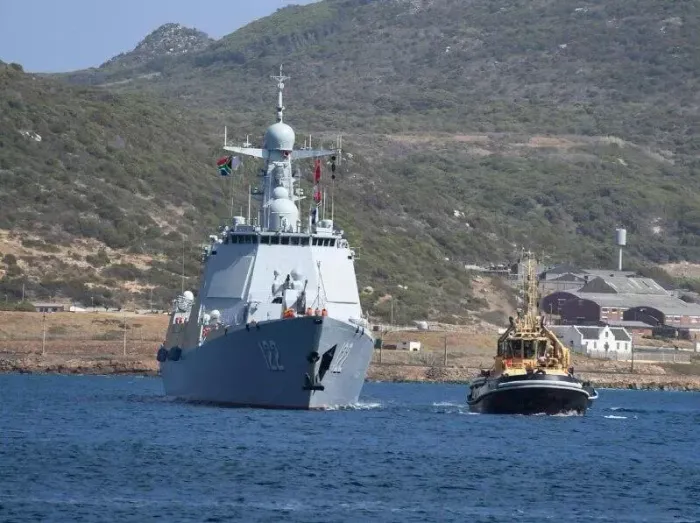
The exercises, titled “Will for Peace 2026”, began off the coast of Cape Town and involve naval forces from Russia, China, Iran and South Africa, with the United Arab Emirates contributing vessels and Brazil, Indonesia and Ethiopia participating as observers. A Russian naval vessel docked at Simon’s Town naval base ahead of the drills, underscoring the scale and symbolism of the operation.
South African defence officials have stressed that the manoeuvres are designed to enhance cooperation, interoperability and the protection of vital sea lanes at a time when global trade routes are increasingly exposed to geopolitical conflict.
Captain Nndwakhulu Thomas Thamaha, South Africa’s joint task force commander, told the opening ceremony that the exercises go beyond routine military training.
According to Thamaha, the drills are explicitly aimed at safeguarding shipping lanes and maritime economic activities across the Indian and Atlantic Oceans, routes that are critical not only to South Africa, but to the wider Global South.
Context of Escalating US Pressure
The timing of the exercises has drawn international attention, coming just days after the United States seized a Venezuela-linked Russian oil tanker in the North Atlantic, citing violations of Western sanctions. The incident forms part of Washington’s broader pressure campaign against Venezuela and its allies.
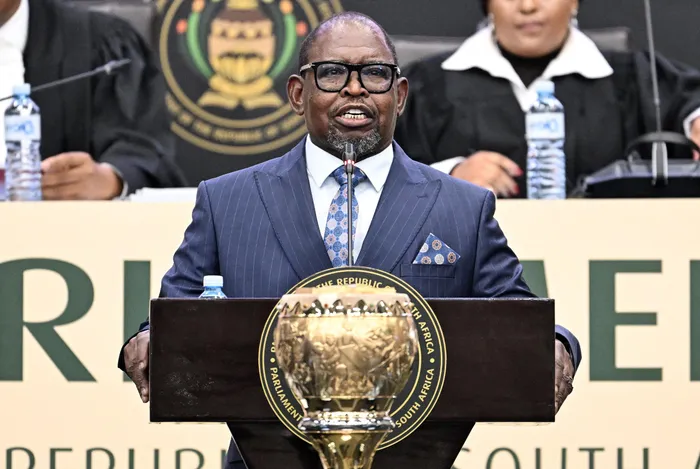
South African officials have rejected claims that the drills are a reactionary or confrontational move. Deputy Defence Minister Bantu Holomisa emphasised that the exercises were planned long in advance and should not be interpreted through the lens of US foreign policy disputes.
“Let us not press panic buttons because the USA has got a problem with countries. Those are not our enemies,” Holomisa said. “Let’s focus on cooperating with the BRICS countries and make sure that our seas, especially the Indian Ocean and Atlantic, are safe.”
The drills were originally scheduled for November but postponed due to a clash with the G20 summit in Johannesburg, an event notably boycotted by the Trump administration.
Washington has increasingly portrayed BRICS as an “anti-American” bloc, warning that its members could face additional tariffs of up to 10 percent on top of existing trade duties. South Africa, in particular, has faced US criticism for its close ties with Russia and for its decision to take Israel to the International Court of Justice over alleged violations of international law in Gaza.
International Law Versus Unilateral Power
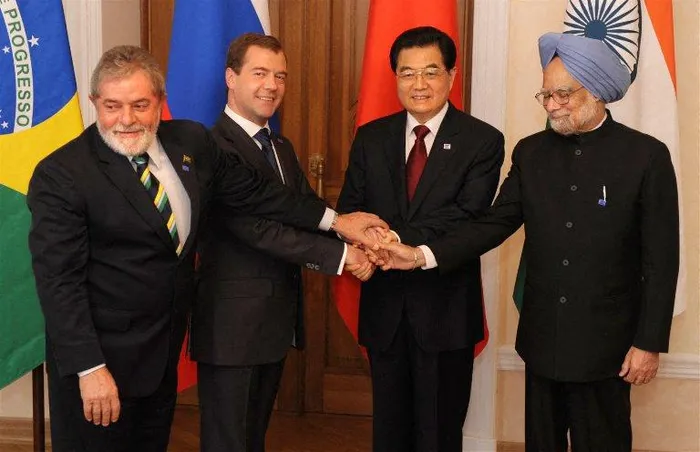
The naval exercises and the Rio declaration together highlight a defining contrast between BRICS’ stated principles and the conduct of the United States in recent years.
BRICS has consistently framed its actions, whether naval cooperation, diplomatic initiatives or economic coordination, as grounded in respect for international law, UN processes and collective security. This stands in stark contrast to what many Global South countries view as US unilateralism: the imposition of sanctions without UN authorisation, the seizure of foreign assets, and military actions taken outside established international legal frameworks.
Critics within the Global South often point to episodes during the Trump era as emblematic of this approach. These include aggressive sanctions regimes, extraterritorial enforcement actions, and operations that were widely condemned as violations of state sovereignty, such as the forcible detention or transfer of foreign political figures under US authority, which many legal scholars argue blurred the line between law enforcement and extrajudicial coercion.
At the Rio summit, BRICS leaders explicitly condemned recent Israeli and US military strikes on Iran, describing them as violations of the UN Charter and international humanitarian law. They also criticised attempts to politicise or militarise humanitarian aid, particularly in Gaza, and called for an immediate ceasefire.
The contrast is clear: while BRICS positions itself as a champion of a multipolar order governed by rules, dialogue and multilateral institutions, the United States continues to rely heavily on coercive tools that bypass those same systems.
A Strategic Signal, Not a Provocation
Seen in this broader context, South Africa’s defence of the “Will for Peace 2026” naval drills is less about military posturing and more about signalling alignment with an emerging Global South consensus. For Pretoria, cooperation with BRICS partners is framed as a pragmatic necessity in an increasingly fragmented world; one where maritime security, trade stability and respect for international law are inseparable.
As global power continues to diffuse, the drills off Cape Town’s coast are likely to be remembered not as an isolated event, but as part of a wider shift: from unilateral dominance towards contested, and increasingly multipolar, global governance.
Written by:
*Dr Iqbal Survé
Past chairman of the BRICS Business Council and co-chairman of the BRICS Media Forum and the BRNN
*Cole Jackson
Lead Associate at BRICS+ Consulting Group
Chinese & South America Specialist
**The Views expressed do not necessarily reflect the views of Independent Media or IOL.