


This decline is not just an arithmetic artefact of faster growth in other emerging markets; it is reflective of deep structural weaknesses in South Africa’s economy. The country has once dominated Africa’s economic landscape, contributing close to 28 % of the continent’s GDP in 1994, a share now that is closer to 15 %. As other economies such as Egypt, Kenya, Ghana, and even Zimbabwe have registered growth rates many multiples that are higher than South Africa’s, the country’s comparative decline has affected its former position as Africa’s undisputed economic leader.
Multiple entrenched constraints are behind this underperformance. To name a few, chronic energy shortages (evident in persistent load-shedding), have suppressed productive capacity. There are estimates suggesting power interruptions have reduced potential output by up to 20 %. Logistical bottlenecks at ports and rail networks have also raised the cost of conducting business while eroding competitiveness in manufacturing and trade. The prolonged periods of state inefficiency, including corruption during the “state-capture” era made these weaknesses worse, and this led to the crowding out of private investment and leaving the capital stock underinvested.
With unemployment being above 30 % incessantly, including levels amongst the young population far higher than global norms, South Africa is suffering from a mismatch between skills and opportunities that dampens not only productivity but consumption as well. These factors explain why South Africa’s GDP has remained slow against the backdrop of far more dynamic economies in Asia including within Africa itself.
The BRICS paradox
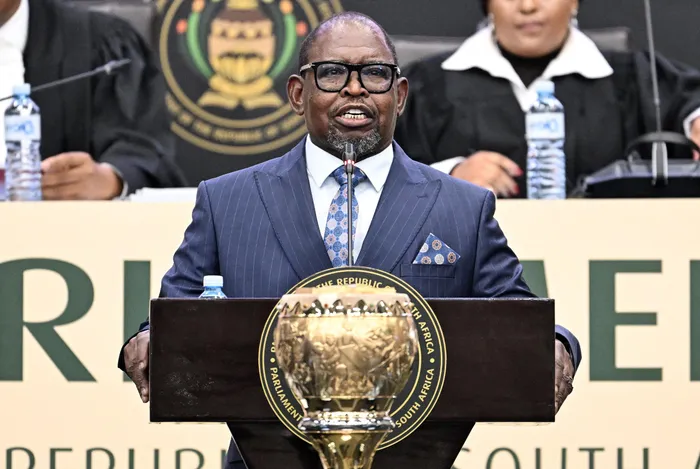
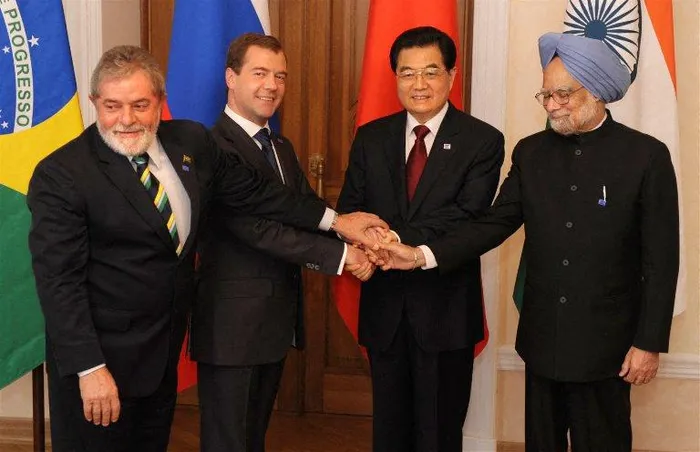
South Africa’s relative economic decline presents a paradox for the role that it plays in BRICS. In comparison to its BRICS partners, South Africa’s economic heft is notably pretty modest: China and India alone account for a combined share of global GDP measured in the tens of percentage points, dominating South Africa’s sub-1 % contribution.
This imbalance has visible implications for South Africa’s influence within the bloc. The country’s diminishing economic standing also raises questions about its ability to leverage BRICS membership for substantive economic benefits.
Strategic constraints and opportunities
South Africa’s diminished global share does not declare the country irrelevant, but it does recalibrate expectations about the role it plays in global governance and economic coalitions. The country continues to play a diplomatic role disproportionate to its size, buoyed by its G20 presidency and moral authority on problems such as inequality. However, economic weight remains one of the main influences in blocs like BRICS.
In order for South Africa to enhance its relevance within BRICS and the broader global economy, much deeper structural reforms are necessary. Fostering an investment climate that encourages private sector participation, modernising energy infrastructure and rehabilitating transport and logistics networks.The recent decreasing of the inflation target to 3 %, an attempt to minimise borrowing costs and stimulate investment shows a willingness to pursue macroeconomic reform, however such measures have to be complemented by supply-side improvements in order to translate into sustained growth.
Written by:
*Dr Iqbal Survé
Past chairman of the BRICS Business Council and co-chairman of the BRICS Media Forum and the BRNN
*Sesona Mdlokovana
Associate at BRICS+ Consulting Group
Africa Specialist
**The Views expressed do not necessarily reflect the views of Independent Media or IOL.