

A meeting with something to prove
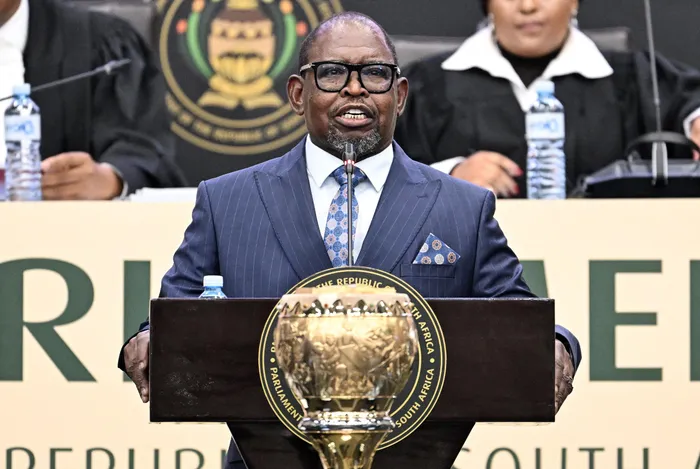
This particular Council meeting arrives under pressure that is anything but ordinary. South Africa has assumed the SADC Chairship not through the normal rotation of ambition, but through the constitutional ejection of Madagascar after the political instability that rocked Antananarivo after the August 2025 Summit. The regional body’s leadership was effectively orphaned mid-term, and then Pretoria stepped in. That context transforms next week’s gathering from routine oversight into something closer to a credibility test both for South Africa and for SADC’s institutional resilience.
The weight of the agenda
The agenda is dense and consequential. Ministers are going to assess disaster risk management and the state of food and nutrition security across a region where droughts have become structurally embedded rather than episodic. They are going to deliberate on the long-delayed operationalisation of the SADC Regional Development Fund, a financing mechanism that has, frankly, been discussed for so long that even civil society organisations have begun to cite it as a symbol of the gap between SADC’s rhetorical ambition and its institutional capacity. The RDF (Regional Development Fund) was enshrined in the SADC Treaty with the explicit purpose of reducing the bloc’s dependence on external donors, who currently are funding upward of 70 percent of SADC’s operational budget. At the December 2024 extraordinary Finance Ministers meeting, members finally endorsed a Special Purpose Vehicle structure in partnership with the African Development Bank. March 2026 is where that endorsement will be met with accountability.
We can compare this to ECOWAS, which operationalised its own development finance instrument far earlier, or to the East African Community, which has, despite its own fractures, demonstrated that regional financing mechanisms can be built when political will is sustained. SADC’s delay is not necessarily technical. It is a failure of sustained political commitment from member states that have resisted capitalisation contributions. The question Lamola’s chair must press is simple: will member states actually fund what they have theoretically endorsed?
The RISDP (Regional Indicative Strategic Development Plan) mid-term review, running as a side event from 4 to 5 March before the Council convenes, deserves equal scrutiny. The Regional Indicative Strategic Development Plan 2020–2030 was conceived as SADC’s most coherent integration blueprint to date, it was structured around industrialisation, infrastructure, and social development. Yet as the region crosses its midpoint, labour market data tells a sobering story: unemployment in some member states has reached 36.9 percent, youth unemployment has risen to 62.5 percent in others, and informal employment exceeds 90 percent across several economies. These are not peripheral statistics. They are indictments of implementation.
The current Summit theme , Advancing Industrialisation, Agricultural Transformation, and Energy Transition for a Resilient SADC. is substantively sound. However, SADC has a persistent habit of selecting themes that articulate the right priorities and then diffusing energy into process rather than outcome. The 2024 Council in Harare under Zimbabwe’s chairship discussed industrialisation with similar urgency; the 2017 Summit under South Africa’s previous chairship spoke of infrastructure corridors that remain partially built. Repetition without delivery is not strategy, it is ritual.
Groundwork for eThekwini
What gives this meeting a genuine opportunity is the specific, structural weight of the eThekwini Summit now confirmed for August 2026. South Africa is not just hosting a meeting; it is building toward a Summit that will occur in a city that was, not long ago, synonymous with governance collapse following the July 2021 unrest. President Ramaphosa’s decision to host SADC leaders in Durban is a bold symbolic act, staging Africa’s premier southern regional summit in a city being actively rebuilt. The March Council must lay the policy groundwork that makes that Summit meaningful rather than ceremonial.
Southern Africa does not lack vision documents, protocols, or summits. It lacks the institutional muscle to convert decisions into delivery. The SADC Budget Manual and Investment Policy, validated just days ago in Gaborone, represents exactly the kind of unglamorous financial governance reform that determines whether broader ambitions survive contact with reality. If Ministers approve it without dilution and commit to the RDF capitalisation pathway, March 2026 will be remembered as the meeting where SADC stopped talking about financial sovereignty and started building it.
History will not be kind to a region with SADC’s natural resource endowments, its demographic youth dividend, and its untapped intra-regional trade potential, if it continues to hold summits primarily to schedule the next summit. Pretoria must deliver.