
Vietnam

Overview

Country Name: Vietnam

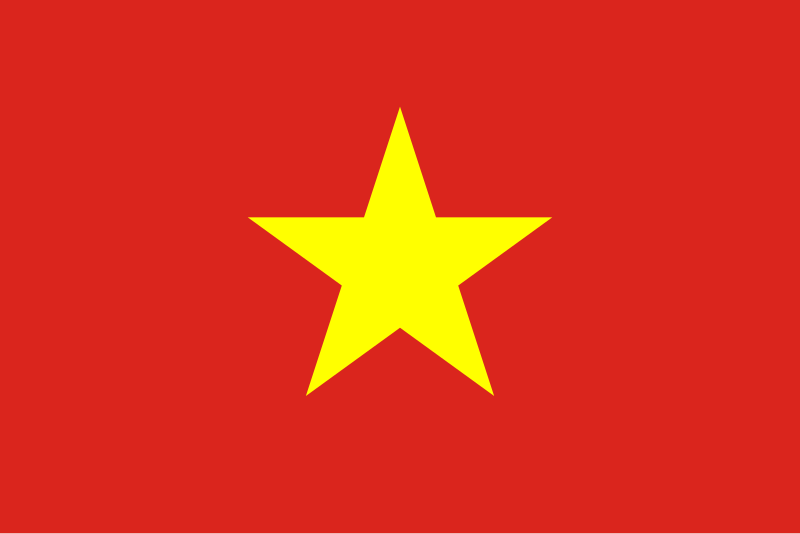
Country Flag:
Historical Background

  • Early Foundations: Home to ancient civilisations such as Đông Sơn and Champa, Vietnam’s cultural roots run deep. Unification under the Vietnamese state expanded significantly during the Lý and Trần dynasties.
  • Colonial Era: From the mid-19th century until 1954, Vietnam was part of French Indochina, with resistance movements culminating in the First Indochina War and the Battle of Điện Biên Phủ.
  • Division and Réunification: The 1954 Geneva Conference split the country into North (Communist) and South Vietnam. The Vietnam War ended in 1975 with reunification under Communist rule.
  • Đổi Mới & Transformation: From 1986 onward, economic reforms (Đổi Mới) shifted Vietnam to a socialist-oriented market economy, triggering rapid industrialisation and poverty reduction. Financial Times

Geography 

Capital

Hanoi (administrative capital), Ho Chi Minh City (largest city) Encyclopedia Britannica

Time zones

UTC+07:00

Area

 ~ 331,212 km² (66th largest globally) with ~3,444 km of coastline gso.gov.vnWikipedia

Climate

  • Northern highlands: cool, seasonal variation
  • Red River and Mekong deltas: tropical, monsoon-influenced rains
  • Central highlands: temperate mountain plateaux Encyclopedia Britannica

Administrative Divisions

Vietnam is divided into eight macro-regions (Northern, Central, Southern), encompassing 63 provinces such as Hanoi, Ho Chi Minh City, Hai Phong, Quảng Ninh, and others. Wikipedia

Natural Resources

Vietnam’s economy leverages resources including rice, seafood, coffee, rubber, coal, natural gas, bauxite, and hydropower potential. Key sectors also include electronics, textiles and machinery (underpinned by FDI). parfumdautomne.fr

Natural Disaster Susceptibility

  • Typhoons and flooding: especially in central coastal plains and Mekong Delta
  • Droughts: periodic lack of rainfall in uplands impacts agriculture
  • Landslides: mountainous mountainous terrain in the north is prone
  • Coastal erosion and saltwater intrusion: threats in delta regions

Border Countries

China, Laos, Cambodia; maritime borders with the South China Sea and Gulf of Thailand. No inland borders with Thailand or Myanmar. Wikipedia

Political Landscape

  • Power Structure: Socialist republic with one-party rule by the Communist Party. The President is head of state, the Prime Minister leads government.
  • Political System: Dominated by the Communist Party; formal multiparty competition does not apply.
  • No recent electoral cycles due to the one-party system. Upcoming congresses in line with party schedules.
  • Foreign Policy: Balances relations between China, the U.S., and others while advocating regional economic integration (ASEAN), trade liberalisation, neutrality in diplomatic disputes. reuters.comWikipediainternational.groupecreditagricole.comwsj.comFinancial Times

Economic Landscape

Size in the world: 34

GDP: $476.3 billion (2024)

GDP per capita: $4,700 (2024)

Currency: Vietnamese dong (VND)

Dominant Economic Sector: Manufacturing & Export-Oriented Industry

Market type: Socialist-oriented market economy

FDI by Country

Inbound

  • South Korea
  • Singapore
  • Japan
  • China
  • Hong Kong
  • Netherlands
  • Thailand
  • United States
  • Malaysia
  • British Virgin Islands

Outbound

  • Laos
  • Cambodia
  • Myanmar
  • Russia
  • United States
  • Germany
  • Australia
  • Singapore
  • France
  • Cuba

Some Major Trading Partners

  • Imports
  • China
  • South Korea
  • Japan
  • Taiwan
  • Thailand

Exports

  • United States
  • China
  • European Union
  • South Korea
  • Japan

Social Landscape

  • Population: ~100 million (2023), density ~300/km², growth ~0.9% annually Wikipedia
  • Ethnic Composition: Predominantly Kinh (85%); minorities include Tay, Thái, Hmong, Khmer, and more Wikipedia
  • Language: Vietnamese official; numerous minority languages widely spoken
  • Religion: Majority Catholic and Buddhist; traditional indigenous beliefs and small Muslim and Christian minorities