

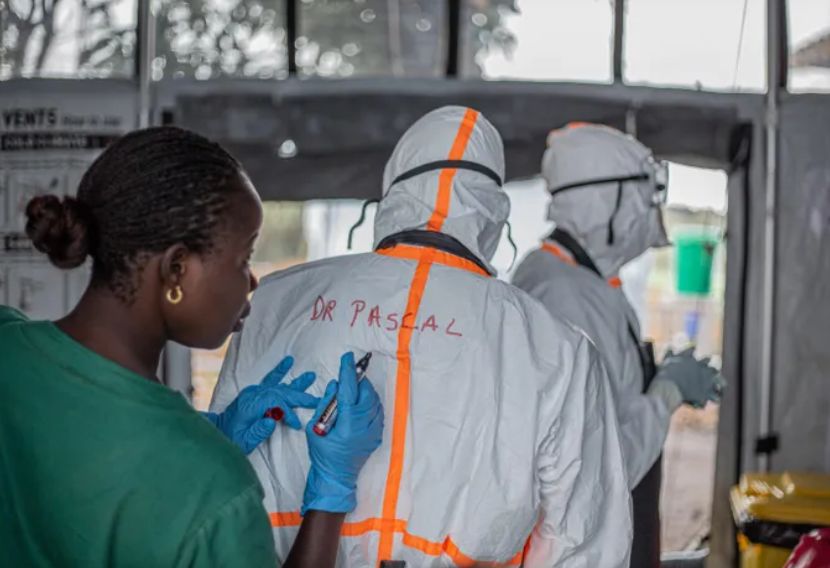
The current outbreak is caused by the Bundibugyo virus, while Ervebo is licensed and recommended for outbreaks caused by the Zaire species of Ebola. WHO and its partners have therefore had to develop emergency guidance for using the vaccine in the current outbreak rather than relying on an established, routinely approved vaccine specifically for Bundibugyo.
That distinction captures the challenge facing the DRC. The world has become much better at fighting Ebola, but the virus is still capable of exploiting gaps in scientific research, healthcare systems and emergency preparedness.
A vaccine is not a victory yet
The arrival of vaccines is important, but it does not mean the outbreak is under control.
The Bundibugyo outbreak has become the largest Ebola outbreak ever recorded in the DRC, surpassing the 2018 to 2020 outbreak. WHO has described transmission as intense, with the virus spreading across multiple provinces and health zones. Uganda has also recorded cases, demonstrating that the outbreak is already a regional concern.
This is where the distinction between having a vaccine and being able to deploy it effectively becomes critical.
Vaccines have to reach the right people at the right time. Health workers need protection. Contacts of infected patients need to be identified quickly. Communities need reliable information. Laboratories need to diagnose infections before patients unknowingly transmit the virus.
A box of vaccines sitting in a warehouse cannot stop an epidemic.
The response therefore depends on logistics, surveillance and trust just as much as science.
Why the DRC matters to the rest of Africa
The DRC’s crisis should not be viewed as a problem contained within its borders.
The country shares borders with nine states and has large, highly mobile populations. The current outbreak has already crossed into Uganda, while isolated cases have been treated in Europe. WHO has assessed the risk to the DRC as very high because of continued transmission and geographical expansion.
For Africa, this is an important test of regional health security.
The continent has spent years trying to build stronger institutions for dealing with outbreaks. Africa CDC has become increasingly central to coordinating continental responses, while WHO has worked with African governments to strengthen surveillance, laboratory capacity and emergency preparedness.
The current crisis provides a real-world test of whether those systems can operate quickly enough when an outbreak moves faster than expected.
It also reinforces why blanket border closures are not necessarily the answer. Africa CDC guidance has argued that broad travel restrictions are not justified for the current outbreak, placing greater emphasis on surveillance and targeted public-health measures.
That is particularly important for a continent trying to increase regional trade and mobility.
The bigger lesson is preparedness
The most uncomfortable lesson from the outbreak is that Africa cannot afford to build its health defences only when a crisis begins.
Bundibugyo is rare. There have only been a small number of known outbreaks caused by the virus, which helps explain why vaccine development has lagged behind research into the more familiar Zaire species.
But rarity does not mean irrelevance.
The COVID-19 pandemic demonstrated how quickly an unfamiliar pathogen can transform into a global emergency. Ebola is a different disease, but the underlying lesson is similar: countries need research capacity, manufacturing capability, trained health workers and emergency supplies before they need them.
Africa should therefore be investing not only in vaccines, but in the ability to develop and manufacture vaccines on the continent.
Relying on international stockpiles will always leave African countries competing for scarce resources during a global emergency. Building regional pharmaceutical and biotechnology capacity would give the continent greater control over its own health security.
A moment for African solidarity
The vaccine allocation is encouraging because it shows what international cooperation can achieve. But it should also prompt a more ambitious conversation about African self-reliance.
The DRC has faced Ebola repeatedly. Its current outbreak is the country’s 17th. The fact that a new strain can emerge and leave health authorities without a specifically approved vaccine demonstrates why preparedness cannot stop once one outbreak has been contained.
Africa needs stronger disease surveillance, faster diagnostics, better-paid health workers and more investment in vaccine research. It also needs countries to share information and resources before an outbreak crosses another border.
The arrival of Ervebo gives the DRC another tool in a desperately difficult fight. But it is not the end of the story.
If anything, it is a reminder of what Africa still needs to build.
The continent should not have to wait for thousands of people to become infected before the world mobilises vaccines, funding and expertise.
The real measure of success will be whether the next outbreak finds Africa better prepared than this one did.
Written by:
*Dr Iqbal Survé
Past chairman of the BRICS Business Council and co-chairman of the BRICS Media Forum and the BRNN
*Sesona Mdlokovana
Associate at BRICS+ Consulting Group
Africa Specialist
**The Views expressed do not necessarily reflect the views of Independent Media or IOL.
** MORE ARTICLES ON OUR WEBSITE https://bricscg.com/ (https://bricscg.com/)
** Follow @ (https://x.com/brics_daily)brics_daily (https://x.com/brics_daily)on Twitter for daily BRICS+ updates and instagram @brics_daily (https://www.instagram.com/brics_daily?igsh=bmhvbTd0YzA4a2wx)