

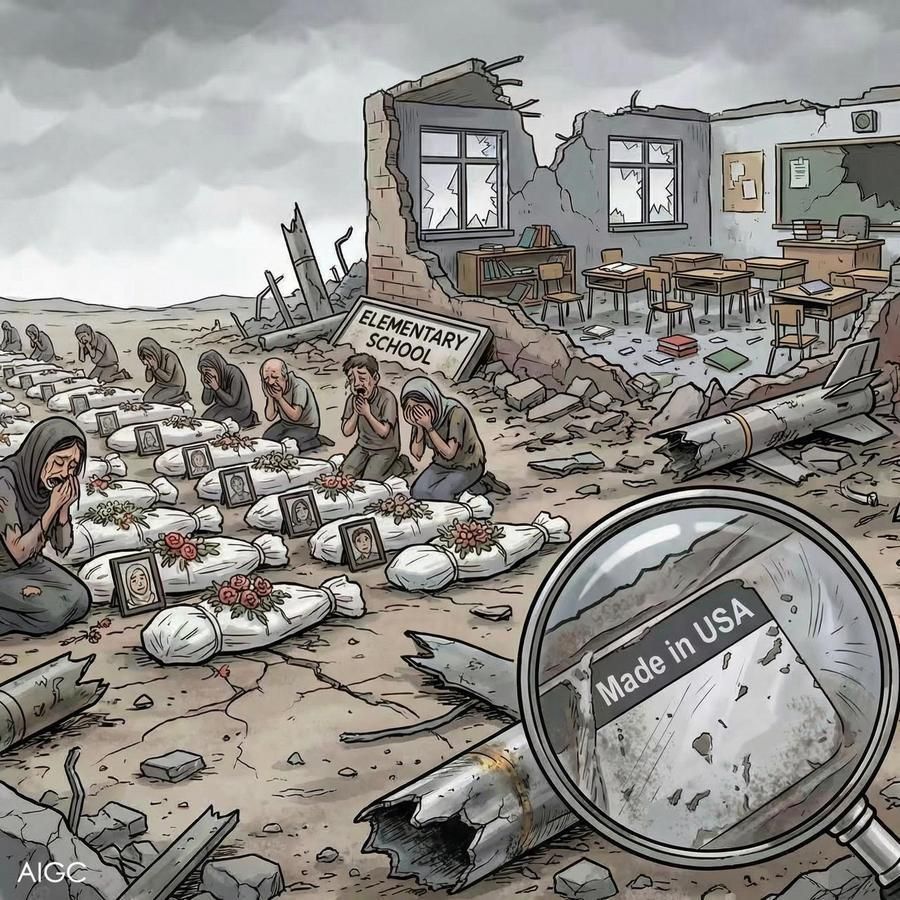
The relentless conflict in the Middle East has evolved from a regional struggle into a crisis with global consequences. For decades, the Israeli-Palestinian conflict was largely viewed as a regional issue, with many states balancing diplomatic concern against strategic and economic interests. Governments often justified their restraint in the language of peace and stability, yet civilians continued to pay the price. Innocent Palestinians have suffered devastating losses through military operations and occupation, while innocent Israeli civilians have endured attacks, violence and insecurity at the hands of militant groups regarded by Israel as terrorist organisations. The tragedy is that ordinary people on both sides have become casualties of a conflict whose political solutions remain elusive.
As the conflict expanded beyond Israel and Palestine, it exposed a broader reality about modern warfare. The Middle East became the stage for competing regional and global powers, each advancing security concerns, strategic interests and political ambitions. Iran, a major regional power, has long been viewed by the United States and its allies as requiring containment, particularly regarding its military and nuclear capabilities. This strategic calculus explains the extensive American military presence across the Gulf and wider Middle East. Military bases in Qatar, Bahrain, Kuwait, the United Arab Emirates, Saudi Arabia, Iraq, Syria, Jordan and Oman are presented as safeguards against regional instability and deterrents against potential Iranian aggression. Yet these installations are not merely defensive structures; they are symbols of how deeply international powers are invested in the region’s security architecture and geopolitical balance.
The escalation between Israel and Iran marked a dangerous shift. Unlike Palestine, whose military capabilities are comparatively limited, Israel and Iran possess the capacity to inflict significant damage on one another and to draw neighbouring states into confrontation. What began as cycles of retaliation increasingly resembled a direct interstate conflict with consequences extending far beyond the battlefield. Military operations, counterstrikes and strategic calculations soon involved not only the immediate belligerents but also external powers seeking to protect allies and maintain influence.
The United States’ involvement illustrates the complexity of modern conflict. What may begin as an effort to deter escalation can simultaneously contribute to it. Military deployments and operations intended to contain threats are often interpreted by opponents as evidence of hostile intent, creating a cycle of action and reaction. The result is a security dilemma in which every actor claims to be defending itself while collectively making the region less secure.
The effects are not confined to the Middle East. The Strait of Hormuz remains one of the world’s most important energy corridors, through which roughly a quarter of global seaborne oil passes. Disruptions to regional stability quickly translate into higher energy costs, increased shipping expenses, rising insurance premiums and inflationary pressures felt across continents. The war may be fought thousands of kilometres away, but consumers everywhere ultimately pay a portion of its cost. In that sense, modern conflicts are no longer regional affairs; they are global economic events.
What is often overlooked, however, is the distinction between governments and the populations they claim to represent. Public support for national defence should not automatically be interpreted as public enthusiasm for war. Citizens frequently support their country’s right to protect itself while remaining deeply sceptical of military escalation. In the United States, many citizens have questioned the economic costs and strategic risks of deeper involvement in conflict with Iran. In Iran, the killing of the country’s supreme leader strengthened domestic support for resistance against perceived foreign aggression. In Israel, public backing for the war has declined as citizens confront the realities of economic strain, persistent missile threats and the uncertainty of prolonged conflict. Across these societies, ordinary people are grappling with consequences that they did not individually choose.
Lebanon’s experience further demonstrates how civilians become trapped between larger forces. Hezbollah’s actions drew Lebanon deeper into the regional conflict, prompting extensive Israeli military responses that devastated communities and displaced large numbers of people. Yet the suffering of Lebanese civilians cannot simply be reduced to the decisions of Hezbollah, nor can it be separated from the broader dynamics of regional confrontation. As is so often the case in war, those with the least influence over strategic decisions bear the heaviest burden.
At the same time, diplomacy appears increasingly fragile. Negotiations are frequently viewed not as pathways to peace but as opportunities for adversaries to regroup, rearm or reposition themselves. Decades of mistrust have made compromise politically costly and strategically suspect. International institutions established to regulate conflict and uphold international law often appear unable to prevent escalation or hold powerful actors accountable. Whether through political paralysis, selective enforcement or competing national interests, the institutions intended to guard peace are increasingly perceived as weak and performative.
Compounding these challenges is the information environment. Citizens are expected to form opinions and support policies while navigating unprecedented volumes of information, misinformation and disinformation. Artificial intelligence has accelerated both the creation and distribution of narratives, making it increasingly difficult to distinguish fact from manipulation. In war, controlling the narrative can become almost as important as controlling territory.
Perhaps this is the central lesson of the current crisis. Wars are often presented as contests between states, governments and military forces, but their consequences are borne by people. Palestinians, Israelis, Iranians, Lebanese, Americans and countless others are not merely statistics in geopolitical calculations. They are citizens whose lives, livelihoods and futures are shaped by decisions taken by leaders acting in the name of national security, ideology or strategic necessity. The true guardians of peace should not be those who prepare societies for endless conflict, but those who recognise that the value of human life transcends borders, alliances and political loyalties. In war, citizens matter as much as states, and perhaps more than the leaders who send them into conflict.
Written by:
*Cole Jackson
*Director of International Relations
Sekunjalo Group Africa Holdings
**The Views expressed do not necessarily reflect the views of Independent Media or IOL.
** MORE ARTICLES ON OUR WEBSITE https://bricscg.com/
** Follow @ (https://x.com/brics_daily)brics_daily (https://x.com/brics_daily)on Twitter for daily BRICS+ updates and instagram @brics_daily (https://www.instagram.com/brics_daily?igsh=bmhvbTd0YzA4a2wx)