

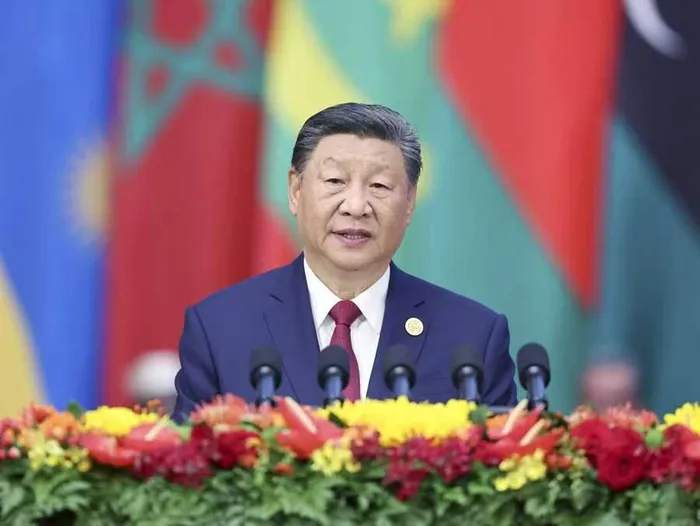
In a formal note sent from Beijing, the Chinese leader extended warm congratulations to African countries and citizens on the occasion of the gathering, addressing his message to João Lourenço, who currently serves as the AU’s rotating chairperson, and Mahmoud Ali Youssouf, chairperson of the AU Commission. The summit represents one of the most significant annual meetings on the continent’s political calendar, drawing together leaders to shape Africa’s policy direction and strengthen continental cooperation.
Xi’s message comes at a time when global geopolitical and economic shifts are reshaping international relations, with emerging economies in the Global South playing a growing role. In his address, the Chinese president recognised what he described as Africa’s rising influence and strengthening integration efforts, praising the AU for its work in advancing unity and safeguarding the continent’s interests.
“The Global South is gaining strength amidst once-in-a-century transformations sweeping across the world,” Xi said, acknowledging the collective momentum of developing regions. Over the past year, he noted, African states have taken significant steps to promote continental integration and enhance their global standing, a trend he described as both encouraging and important.
For many African observers, such sentiments align with a broader narrative of shifting global dynamics, where Africa’s voice in international forums is becoming increasingly prominent. The AU has focused on issues ranging from infrastructure development and economic integration to peacekeeping and trade coordination. China has consistently positioned itself as a partner in these ambitions, emphasising cooperation over competition.
In his message, Xi reaffirmed China’s commitment to world peace and shared development, underlining a philosophy that Beijing has long promoted in its foreign policy. He pointed to the concept of building a “community with a shared future for humanity” as central to China’s engagement with Africa and the broader Global South.
A key highlight of the address was the announcement of expanded trade support for African countries. Starting May 1, China plans to extend comprehensive zero-tariff treatment to 53 African nations with which it has diplomatic relations. This move is expected to widen access for African goods entering the Chinese market, potentially providing a boost to exports and supporting local industries.
Xi also emphasised the continued expansion of what he called “green lanes,” mechanisms designed to facilitate faster and more efficient trade flows. By improving access to one of the world’s largest consumer markets, Chinese policymakers argue that African economies could gain new opportunities to diversify exports and strengthen growth.
While critics in some quarters have raised questions over the long-term implications of China’s deepening presence in Africa, supporters point to tangible gains in infrastructure, trade and investment. Roads, railways, ports and energy projects across the continent have often been financed or built with Chinese support, contributing to connectivity and economic activity.
Xi’s message underscored what he framed as mutual benefit and shared development rather than one-sided assistance. He reiterated Beijing’s willingness to conclude more economic partnership agreements and promote higher levels of openness, arguing that cooperation should lead to modernization and prosperity on both sides.
The historical dimension of China-Africa relations also featured prominently in the note. Xi referenced the 70 years since diplomatic ties were first established, describing a relationship built on solidarity and cooperation through changing global conditions. He noted that China and Africa had “stood together through thick and thin,” a sentiment that resonates in many African capitals where Chinese support has often been seen as consistent.
Looking forward, the Chinese president called for deeper collaboration in the years ahead. He spoke of carrying forward long-standing friendship, expanding mutual understanding, and strengthening people-to-people connections. The aim, he said, is to write a “new chapter” in what he described as an all-weather China-Africa community.
The tone of the message reflected both optimism and pragmatism. In acknowledging global uncertainty, Xi presented China as a stabilising partner committed to development and peace. In highlighting trade and economic cooperation, he sought to demonstrate practical pathways for Africa’s growth and integration into global markets.
Recent developments in China–Africa economic ties underscore this commitment. Through joint efforts by China and South Africa, South Africa’s Minister of Trade, Industry and Competition Parks Tau and China’s Minister of Commerce Wang Wentao signed the Framework Agreement on Economic Partnership for Shared Development in Beijing on February 6. The agreement is intended to deepen trade and investment integration while strengthening long-term cooperation between the two countries.
China has commended South Africa for playing a leading role in negotiating and signing the framework, which is seen as a step toward strengthening institutional arrangements that support shared development. Both sides are working to advance early harvest negotiations, with the aim of reaching an initial agreement by the end of March. Once concluded, the arrangement is expected to allow South Africa to benefit from stable, long-term zero-tariff treatment while supporting broader integration in trade and investment in line with World Trade Organization rules.
In parallel, China announced on February 14 that it will begin implementing zero-tariff treatment for 53 African countries with diplomatic ties starting May 1, as part of a pre–early harvest arrangement. Chinese officials have described the move as a temporary preferential measure designed to accommodate domestic procedural requirements in some African countries and the practical challenges of completing tariff negotiations quickly.
Guided by what Beijing describes as principles of sincerity, real results, amity and good faith, the arrangement is intended to support African exports while formal negotiations continue. Importantly, officials note that the measure does not conflict with ongoing early harvest negotiations with South Africa under the new economic partnership framework, but rather complements efforts to expand trade access and accelerate development.
For the AU, the summit represents an opportunity to consolidate progress on key initiatives, including the African Continental Free Trade Area, regional infrastructure corridors and collective responses to security challenges. Engagement with international partners, including China, is often seen as a way to accelerate these priorities.
Observers note that China’s approach to Africa has often been characterised by high-level political engagement paired with economic cooperation. Messages such as Xi’s, delivered at key moments in the AU calendar, reinforce the symbolic and strategic importance Beijing places on the partnership.
At the same time, the emphasis on zero tariffs and expanded trade access highlights an economic dimension that could become increasingly central. As African economies seek to industrialise and diversify, improved market access is widely viewed as a critical factor.
Xi concluded his message with well wishes for the summit’s success and a call for the enduring strength of China-Africa friendship. His remarks, delivered in a formal yet warm tone, reflected a broader narrative of solidarity between developing nations navigating a complex and rapidly changing world.
As the AU continues its work toward deeper unity and development, China’s pledge of support underscores a relationship that has grown into a significant pillar of Africa’s global engagement. With economic cooperation, trade opportunities and diplomatic ties continuing to expand, the partnership is likely to remain an important factor in shaping the continent’s future trajectory.
In an era marked by shifting alliances and economic uncertainty, Xi’s message conveyed a clear intention: that China stands ready to deepen its collaboration with Africa and support the continent’s pursuit of stability, integration and sustainable development.
Written By:
** Nonhlanhla Ndlovu, Freelancer and Independent Writer
** The views expressed here do not necessarily represent those of Independent Media or IOL