

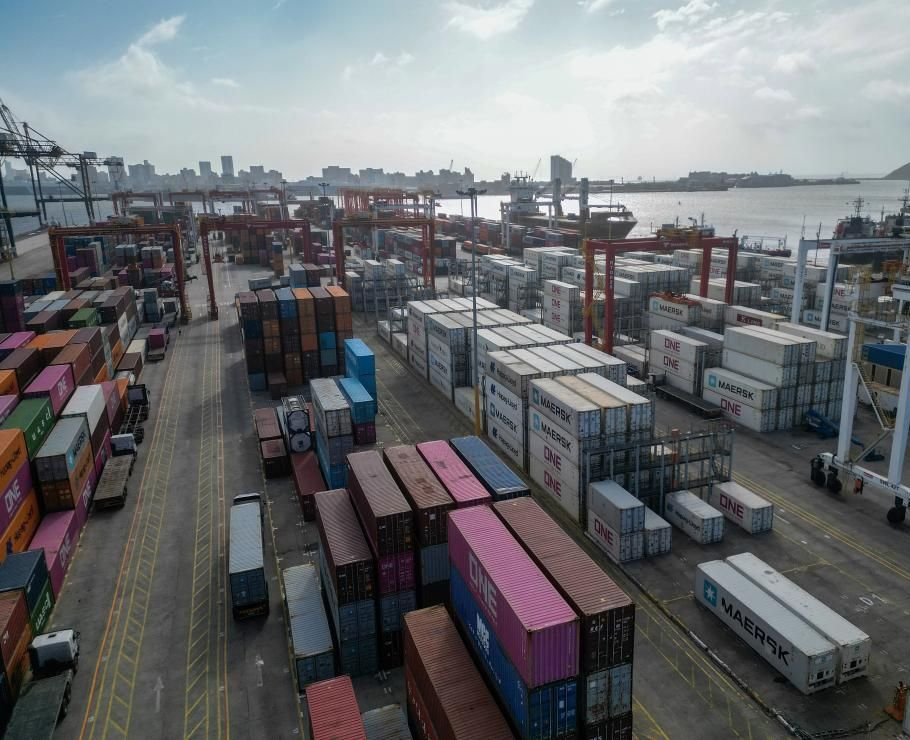
The recent rise in the cost of shipping goods from China to the United States offers a lesson for manufacturers: the cost of making a product is only one part of getting it to market. Freight, inventory decisions, port congestion and uncertainty over demand can determine whether production remains profitable.
According to Drewry’s World Container Index, shipping a 40-foot container from Shanghai to New York cost US$10,075 on 15 October 2026, compared with US$4,317 in May. Although rates eased slightly in the latest weekly assessment, the route remained more than twice as expensive as five months earlier. This is not simply a logistics problem. It changes how manufacturers plan production, purchase materials, schedule deliveries and manage cash.
Several pressures have converged. US container imports reached 2.55 million twenty-foot equivalent units in September, the highest September figure on record and 10.3% above September 2025. Imports from China rose 21.2% year on year, accounting for 36.3% of US container imports. Strong demand has met constrained shipping capacity as carriers adjusted schedules and cancelled sailings. Typhoon-related disruption at major Chinese ports and a rush to move goods before the Golden Week holiday added further pressure.
These developments show how quickly external events affect factory planning. When shipping space becomes scarce, manufacturers may wait for a vessel, pay more to secure a booking or accept a longer route. A factory can complete an order on time and still miss its customer’s delivery window because transport networks cannot move goods reliably. For manufacturers with tight margins, delays can mean penalties, idle production downstream or lost orders.
The more difficult consequence is the effect on inventory. Faced with expensive and uncertain freight, businesses may fill containers fully and order larger quantities earlier. This can reduce transport cost per unit, but commits capital to products before demand is known. If preferences change, sales fall or a competitor offers a cheaper alternative, excess stock accumulates. Manufacturers and retailers then face storage costs, discounting and the possibility that goods become obsolete before they are sold.
The scale of the problem is significant. IHL Group estimates that global inventory distortion – the combined cost of overstocking and stock-outs – reached US$1.7 trillion in 2026, equivalent to 6.2% of global retail sales. Netstock’s 2026 supply-chain planning research found that 24% of surveyed small and medium-sized businesses had more than 10% of inventory tied up in dead stock, double the share in 2024. Its findings also show that 74% face supplier lead-time variability and 72% identify freight and shipping costs as a planning pressure. The challenge is not simply holding too much stock; it is holding the wrong stock, in the wrong place, at the wrong time.
For manufacturers, visibility and flexibility are increasingly valuable. Better demand forecasting, real-time inventory data and closer supplier communication can help businesses identify which products need replenishment and which should not be reordered. Rather than relying on one large shipment, firms may split orders, negotiate more flexible minimum quantities or hold safety stock for critical components. These approaches can raise unit or administrative costs, but reduce the risk of tying up cash in slow-moving goods.
Keeping inventory closer to production is another option. For suitable products, manufacturers can store finished goods near factories or in regional fulfilment hubs, then dispatch smaller quantities as orders arrive. Air freight may suit lightweight, high-value products where speed justifies the premium. It is not a universal substitute for sea freight: heavy machinery, bulk materials and low-margin goods generally remain better suited to ocean transport. Decisions should reflect total landed cost, including storage, duties, financing, insurance and delayed sales, rather than freight price alone.
The lesson extends beyond the US-China route. UN Trade and Development warns that shipping is increasingly vulnerable to geopolitical tensions, rerouting and port disruption, with longer journeys raising costs and reducing reliability. For emerging manufacturing economies, including BRICS members, this underlines the importance of resilient ports, diversified suppliers and stronger regional logistics links. South African manufacturers cannot control global freight rates, but can improve competitiveness through reliable infrastructure, predictable customs processes, better inventory planning and closer regional trade partnerships.
Freight rates will rise and fall, but manufacturers should not build their business models around a return to consistently cheap and predictable shipping. The companies best placed to manage the next disruption will treat logistics and inventory as part of production strategy, not as costs considered only after goods leave the factory.
Written by:
*Chloe Maluleke
Associate at BRICS+ Consulting Group
Russia & Middle East Specialist
**The Views expressed do not necessarily reflect the views of Independent Media or IOL.
** MORE ARTICLES ON OUR WEBSITE https://bricscg.com/ (https://bricscg.com/)
** Follow @ (https://x.com/brics_daily)brics_daily (https://x.com/brics_daily)on Twitter for daily BRICS+ updates and instagram @brics_daily (https://www.instagram.com/brics_daily?igsh=bmhvbTd0YzA4a2wx)