

We are four weeks into the Iran war and the economic story getting the least attention is the one with the longest consequences.Somewhere in the noise of missile strikes and shipping reroutes, global fertiliser markets have moved in a way that is going to affect what food costs and who controls it for years and Russia is at the centre of this story.
The fertiliser price shock
The Gulf is not only an energy corridor. It is a major production and export hub for urea, the most commonly used fertiliser in the world. Urea production runs on natural gas, and when Gulf infrastructure gets damaged and shipping lanes close, urea supply tightens.
Before the conflict, urea was trading at between $435 – $490 per tonne. By mid-March it had moved to between $604 – $710. Forward contracts for April delivery crossed $745 per tonne. A 50% price increase in under a month, landing right at the start of planting season.
Nitrogen fertilisers account for an estimated 40 to 50% of global crop yields. When prices spike at this point in the agricultural calendar, farmers face a real choice of either paying the new price, applying less fertiliser, or delaying planting. None of those options end well for food supply three to six months from now.
What it means for Russia
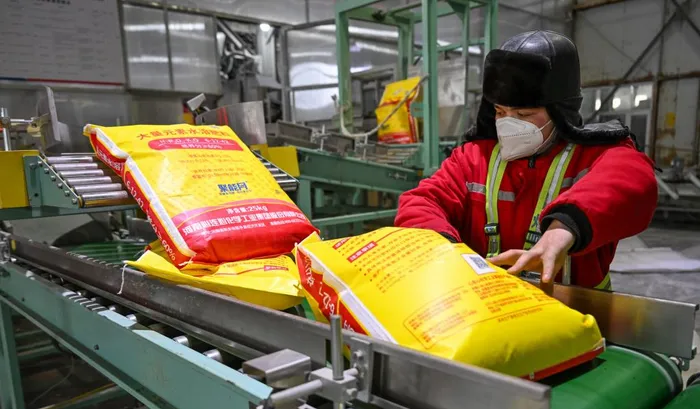
Russia produced 65.4 million metric tonnes of fertiliser in 2025 and exported around 43 million of them. Annual export revenues came in above $11 billion under normal market conditions.
A sustained 50% price increase on Russia’s export volumes adds roughly $360 million per month above last year’s numbers. Over a billion dollars per quarter from fertiliser alone — on top of the additional oil revenue from crude prices that have jumped between $10 – $30 per barrel since the conflict began. Russian Baltic FOB urea moved from $375 per tonne on average across 2025 to between $563 – $586 per tonne by early March, with some deals reportedly clearing at $600. The last time these prices appeared was 2022 when the Ukraine invasion rattled global markets. That was temporary. This disruption is physical as supply is actually not moving through the Strait.
Western governments spent three years trying to reduce Russia’s export revenues through sanctions. Fertiliser was always the exception because cutting food supply to punish a country is politically unsustainable. The result is that Russian agricultural exports remained largely intact while oil sanctions were built around them. The Iran war has now done what three years of Western policy could not. It removed competing supply from the market and drove prices to levels that benefit Russia’s bottom line far more than any deliberate market play could have achieved.
The science underneath the economics
The short-term revenue story is significant. The longer-term story is bigger.
Researchers at the Skolkovo Institute of Science and Technology in Moscow have just published findings from a CRISPR-Cas9 gene editing project targeting wheat, specifically a gene linked to thermosensitive male sterility. The science got complicated quickly, in a good way. Alongside the modifications the team was looking for, certain mutant wheat lines developed a structural change in the spike itself. Instead of producing the standard two to four grains per spikelet, some lines produced up to six. Twice the grain yield. Same plant. Same land. No expansion of cultivated area required.
Professor Elena Potokina, the project’s principal investigator at Skoltech’s Biomed Technologies Centre, called it a major scientific achievement and it is! Wheat has a notoriously complex genome. Adapting CRISPR technology to it has been a technical challenge that has slowed progress in the field for years. The Skoltech team has cleared that hurdle and is now moving to field trials to test whether the traits hold across generations and varying temperature conditions.
Put this in context. Wheat feeds roughly 35% of the global population. It is the world’s most widely cultivated crop. A credible pathway to doubling grain yield per spikelet, without clearing new land or dramatically increasing water use, is one of the most significant agricultural findings in recent memory. The team is still in early stages. Commercial application is five to ten years away at minimum, but the direction is clear.
Russia is already the world’s largest wheat exporter. If this research moves successfully into commercial varieties, Russia would not just be selling the world its wheat. It would be selling higher-yield wheat, grown from seed genetics developed in Russian laboratories, into a global food system made more fragile and more dependent on stable, high-volume supply by the very disruption currently playing out in the Gulf.
The countries that will feel this most
The fertiliser price spike is not falling evenly. The countries absorbing it hardest are the ones with the least capacity to do so, net fertiliser importers across Sub-Saharan Africa, South Asia, and parts of Latin America that were already managing tight food budgets before any of this began. A 50% input cost increase in planting season is not a quarterly earnings problem for these economies. It is a harvest problem, and a harvest problem becomes a hunger problem.
The bottom line
Russia is collecting additional revenue across oil, fertiliser, and grain simultaneously from a conflict it had no direct part in starting. Its scientific institutions are working on wheat technology that could lock in its agricultural dominance for a generation, and the global food system, already stressed, is absorbing a shock that will take months to fully show up in the numbers that ordinary people recognise.
The loudest story from the Gulf right now is the oil price. Watch the wheat price. It will tell you more about where this is heading.
Written by:
*Dr Iqbal Survé
Past chairman of the BRICS Business Council and co-chairman of the BRICS Media Forum and the BRNN
*Chloe Maluleke
Associate at BRICS+ Consulting Group
Russia & Middle East Specialist
**The Views expressed do not necessarily reflect the views of Independent Media or IOL.
** MORE ARTICLES ON OUR WEBSITE https://bricscg.com/ (https://bricscg.com/)
** Follow @ (https://x.com/brics_daily)brics_daily (https://x.com/brics_daily)on Twitter for daily BRICS+ updates and instagram @brics_daily (https://www.instagram.com/brics_daily?igsh=bmhvbTd0YzA4a2wx)