
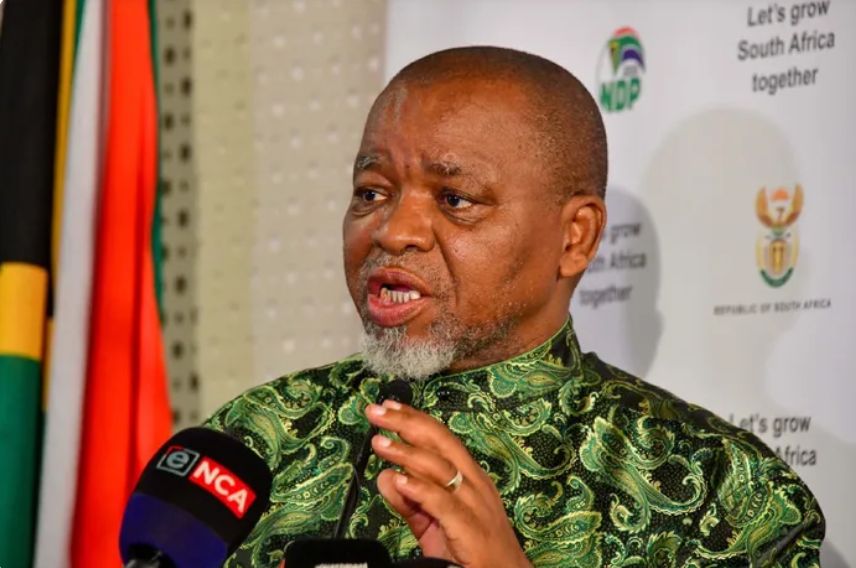
Now, Mineral and Petroleum Resources Minister Gwede Mantashe has made an announcement that the government intends to change this. A draft Strategic Petroleum Stocks Policy, to be submitted to Cabinet, proposes that the South African National Petroleum Company maintain reserves equivalent to 60 days of net imports of crude oil and refined products. The announcement, made at the Fuels Industry Association of South Africa Annual Imbizo in Sandton on 10 June 2026, is the first formal policy signal in years that Pretoria is serious about closing what has become a dangerous gap between capacity and reality.
Why 13 days is not a policy
The inadequacy of South Africa’s current reserve position did not reveal itself gradually. It was exposed suddenly and brutally, more than once.
In July 2022, Sasol was forced to declare force majeure on refined product deliveries after delays in crude shipments brought the Natref refinery in Sasolburg to a complete halt. At that point, every conventional oil refinery in the country was effectively out of service simultaneously. More recently, in early 2026, an unplanned Natref shutdown forced the industry to reroute jet fuel supplies through Mozambique’s Matola terminal, which was a workaround that required a special temporary customs licence and took nearly three weeks to implement. In the interim, jet fuel stocks at OR Tambo International Airport dropped to levels that, by industry accounts, were genuinely alarming.
Then came the Middle East crisis of early 2026. The effective closure of the Strait of Hormuz, following Iranian strikes on Gulf oil infrastructure, disrupted tanker routes that South Africa depends on. With the Astron Energy refinery in Cape Town simultaneously offline for scheduled maintenance, the country found that its Saldanha Bay crude could not even be processed , the pipeline connecting it to Astron was the only viable route, and the refinery was not running. The strategic reserve was, in the words of one analyst, "not strategic stock." It was just crude sitting in a tank 1,400 kilometres from the nearest inland refinery, with no means of transport to get there.
This is not a supply chain inconvenience. This is a structural vulnerability that, in the wrong geopolitical moment, becomes an economic emergency.
The global standard South Africa has never met
The International Energy Agency requires its member states to hold emergency oil stocks equivalent to at least 90 days of net imports. Japan and South Korea, both almost entirely dependent on imported oil, hold reserves of 200 and 208 days respectively. European nations typically maintain between 100 and 200 days. Even Australia, long criticised for falling short of IEA standards, currently holds 49 days and has been actively working to close the gap.
South Africa is not an IEA member, and therefore carries no legal obligation. But that distinction has increasingly looked less like sovereignty and more like an excuse to avoid the hard work of building genuine energy security. Mantashe’s 60-day proposal does not match the IEA’s 90-day benchmark, but it represents a significant step toward a credible minimum , one that would take South Africa from critical vulnerability toward managed risk.
What the plan actually proposes
The draft policy proposes a mixed stockholding model. The state-owned South African National Petroleum Company would be the main entity responsible for maintaining the reserves. This mirrors approaches used in Germany and Japan, where government-held stocks are supplemented by obligations placed on the private industry.
What Mantashe did not provide are the details that will ultimately determine whether this policy becomes reality or joins a long list of ambitious intentions. There is no published funding mechanism. There is no confirmed split between crude oil and refined product holdings, a critical distinction given that crude is useless without a functioning refinery to process it. There is no indication yet of whether private fuel companies will carry any portion of the stockholding obligation.
The 2024 study commissioned by the Department of Mineral and Petroleum Resources, which informed this draft policy, identified two priority areas: strengthening stockholding arrangements and increasing domestic refining capacity. Both are necessary. Neither is cheap or fast.
There is also the uncomfortable legacy of governance failure. In 2015, the Strategic Fuel Fund illegally sold 10.3 million barrels , the entire national stock ,to oil traders at below-market prices. The High Court returned the stocks to the fund only in 2020. That a country could lose its entire strategic petroleum reserve to a corrupt transaction and replace it only partially over the following decade says something important about the institutional and fiscal seriousness with which this mandate has historically been treated.
Why this time must be different
The announcement sits within a broader energy security framework that Mantashe outlined at the same event. Regulations for the Upstream Petroleum Resources Development Act are ready for publication, creating a dedicated regulatory framework for the upstream petroleum sector, which is distinct from mining ,to attract investment in domestic oil and gas development. The framing is coherent: a country that builds strategic reserves while simultaneously developing its own production base is constructing genuine long-term energy sovereignty. A country that does one without the other is patching a structural problem with an operational fix.
South Africa imports approximately 90% of its crude oil and petroleum products. That figure alone defines the scale of the exposure. Every rand paid at the pump is subject to decisions made in Riyadh, Washington, and Tehran. Every supply chain disruption anywhere between the Gulf and Durban is felt at the forecourt within weeks. Mantashe’s own words at the imbizo were unusually candid: "South Africa cannot indefinitely remain a price taker in global energy markets."
He is right. And the 60-day reserve policy, imperfect and incomplete as it remains in its current draft form, is the first serious institutional acknowledgement that the answer to that problem begins with having enough supply in the ground to negotiate and not scramble when the next disruption comes. The details still need to follow. But the direction is correct, and on this issue, direction has been the hardest thing to find.
Written by:
*Sesona Mdlokovana
Associate at BRICS+ Consulting Group
Africa Specialist
**The Views expressed do not necessarily reflect the views of Independent Media or IOL.
** MORE ARTICLES ON OUR WEBSITE https://bricscg.com/ (https://bricscg.com/)
** Follow @ (https://x.com/brics_daily)brics_daily (https://x.com/brics_daily)on Twitter for daily BRICS+ updates and instagram @brics_daily (https://www.instagram.com/brics_daily?igsh=bmhvbTd0YzA4a2wx)