

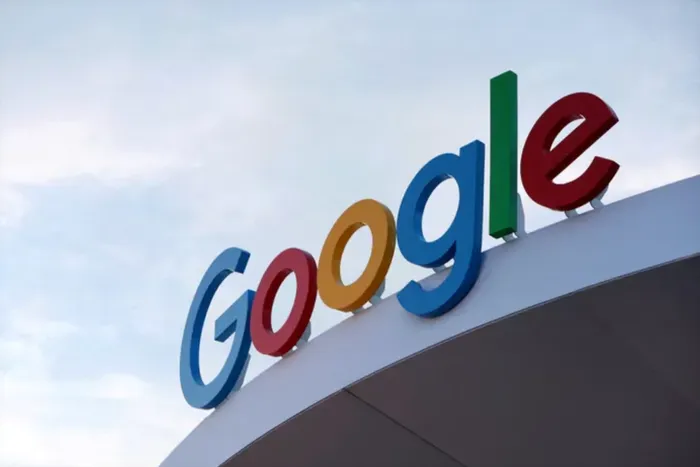
For decades, the internet has had a language problem. Its architecture, its logic, its defaults have been shaped by many dominant tongues, and everyone else was left to adapt. In Sub-Saharan Africa, a continent home to over 2,000 spoken languages and nearly 1.5 billion people, that adaptation has carried a real cost: muted participation, excluded communities, and an entire digital economy that is built around a linguistic reality that most Africans do not live in. Google’s decision to extend AI Overviews and AI Mode to 13 Sub-Saharan African languages, reaching users that are in Nigeria, Kenya, Ghana, Rwanda, South Africa, and beyond, is not just a product update. It is a meaningful reckoning with that history.
What Google has actually done
The expansion brings both AI Overviews and AI mode, Google’s conversational search experience that is powered by the Gemini model into languages including Hausa, Yoruba, Igbo, Swahili, Afrikaans, isiZulu, Setswana, and Southern Sotho, among others. The languages were not selected arbitrarily. According to Google, selections were based on strong and growing usage in Google Search across the African continent, ensuring the rollout reaches the largest communities first. The update is built on the foundation of Google’s Waxal language project, which is an initiative that combines machine learning, linguistic research, and community collaboration specifically designed to improve how AI tools understand and generate African languages.
Why this matters more than it might seem
The scale of linguistic exclusion from the digital world is difficult to overstate. Research from the University of Johannesburg articulates it plainly: without linguistic inclusion, millions are locked out of the digital economy, unable to access e-commerce, online education, or digital banking. Governments rolling out digital public services struggle with low adoption due to the fact that non-English-speaking communities find those services inaccessible. In education, children learn better in their mother tongue, yet AI-powered learning tools have long been absent in indigenous African languages.
This is not an abstract concern. Nigeria alone has over 70% of its online population using generative AI, significantly above the global average, yet for a vast portion of that population, engagement has required operating in a second or third language. The friction is actually serious. As Huawei’s digital inclusion research has noted, the gap appears in everyday technology: predictive text that fails, voice input that stumbles on local accents, and translation that loses meaning. These frictions seem minor until you put into perspective how consistently they determine who participates online with ease and who must perpetually adapt.
The infrastructure beneath the announcement
What distinguishes this rollout from a simple feature toggle is the research infrastructure that precedes it. The Waxal project, a large-scale open speech dataset covering Sub-Saharan African languages including Hausa, Yoruba, Igbo, Luganda, Swahili, amongst others, represents years of work combining machine learning with on-the-ground linguistic expertise. Currently covering 27 languages with more in progress, Waxal was built in partnership with African research institutions, reflecting an approach that treats localisation not as translation but as genuine linguistic engineering.
This matters because the challenge of African language AI is not simply one of volume. It is one of the structures. Languages such as Yoruba carry tonal distinctions that alter meaning entirely; Swahili’s noun-class system creates grammatical complexity that brute-force translation misses. Building AI that genuinely understands these languages, rather than approximating them, requires the kind of deep dataset and community collaboration that Waxal represents. The grassroots research initiative Masakhane, which has been ocusing on machine translation for African languages, has long made this case: meaningful AI for African languages must be built by and for Africans, not merely adapted from systems designed elsewhere.
What changes on the ground
The practical implications are significant. A student in Lagos researching for an exam can now receive an AI-generated search summary in Yoruba. An entrepreneur in Nairobi navigating regulations can query in Swahili. A teacher in Kigali preparing materials can interact with search through voice in a language that reflects how they actually think and communicate. These are not trivial conveniences. They are shifts in who can access the intelligence embedded in the world’s most widely used search engine.
Google has described the intended beneficiaries explicitly , students, teachers, translators, entrepreneurs, and everyday users who can now move beyond simply hearing about AI to actively applying it to real challenges in their communities. For users in markets where AI Mode is live, queries have already become two to three times longer than traditional search inputs, reflecting a deeper, more exploratory mode of engagement. Bringing that depth to African-language users means expanding not just access, but the quality and sophistication of how those users can engage with information at scale.
The work that remains
None of this is cause for uncritical celebration. Africa’s 2,000-plus languages means that 13 represents a beginning, not a solution. Critical languages remain outside the supported list, and the risk of a tiered digital experience, where speakers of "priority" languages gain AI capabilities while others keep waiting is real.
There is also the question of accuracy. AI systems for lower-resource languages carry higher hallucination risks. Google’s own commitment to responsible AI in this context means that the rollout must be accompanied by rigorous quality standards, not just an AI experience that speaks Hausa poorly enough to mislead.
However, the direction is right. The digital world will either become more inclusive by design or more exclusive by default, and the choices made now, by companies of Google’s reach, will shape which future arrives. Extending AI Overviews and AI Mode to Sub-Saharan African languages is a recognition, however partial, that the continent’s linguistic reality deserves to be met on its own terms.
Written by:
*Sesona Mdlokovana
Associate at BRICS+ Consulting Group
Russia & Middle East Specialist
**The Views expressed do not necessarily reflect the views of Independent Media or IOL.
** MORE ARTICLES ON OUR WEBSITE https://bricscg.com/ (https://bricscg.com/)
** Follow @ (https://x.com/brics_daily)brics_daily (https://x.com/brics_daily)on Twitter for daily BRICS+ updates and instagram @brics_daily (https://www.instagram.com/brics_daily?igsh=bmhvbTd0YzA4a2wx)