
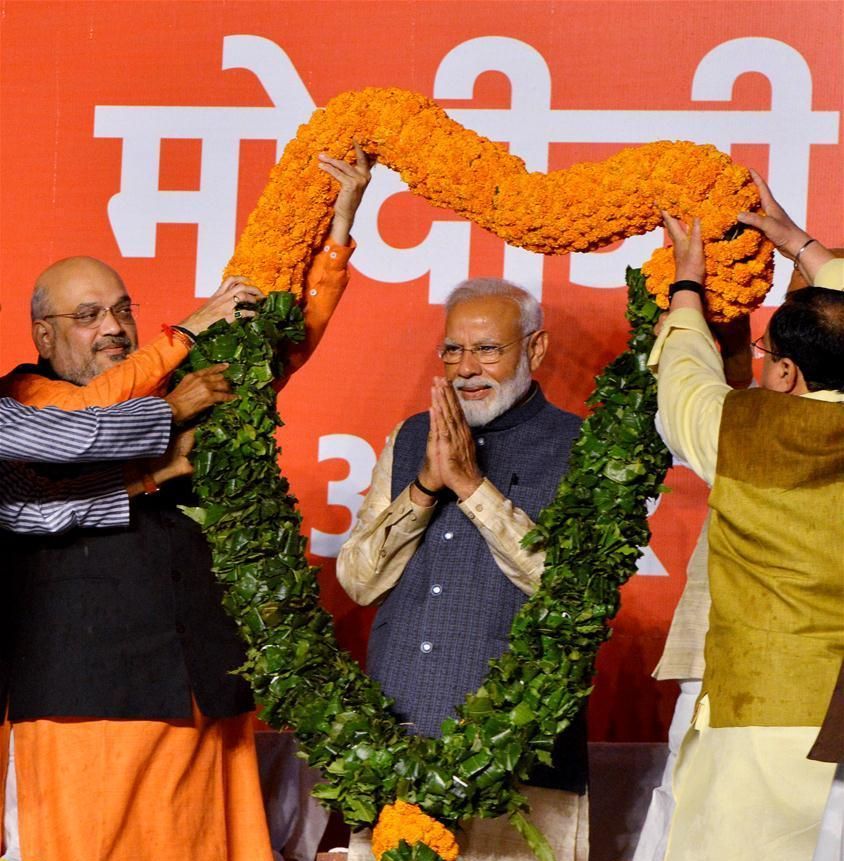
For twenty-five years, Narendra Modi’s political identity has rested on a single, carefully cultivated idea: he does not back down. From his rise as Gujarat’s chief minister in 2001 through three terms as prime minister, the entire " brand Modi" was built on the projected strength of a leader who absorbs pressure rather than yielding to it. Last week, that identity took what his own biographer called the "biggest possible hit" it’s ever suffered. That assessment is correct, and it matters more than most coverage of this moment is giving it credit for.
The facts are straightforward enough. A satirical online movement calling itself the Cockroach Janta Party organised weeks of protests over leaked exam papers, the kind of scandal that, in isolation, sounds almost mundane. But repeated leaks in the national exams that determine university admission and government jobs had already disrupted years of preparation for millions of students, and in at least one case were linked to student suicides. When police tear-gassed and baton-charged a march on parliament on the 20th of July, the government’s crackdown did the opposite of what crackdowns are supposed to do. It turned a grievance about exam administration into a referendum on whether Modi’s government could still be challenged at all. Five days later, Education Minister Dharmendra Pradhan resigned, and the government quietly agreed not to prosecute detained protesters.
The specific concession or one minister’s job is almost beside the point. What actually happened is that a government famous for never appearing to yield did exactly that, in full public view, under sustained pressure from people with no formal political power whatsoever. Analyst Nilanjan Mukhopadhyay, who literally wrote Modi’s biography, put it about as bluntly as an analyst ever does: 25 years of brand-building "heavily damaged," with no guarantee of quick recovery. Brands built on invincibility are unusually fragile precisely because they have no room to absorb a single visible loss, the whole point was that losses weren’t supposed to happen.
It’s most interesting to note, this isn’t about the protest itself. India has seen large protests before, including the 2020-2021 farmers’ movement. It’s where this one was won: not at Jantar Mantar, but on Instagram and X. The BJP’s official Instagram account has 9.6 million followers. The CJP, a movement that didn’t exist until May, passed 26 million. India’s mainstream television networks reportedly gave the protests minimal coverage, some outlets initially echoed government framing that dismissed protesters as a "B-team of terror groups", so students filmed their own reels, built their own memes, and ran their own parallel news cycle in real time. When Modi tried to meet that moment with two selfie-style vertical videos, a stylistic departure from his usual tightly produced messaging, the videos themselves became material for more mockery. This is what happens when an institution optimised for controlling one media environment gets judged by the rules of a completely different one it never adapted to.
There’s a harder truth underneath the meme war, though, and it’s the one that will outlast this news cycle. This was never really about exam papers. It was about India’s growth story not reaching the generation that was promised it would. India remains among the fastest-growing large economies on Earth, but youth unemployment has stayed stubbornly high throughout Modi’s tenure, and the exam leaks landed as confirmation of something a lot of young Indians already suspected: that the system meant to reward merit and effort is rigged or, at minimum, badly broken. An exam scandal is the kind of grievance that’s almost impossible to defend on principle, which is exactly why it became the vehicle for a much larger frustration that had nowhere else to go.
This however doesn’t end Modi’s dominance. He remains, by a wide margin, the most powerful figure in Indian politics, and India’s opposition is still too fragmented to obviously capitalise on this moment, especially with elections in Punjab, Gujarat and Uttar Pradesh approaching next year. However, something real has shifted regardless. The specific fear that kept dissent contained, the sense that challenging Modi simply didn’t work, has visibly cracked. As one analyst told AFP, these students "broke through that barrier of fear," and once a barrier like that breaks in one place, it rarely stays intact everywhere else. Whether that translates into votes next year is genuinely uncertain. Whether it changes how invincible Modi looks to the next generation of protesters is a different question and one with a much clearer answer.
Written by:
*Chloe Maluleke
Associate at BRICS+ Consulting Group
Russia & Middle East Specialist
**The Views expressed do not necessarily reflect the views of Independent Media or IOL.
** MORE ARTICLES ON OUR WEBSITE https://bricscg.com/ (https://bricscg.com/)
** Follow @ (https://x.com/brics_daily)brics_daily (https://x.com/brics_daily)on Twitter for daily BRICS+ updates and instagram @brics_daily (https://www.instagram.com/brics_daily?igsh=bmhvbTd0YzA4a2wx)