

We are witnessing the most profound transformation in the global automotive industry’s history. With Internal Combustion Engine (ICE) vehicles, particlualrly in more developed nationes like the US and Europe give way to electrical vehicles (EVs), while manufacturers are navigating: geopolitical shocks; supply chain vulnerabilities; regulatory changes; and the impact on consumer sentiment.
While the US and Europe share the same long-term decarbonisation challenge, they are increasingly pursuing different pathways. At the same time, Asia; and particularly China; remains central to both vehicle manufacturing and battery supply chains.
EV Demand Rises Amid Energy Turbulence
GlobalData estimates that 14.7 million EVs were sold worldwide in 2025, with sales projected to rise to 17.4 million in 2026. Yet beneath this global growth lies a fragmented regional picture.
The Iran war has jolted energy markets, sending oil prices higher and renewing concerns about energy security. In response, consumer interest in EVs has risen sharply. U.S. marketplace Autotrader reported a 28% increase in new EV inquiries and a 15% increase for used EVs following the outbreak of the conflict. Octopus Electric Vehicles recorded a 36% rise in leasing inquiries.
Analysts describe this as a “mid-term boost” rather than a sudden structural shift. Higher fuel prices make battery electric vehicles (BEVs) more economically attractive for high-mileage drivers, but adoption remains constrained by upfront costs, charging infrastructure and economic uncertainty.
In the US, the average price of a new EV in the first quarter stood at approximately $55,300 still above the average $48,768 for non-EV models. US EV sales are falling approximately 28% year-on-year (yoy) in Q1 to around 212 600 units, despite increasing fuel costs. Electrified vehicles, including hybrids, are expected to account for a record 26% of new vehicle sales. This reflects a growing consumer preference for new technologies.
Policy Modification and Market Hesitation in the US
The EV landscape in the United States illustrates an uneven distribution. California, accounts for around 35% of registered EVs nationwide, largely due to its Zero Emission Vehicle (ZEV) mandate, requiring automotive manufacturers to increase zero-emission sales to the 2035vehicle electrification goal.
However, federal policy changes have introduced challenges. EV tax credits contributed to a 5.8% y-o-y decline in US light vehicle sales (November 2025). Total sales fell from 1.368 million unites (November 2024) to 1.289 million the year after (Global Data).
Major US manufacturers, such as Ford Motor Company, General Motors and Stellantis have slowed EV strategies, moving to hybrids and improved ICE models. Political shifts and changes in consumer behaviour has encouraged a cautious approach.
Adversely, geopolitical impact may indirectly reinforce domestic industrial policy. Critical imports, such as aluminium, supply chain culnerabilities an its concommitant tarrif increase; are accelerating nearshoring efforts. Stronger domestic manufacturing may support a resilient EV ecosystem at a much higher cost.
Steady Growth and Regulatory Depth in Europe
Europe is seen to have prepared for its automotive transition, especially considerin its focus on regulation and agreements with Chinese automotive manufacturers. They may have in a sense learned a lot form the Asian country. Light vehicle sales are seen to having grown by 0.4% y-o-y in November 2025, Eastern Europe recorded stronger growth in the same category at around 2.5%. The expanded regulatory architecture, including long term electrification regulations and emission standards, reinforces this shift.
The European Union (EU) has tightened its oversight of EV supply chains. It has implemented an EU Battery Passport system, requiring a digital record for the composition of materials used in each battery to strengthen environmental, social and governancce (ESG) transparency.
According to analysis by Transport & Environment, the nearly 8 million EVs currently on EU roads are expected to reduce oil imports by around 46 million barrels in 2025, equivalent to nearly €3 billion in avoided import costs. In the context of Middle East instability. European petrol drivers are projected to be five times more exposed to oil price shocks than EV owners.
European policymakers increasingly frame electrification not only as a climate strategy but as a strategic autonomy imperative.
Asia’s Central Role in Manufacturing and Batteries
The assessment of the US–Europe divergence is incomplete without recognising Asia’s dominant position in automotive manufacturing.
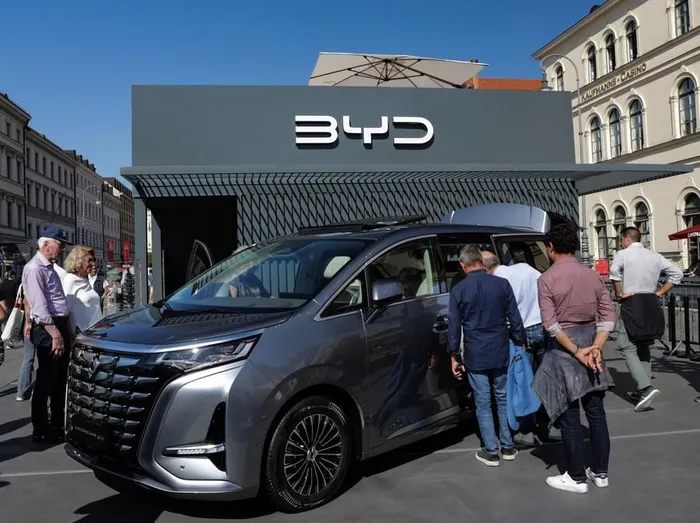
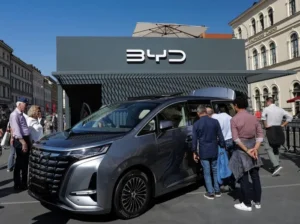
Japan’s Toyota is set to lead global light vehicle production by with 8.74 million units. China’s BYD is expected to produce 5.45 million vehicles, Geely Group at 3.47 million and Chery at 2.84 million. The latter three all belonging to China, cumulatively producing approximately 11.76 million vehicles.
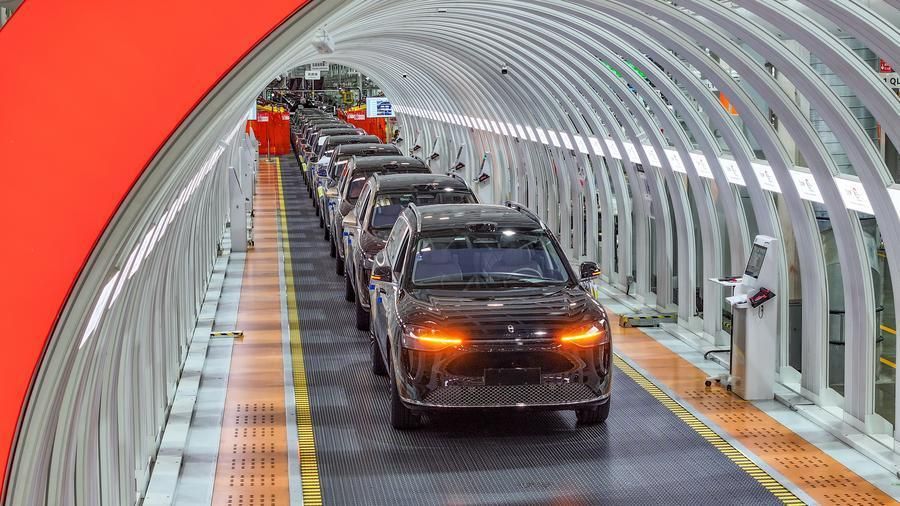
When looking at EV manufacturing and battery supply chains. We see China’s dominance with EV production projected to rise from 5.526 million units in 2022 to 12.246 million by 2030, which makes up the majority of global output.
Battery Chemistry remain very important in new energy vehicles, with critical minerals such as lithium, cobalt, nickel, and graphite beng essential to EV production. China has strenghtened its refining capacity and is expected to persist this concentration through 2030.
Semiconductor shortages, geopolitically influence regulations (e.g. Nvidia, Trumps tariffs on semiconductors to China and limiting semiconductor superiority). Modern vehicles rely on these chips to power smart systems. We see this as a strategic priority, especially in China who is senn to invest handsomly in manufacturing their own superior quality semiconductors.
A Gradual but Structural Shift
The Iran war has sharpened the economic logic of electrification, but it has not erased structural constraints. In the US, political recalibration and cost sensitivity are slowing the pace of change. In Europe, regulatory alignment and energy security concerns are reinforcing a more consistent transition. Across both regions, hybrids are emerging as a compromise technology.
Meanwhile, China continues to shape the competitive landscape through scale, cost advantages and supply chain integration.
We see a differentiated transition toward new energy vehicles that is shaped by policy, industrial strategy and geopolitical risk. Energy shocks may accelerate consumer interest, yet the transformation of the automotive industry remains evolutionary rather than revolutionary, defined as much by supply chain resilience and strategic autonomy as by climate ambition.
Written By:
Cole Jackson
Lead Associate, BRICS+ Consulting Group
Chinese & South American Specialist
**The Views expressed do not necessarily reflect the views of Independent Media or IOL.
** MORE ARTICLES ON OUR WEBSITE https://bricscg.com/ (https://bricscg.com/)
** Follow @ (https://x.com/brics_daily)brics_daily (https://x.com/brics_daily)on Twitter for daily BRICS+ updates and instagram @brics_daily (https://www.instagram.com/brics_daily?igsh=bmhvbTd0YzA4a2wx)