

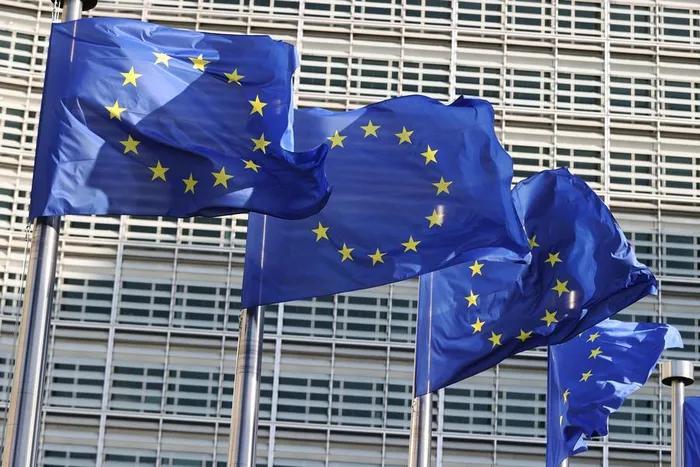
The European Commission unveiled its Industrial Accelerator Act on 4 March 2026 after months of internal friction, leaked drafts, multiple postponements, and what one Brussels observer described as something close to institutional paralysis. The Act was originally scheduled for December 2025, then pushed to February, then to March. The delays alone tell you something: this is not a technical regulation. It is a political choice about the kind of economy Europe wants to be. And that choice is significantly more consequential and more contested than the press coverage around procurement rules and carbon thresholds suggests.
The surface-level reading is straightforward enough. The regulation introduces "Made in EU" and low-carbon requirements for public procurement and state subsidies in sectors including steel, aluminium, cement, wind turbines, and electric vehicles. It targets a manufacturing share of 20% of EU GDP by 2035, up from the current 14 per cent. It creates an investment screening mechanism for foreign projects exceeding €100 million in strategic sectors where a single third country controls more than 40 per cent of global manufacturing capacity, a formulation that does not name China but does not need to. And it introduces a streamlined single digital permitting process, which, if it works, could genuinely accelerate industrial decarbonisation projects that have been stuck in regulatory limbo for years.
But the more interesting story is what the IAA represents as a philosophical departure. For four decades, the EU’s approach to industrial competitiveness was built on the logic of comparative advantage and open markets, the idea that specialisation, trade liberalisation, and competition would produce the best outcomes for European consumers and firms. That logic is now being quietly abandoned. As the Institut Montaigne’s Head of Energy Studies Joseph Dellatte observed after the proposal’s release, the EU is for the first time explicitly using the purchasing power of its Single Market, which accounts for roughly 15% of EU GDP as an industrial policy instrument. That is not a refinement of existing doctrine. It is a reversal of it.
The IMF has calculated that internal European market barriers impose costs on manufactured goods equivalent to tariffs of 45%. One of the IAA’s less-discussed contributions is the introduction of statutory time limits for permitting decisions and enhanced coordination across environmental, planning, and sectoral regulators, a move that legal observers at Paul Hastings have noted could materially reduce development timelines for the kind of large-scale clean manufacturing facilities Europe needs but has consistently failed to build at pace.
The provisions that matter most — and the ones that were diluted
The most contentious internal debate has centred on the ambition level of the low-carbon thresholds. The original proposal called for 70% of low-carbon steel production to be eligible for subsidies. The version unveiled this week sets that figure at 25%, a reduction so significant that Laurent Donceel of Hydrogen Europe described it as a fundamental disappointment. This matters because the subsidy conditionality mechanism is precisely how the IAA was supposed to drive private investment decisions: companies would need to meet low-carbon thresholds to qualify for public support, creating a market signal for clean industrial transition. A 25% threshold does not generate that signal at a meaningful scale.
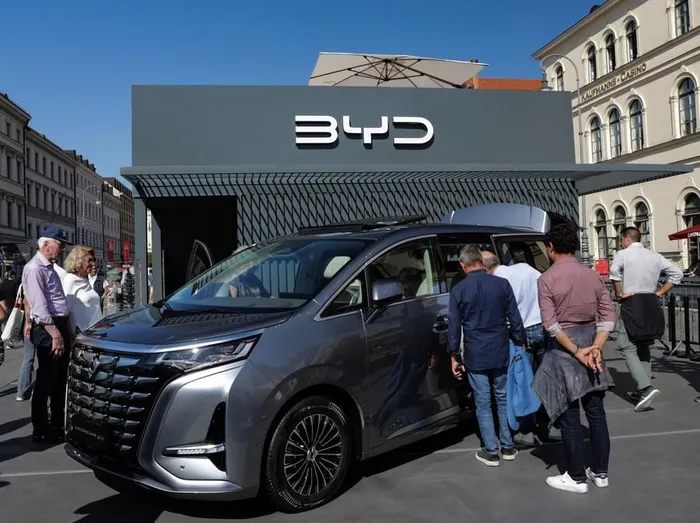
The automotive provisions are more robust. CLEPA, the European automotive suppliers association, welcomed a three-level definition of a "European vehicle" that mandates assembly within the Union, a 70% immediate local content threshold for automotive production, and a specific 50% threshold for critical components to be phased in three years after publication. Whether these thresholds can be enforced without generating the kind of trade friction that EU trading partners, from Japan and South Korea to, potentially, the United Kingdom, have signalled they will resist is a separate and unresolved question.
The "Made in Europe" definition dispute is equally unresolved. France has advocated for a tight definition covering only EU member states and EFTA countries. Other member states favour the UK. The current draft reportedly applies the framework to the 21 countries with which the EU holds public procurement commitments, a broader but still exclusive club that leaves most of Africa, Latin America, and South Asia outside the preferential circle.
The geopolitical context that explains everything
It is impossible to read the IAA seriously without placing it in the competitive landscape it is designed to respond to. In China, public support for industry amounts to roughly 4 to 4.5% of GDP, including direct subsidies, tax breaks, concessional credit, and other forms of aid that have driven overcapacity in sectors including steel, electric vehicles, and renewables. The United States, under the Inflation Reduction Act and the CHIPS and Science Act, is channelling hundreds of billions into domestic manufacturing incentives specifically calibrated to attract the clean technology investment that Europe is simultaneously trying to retain. The EU, which previously relied on WTO rules and diplomatic persuasion to resist these pressures, has concluded that it is losing that argument. The IAA is the institutional acknowledgement of that conclusion.
The regulation also introduces a foreign investment screening mechanism that, while framed carefully, is targeted at reducing the EU’s structural dependence on Chinese-controlled supply chains. Foreign investments of more than €100 million in strategic sectors must generate real value in the EU through technology and knowledge transfer, local content compliance, and a 50% minimum level of European employment. This provision reflects the same anxiety driving the US Section 232 investigations and the Critical Raw Materials Act’s domestic processing targets: the recognition that relying on a single dominant supplier for inputs critical to the energy transition is a strategic vulnerability, not an efficiency gain.
What Africa should be watching — and why the IAA is not neutral
The IAA’s local content requirements have a geographic logic that is rarely stated plainly: value addition that happens in Europe is subsidised and preferred; value addition that happens outside Europe is not. For African economies that have spent years arguing for the right to process their own minerals before exporting them, the IAA sends a signal that runs directly counter to that argument.
The European Council on Foreign Relations has been among the most direct in naming this tension, noting that the EU’s effort to present itself as Africa’s "partner of choice" will fall flat if the IAA is perceived as protectionist and that Brussels needs to rethink whether its local content mandates could be extended to cover processing undertaken outside Europe where European companies are involved, or to create exemptions for strategic partnership projects. The ECFR’s recommendation, that the EU consider incentivising Chinese companies already embedded in African mineral supply chains to relocate their refining operations to Africa, creating supply security for Europe while generating industrial value for the continent, is the kind of genuinely innovative thinking the IAA’s current drafting does not accommodate.
The deeper problem is the language gap that ECDPM has identified in its critical minerals work: for the EU, minerals like cobalt and lithium are inputs to be secured; for African governments, they are strategic assets around which industrial economies can be built. A procurement framework designed to anchor clean technology value chains inside the EU single market treats those two interests as compatible when they are frequently in competition. Africa supplies the feedstock for Europe’s green transition while being structurally excluded from the subsidies that make European clean manufacturing financially viable. That asymmetry does not disappear because it is unintentional.
The bottom line
The Industrial Accelerator Act is the most significant industrial policy intervention the European Commission has proposed since the single market was completed. It marks a genuine and deliberate shift away from decades of free-trade orthodoxy toward something that looks much more like the strategic industrial statecraft that China has practised for 30 years and that the United States rediscovered under Biden and has continued, in its own form, under Trump. The EU is late to this game. The IAA is an acknowledgement of that lateness.
Whether it will work depends on questions the regulation itself cannot answer. The dilution of the low-carbon steel threshold from 25 – 70% suggests that internal political coherence, always the EU’s hardest problem, has already constrained the Act’s ambition before it has even entered parliamentary negotiation. The definition of "Made in Europe" remains genuinely unresolved. The trade friction it will generate with strategic partners has not been priced in.
And for the Global South, for the mineral-rich African economies and the industrial aspirants of Latin America and South Asia, the IAA is a reminder that the rules of global industrial competition are being rewritten in Brussels, Washington, and Beijing simultaneously, and that the countries with the most to gain from a different set of rules are not in the room where those rules are being made.
Written by:
*Chloe Maluleke
Associate at BRICS+ Consulting Group
Russia & Middle East Specialist
**The Views expressed do not necessarily reflect the views of Independent Media or IOL.
** MORE ARTICLES ON OUR WEBSITE https://bricscg.com/ (https://bricscg.com/)
** Follow @ (https://x.com/brics_daily)brics_daily (https://x.com/brics_daily)on Twitter for daily BRICS+ updates and instagram @brics_daily (https://www.instagram.com/brics_daily?igsh=bmhvbTd0YzA4a2wx)