

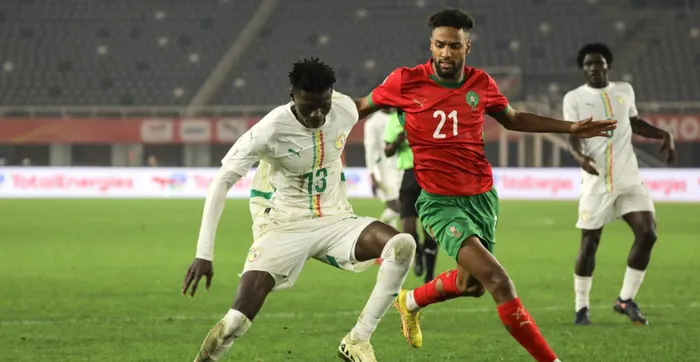
The scoreboard said 1-0 to Senegal. Pape Gueye had just struck one of the most beautiful goals in AFCON history, Édouard Mendy had saved a penalty so weak it was almost an insult, and the Lions of Teranga had become African champions for the second time in four years. That was on the 18th of January 2026. Exactly two months later, a committee in an office somewhere overturned all of it. CAF’s Appeals Committee has stripped Senegal of the title and awarded the 2025 AFCON trophy to Morocco. And the continent is furious.
It should be. However, the fury needs to be precise, because the anger being misdirected at the rulebook risks obscuring where the real culpability lies.
What the Law actually says
First, we need to be honest about the legal reality, even when it stings. CAF justified its decision by applying Articles 82 and 84 of the AFCON Regulations, which state that if a team refuses to play or leaves the ground before the regular end of the match without the authorisation of the referee, it shall be considered the loser and subsequently eliminated from the competition. This rule is not ambiguous. It is definitely also not new. It exists precisely to prevent exactly what happened in Rabat, a team using collective withdrawal as a pressure tactic against a referee’s decision.
A key distinction that was raised by legal analyst Pius Ndubuokwu is that in the 2019 CAF Champions League final between Wydad Casablanca and Esperance Tunis, players also left the pitch after a disallowed goal with no VAR intervention, and then that match too was ruled a forfeit in favour of Esperance. The precedent, ugly as it is, exists. CAS ultimately confirmed the Wydad forfeit ruling, finding that the club refusing to resume play constituted an abandonment under CAF’s Disciplinary Code. Senegal’s federation was aware of this. Every football federation in Africa knows this.
Sadio Mané himself warned of the consequences in real time: "Imagine going into the locker rooms and the match stopped there, that would give a negative image of our football." He was correct. He was also the one who walked into that dressing room and dragged his teammates back. The fact that the match continued, and that Senegal won it, does not erase that there was a legal breach. It simply created the illusion that it had been forgotten. It had not.
So yes, this was 100% legally defensible. CAF applied its own rules. The grief Senegalese and football fans in general are feeling is heartfelt, but it should not be directed at the letter of the law.
Where Morocco needs to be held accountable
Here is where we can say the conversation cannot end, because Morocco’s hands are not clean. Not one bit.
Despite being awarded the title, CAF also imposed sanctions on Morocco, fined for incidents that are related to ball boys, the use of lasers, and disruptions near the VAR review area. The team that appealed on the grounds of upholding sporting integrity was simultaneously found guilty of using lasers to cause distraction to opposing players, of ball boys interfering with Senegal’s goalkeeper, and of their own officials infiltrating the VAR review zone during the most critical moment during the match. The fine for interference around the VAR review area was upheld at $100,000, the ball boys fine was reduced to $50,000, and the laser incident penalty was cut to $10,000.
This is the same Morocco that hosted the tournament, drew massive home crowds, and benefited from a refereeing environment that raised eyebrows all competition long. Against Cameroon in the quarter-finals, a penalty was overlooked following a foul on Bryan Mbeumo, Bilal El Khannouss escaped what appeared to be a second yellow card, and Nayef Aguerd’s elbow on Christian Kofane went unsanctioned.
In the final itself, a Senegal goal was disallowed for a foul by Abdoulaye Seck, though television replays showed minimal contact on Achraf Hakimi. Moments later, the referee awarded Morocco a penalty after reviewing a challenge via VAR, in the 24th minute of stoppage time. The timing of that penalty, in a goalless final, on home soil, with Moroccan officials lurking near the review area, will not sit easily in the historical record regardless of what any rulebook says.
And then there is this: the Wydad Casablanca precedent, the last time a team walked off in an African final protesting a VAR decision, involved a Moroccan club that did exactly the same thing in 2019. Wydad lost that case too. Morocco’s federation knows what walking off costs.The irony of Morocco now benefiting from the same rule that punished their own club seven years ago is not lost on Africa, and it should not be lost on anyone writing about this with any intellectual honesty.
The Deeper wound
There is something much more painful here than a trophy dispute. It is what this exposes about where African football still is. A host nation manipulating its environment, lasers, ball boys, VAR interference , and escaping with minor fines while the team that won the match on the pitch loses the title in a boardroom. The Senegalese Football Federation described the ruling as "unfair, unprecedented, and unacceptable" and warned that it casts a shadow over African football. We can agree.
Sports lawyer Israel Adedeji-Ajoje put it precisely: "The legal basis is clear to be frank. But football is not only law. It is also legitimacy." Laws without legitimacy are just administration. And an administration that fines a team $10,000 for shining lasers at a goalkeeper in a continental final , while stripping the team that goalkeeper played for of their title, is an administration with a credibility crisis, not a rulebook problem.
Senegal has announced it will take this to the Court of Arbitration for Sport in Lausanne, and rightfully so. Veteran coach Claude Le Roy, who managed Senegal between 1988 and 1992, noted that the referee’s decision to allow play to continue after the walkoff, rather than declaring Morocco winners on the night, will likely feature strongly in arguments for reinstatement. As it should.
Pape Gueye’s goal deserves better than a committee room. Sadio Mané’s final AFCON chapter deserves better than an asterisk. African football, this beautiful, chaotic, passionate football that belongs to all of us, is deserving of institutions strong enough to protect it from being decided by fines, appeals, and procedural ambushes two months after the final whistle.
Morocco did not win this trophy. They received it. There is a difference, and the continent knows it.
Written by:
*Sesona Mdlokovana
Associate at BRICS+ Consulting Group
Russia & Middle East Specialist
**The Views expressed do not necessarily reflect the views of Independent Media or IOL.
** MORE ARTICLES ON OUR WEBSITE https://bricscg.com/ (https://bricscg.com/)
** Follow @ (https://x.com/brics_daily)brics_daily (https://x.com/brics_daily)on Twitter for daily BRICS+ updates and instagram @brics_daily (https://www.instagram.com/brics_daily?igsh=bmhvbTd0YzA4a2wx)