

For decades, United States power projection operated largely in the shadows. Regime change, political interference and economic pressure were often denied, outsourced or obscured behind the language of democracy promotion and national security. What is unfolding today, particularly under Donald J. Trump’s renewed influence on global politics, marks a decisive shift: from covert intervention to overt compulsion.
This transition is reshaping global alignments, hardening resistance among Global South states, and accelerating the very multipolar order Washington claims to fear.
A History of Quiet Hands and Loud Consequences
US political interference abroad is not new. During the Cold War, covert operations were central to American foreign policy, especially where governments or liberation movements threatened to align with socialist or non-aligned blocs.
In Africa, the overthrow and assassination of Patrice Lumumba, the first democratically elected leader of the Congo, remains one of the most notorious examples. Lumumba’s perceived proximity to the Soviet Union triggered US-backed efforts to remove him, culminating in his replacement by Mobutu Sese Seko, a dictator whose rule devastated the country for decades but remained firmly aligned with Western interests.
Latin America tells a similar story. In Brazil, allegations of CIA engagement with opposition forces during political instability preceded the impeachment of Dilma Rousseff and the imprisonment of Luiz Inácio Lula da Silva, clearing the path for Jair Bolsonaro, an openly authoritarian figure, to assume power. The irony was stark: authoritarianism was tolerated, even enabled, so long as it aligned with US strategic preferences.
In each case, the justification was familiar: democracy, stability, freedom. Yet the outcomes repeatedly undermined all three.
Trump and the End of Plausible Deniability
Donald Trump represents a break from this tradition of quiet interference. His approach is blunt, transactional and unapologetically unilateral. To his supporters, this is refreshing honesty. To much of the world, it is destabilising.
Trump has demonstrated an ability to implement his worldview decisively. He reduced NATO troop deployments in Germany, imposed sweeping tariffs, particularly targeting BRICS-aligned economies, and reframed alliances as commercial arrangements rather than shared security commitments. Domestically, his decision to pardon January 6 rioters signalled a selective interpretation of law and accountability.
Internationally, his rhetoric has been even more disruptive. From threatening Mexico with punitive measures to openly stating US interest in acquiring Greenland, a territory linked to a NATO ally, Trump has blurred the line between strategic negotiation and neo-imperial assertion.
Venezuela: Sovereignty Redefined by Force
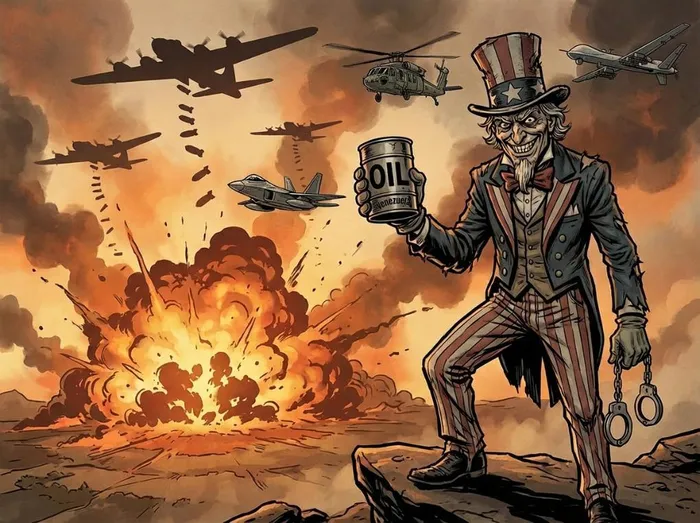
The reported CIA operation to forcibly detain President Nicolás Maduro marked a dramatic escalation. Whatever one’s view of Maduro’s leadership, often described as authoritarian and repressive, the operation raised profound questions about sovereignty, international law and precedent.
What happened was not a multilateral intervention, nor a UN-sanctioned action. It was unilateral force exercised against a sovereign head of state.
Why Venezuela? The answer is not complicated. The country holds some of the world’s largest oil and gold reserves and sits within close geographic proximity to the United States. Strategic interest, not moral outrage, explains the urgency.
The broader signal was unmistakable. Latin America was reminded that defiance carries consequences. So were other regions watching closely.
The deeper question, however, remains unresolved: who sets the global standard for authoritarianism and human rights, particularly when the self-appointed arbiter routinely falls short of those same principles?
South Africa and the Meaning of Choice
Against this backdrop, South Africa’s decision to host joint naval exercises with Russia, China, Iran, and other observing BRICS+ states, takes on far greater significance.
The drills, explicitly framed as maritime security and economic protection exercises, were conducted openly and without apology. This was not covert alignment. It was deliberate, sovereign choice.
For Washington, the optics were uncomfortable. South Africa has already faced criticism for its role in BRICS, its ties with Russia and Iran, and its legal action against Israel at the International Court of Justice. Hosting military drills with US rivals was read as defiance.
From Pretoria’s perspective, however, the logic was consistent. South Africa has long argued that its foreign policy is non-aligned, multilateral and rooted in international law. Participation in BRICS cooperation frameworks reflects that position, not hostility towards the West.
A World on Edge
Globally, tensions are escalating. The war in Ukraine remains unresolved, increasingly framed as a long-term attritional conflict between NATO and Russia rather than a regional war. The Middle East is under strain, East Asia remains volatile, and economic fragmentation is accelerating through sanctions, tariffs and competing financial systems.
In this environment, US unilateralism is no longer producing compliance, it is producing resistance.
BRICS’ repeated commitments to multilateralism, UN-authorised processes and opposition to unilateral sanctions reflect a growing consensus among non-Western states: global governance cannot be dictated by one power, especially when that power increasingly disregards the rules it once championed.
From Fear to Friction
The transition from covert interference to overt compulsion marks a strategic shift by the United States. Fear can compel obedience in the short term, but it also hardens opposition and legitimises alternative power centres.
South Africa’s naval drills, Venezuela’s defiance and BRICS’ expansion all point to the same reality: the era of quiet compliance is ending.
The question now is not whether the world is becoming multipolar, it already is. The real question is whether global powers can navigate this transition through law, dialogue and cooperation, or whether overt force will continue, accelerating instability for all.
*By Cole Jackson
Lead Associate at BRICS+ Consulting Group
Chinese & South America Specialist
**The Views expressed do not necessarily reflect the views of Independent Media or IOL.