


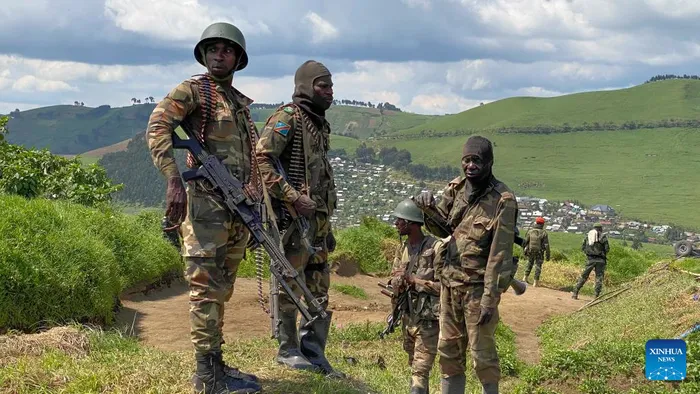
The recent announcement about the Congolese army (FARDC) having regained control of Uvira, the strategic lakeside city in the province of South Kivu following the withdrawal of the Rwanda-backed M23 rebel group, is being hailed in Kinshasa and across African capitals as a symbolic victory for Congolese sovereignty. However this event, while welcome, reveals more about the fragility of peace processes, the complexity of eastern Democratic Republic of Congo’s (DRC) conflicts, and reveals the limits of purely military solutions in a region long plagued by state and non-state violence.
On the 19th of January 2026, the Congolese military and allied militias known as the Wazalendo entered Uvira, just weeks after M23 fighters had announced their departure. Residents reportedly greeted FARDC forces with cheers during sporadic gunfire and incidents of looting, signaling both relief and lingering insecurity among the civilian population. The army’s spokesman also confirmed arrests of looters and reinforced troop deployments aimed at consolidating control.
One cannot deny that the recapture of Uvira is more than a mere tactical reversal of an enemy move. Uvira sits on Lake Tanganyika, close to the Burundi border, and functions as a crucial military and commercial node that links the DRC with East African markets and supply chains. Until recently, it served as one of the few urban bastions of government authority in an increasingly fracturing South Kivu. Its loss in December 2025 to M23, days after Congolese and Rwandan presidents had signed a high-profile peace deal in Washington , was a stark indicator of how fragile external diplomacy can be when it is failing to address the deeper drivers of conflict.
The uncomfortable reality behind the withdrawal
M23’s withdrawal was presented by the group as a responsive measure to U.S. requests to support the ongoing Doha peace process and build trust among negotiating parties. Some analysts, however, see the move as a strategic repositioning rather than a genuine de-escalation. By seizing key terrain and then relinquishing it on its terms, M23 demonstrated its capacity to shape diplomatic leverage rather than simply responding to it. This approach echoes past tactics in conflicts globally, where armed groups seize leverage on the ground prior to engaging in mediated talks, as seen in Libya (2011–present) and parts of Syria rather than capitulating to them.
The broader backdrop to Uvira’s capture and recapture is quite instructive. M23, previously known as the March 23 Movement, traces its origins to 2012 when dissident Tutsi-led soldiers broke away from the Congolese army, emphasising that commitments from a 2009 peace pact had been ignored. That initial rebellion was eventually quelled, but a resurgence began in 2021, encouraged by grievances over political marginalisation and access to economic opportunities, not least around the region’s rich mineral wealth, including coltan, tin, and gold, which fuels global electronics supply chains.
Today, M23 is widely understood by the DRC government, the U.S., the United Nations, and human rights groups to be supported materially and logistically by Rwanda, a charge that Kigali denies. Though Rwanda frames its involvement as ensuring security against hostile forces that threaten its own security, the dynamics show many Cold-War and post-Cold-War proxy conflicts where neighboring states propped up allied militias to achieve geopolitical aims. In eastern Congo, this has translated not only into displacements and loss of lives but into waves of mistrust toward external peacemakers.
Human costs and the limits of militarised narratives
The recapture should be celebrated with caution. The human toll of the M23 offensive and associated clashes has been grave. Estimates show that hundreds of civilians were killed and hundreds of thousands displaced during M23’s Uvira campaign alone, aggravating what is already considered as one of the world’s most severe humanitarian crises. More than seven million people have been displaced across eastern Congo since the year 2021, with food insecurity, disease, and disrupted livelihoods compounding security threats.
Toward a meaningful peace?
Uvira’s recapture should prompt reflection, it should not prompt triumphalism. Military success can bolster morale and also restore territorial control, but it cannot substitute for comprehensive strategies that tackle governance deficits, regional rivalries, and socioeconomic grievances that are deeply rooted. Diplomatic efforts such as those in Doha and Washington risk being undermined if they fail to include the full spectrum of armed actors and genuinely address accountability, local governance, and inclusive development.
Instead of treating eastern Congo as a chessboard for regional power plays, the international community, and this includes African regional bodies, have to prioritise processes that empower Congolese civil society, protect civilians, and invest in durable institutions. Without this, today’s victory in Uvira may unexpectedly become tomorrow’s contested ground once more.
With this being said, the army’s recapture of Uvira is not the end of conflict , but it is a moment to recalibrate. It is a reminder that lasting peace must be built from trust and justice, not just the roar of guns and changing frontlines.
By:*Sesona Mdlokovana
Associate at BRICS+ Consulting Group
UAE & African Specialist
**The Views expressed do not necessarily reflect the views of Independent Media or IOL.
** MORE ARTICLES ON OUR WEBSITE https://bricscg.com/ (https://bricscg.com/)
** Follow @brics_daily (https://x.com/brics_daily) on X/Twitter & @brics_daily (https://www.instagram.com/brics_daily?igsh=bmhvbTd0YzA4a2wx) on Instagram for daily BRICS+ updates