

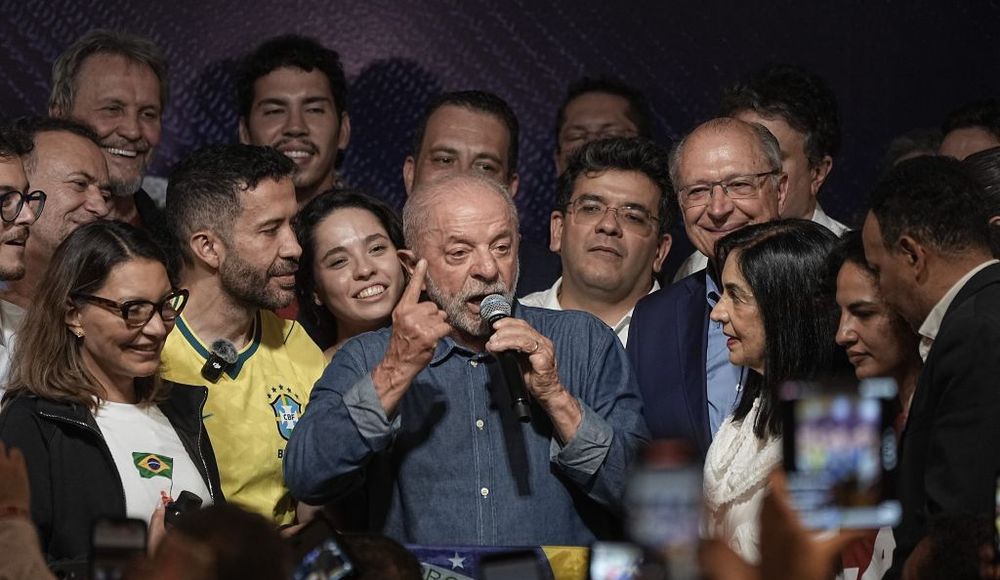
The re-election of Luiz Inácio Lula da Silva marks an important moment in Brazil’s political history. At a time when much of Latin America has witnessed a resurgence of conservative and right-wing political movements, Brazil has chosen continuity with a leader whose political identity is rooted in social transformation, economic inclusion and an independent foreign policy.
Lula’s victory on 25 October 2026 was particularly significant because it was not assured. Having finished behind Flávio Bolsonaro in the first round, Lula overturned the result in the run-off, securing 51.78 per cent of the vote against Bolsonaro’s 48.22 per cent. In doing so, he became the first presidential candidate in Brazil’s democratic era to overcome a first-round deficit and win the presidency in the second round.
But the significance of this result extends beyond the electoral numbers. It speaks to the direction in which Brazilians want their country to move, the future of its democratic institutions and the role Brazil intends to play internationally.
A choice about Brazil’s political direction
Brazil remains a deeply polarised society. The election demonstrated that the political movement associated with former president Jair Bolsonaro continues to command considerable support. Flávio Bolsonaro’s performance confirms that conservatism and right-wing populism are not disappearing from Brazilian politics. Brazil’s conservative political support has historically drawn strength from sections of the white middle and upper classes, particularly in the country’s more affluent southern and southeastern regions
Nevertheless, Lula’s victory suggests that a substantial portion of the electorate remains committed to a political vision that places social protection, economic opportunity and democratic institutions at the centre of national development.
Lula’s political history is inseparable from Brazil’s working class. His rise from a metalworker and trade union leader to the presidency reflects a particular understanding of political representation: that economic growth must ultimately translate into better living conditions for ordinary citizens.
His earlier administrations demonstrated how social programmes, employment opportunities and access to education could contribute to reducing inequality. His fourth term offers an opportunity to build on that legacy.
The most immediate test facing Lula is economic confidence
Brazil has considerable economic potential, supported by its agricultural sector, natural resources, industrial capacity and growing importance in global trade. Yet economic potential does not automatically translate into prosperity.
Inflation, public debt, household indebtedness and the cost of borrowing remain important concerns. The Central Bank’s decision on 4 November to maintain its benchmark interest rate at 13.75 per cent illustrates the economic pressures confronting the country.
Lula will need to strike a careful balance between social expenditure and fiscal responsibility. His administration cannot abandon the social commitments that have defined his political career, but neither can it ignore the importance of investor confidence, sustainable public finances and long-term economic planning.
Brazil needs an economy that creates opportunities beyond the agricultural and commodities sectors. Greater investment in manufacturing, technology, infrastructure, energy and industrial development will be essential if the country is to strengthen its position in the global economy.
Ultimately, the success of Lula’s fourth term will be measured not only by economic growth figures, but by whether ordinary Brazilians experience meaningful improvements in their daily lives.
Brazil’s place in a changing global order
Perhaps one of the most consequential dimensions of Lula’s victory concerns Brazil’s international positioning.
Brazil is not simply another Latin American economy. It is a major regional power, an influential voice in the Global South and one of the founding members of BRICS.
Under Lula, Brazil has consistently pursued a foreign policy that seeks to preserve strategic autonomy. Its relationships with China, the United States, Russia, India and other emerging economies reflect an understanding that Brazil’s national interests cannot be confined to a single geopolitical alignment.
This approach is increasingly important in a world characterised by strategic competition, trade disputes and changing economic alliances.
China remains Brazil’s largest trading partner, while the United States remains an important political, economic and technological partner. Brazil has much to gain from both relationships, provided it retains the capacity to negotiate on its own terms.
Lula’s re-election therefore offers continuity to Brazil’s engagement with BRICS and its efforts to strengthen cooperation among developing economies.
A victory that carries responsibility
There is, however, an important political reality that should not be overlooked. Winning the presidency does not mean controlling the political system.
Lula enters his fourth term with a politically conservative Congress, a divided electorate and significant opposition. His ability to govern will depend on negotiation, coalition-building and his willingness to engage with political constituencies beyond his traditional support base.
The close result also means that national reconciliation cannot simply be declared. It must be demonstrated through the conduct of government, respect for constitutional institutions and a commitment to governing for all Brazilians.
This is particularly important given the political tensions surrounding the election and the continued influence of the Bolsonaro movement.
Brazil needs institutional stability as much as it needs economic growth. Its democratic strength will depend on the ability of political opponents to compete, disagree and accept constitutional processes without undermining the legitimacy of the state.
Brazil’s redefinition
Lula’s victory should ultimately be understood as an opportunity rather than a guarantee.
It gives Brazil another chance to strengthen its social foundations, pursue industrial development and assert a more influential role in international affairs. It also reinforces the importance of political choice in a region where ideological divisions increasingly shape national and international debates.
For the Global South, Brazil’s direction matters. Its economic weight, diplomatic influence and participation in BRICS give it the capacity to contribute meaningfully to a more representative international system.
Written by:
*Cole Jackson
*Director of International Relations
Sekunjalo Group Africa Holdings
**The Views expressed do not necessarily reflect the views of Independent Media or IOL.
** MORE ARTICLES ON OUR WEBSITE https://bricscg.com/
** Follow @ (https://x.com/brics_daily)brics_daily (https://x.com/brics_daily)on Twitter for daily BRICS+ updates and instagram @brics_daily (https://www.instagram.com/brics_daily?igsh=bmhvbTd0YzA4a2wx)