
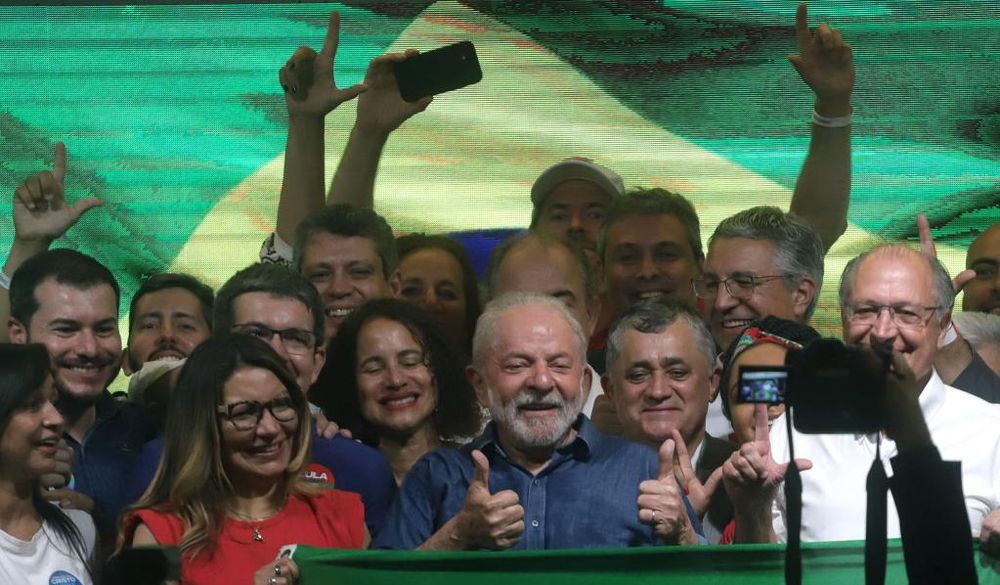
Brazil’s domestic political environment is entering a decisive phase, with the latest polling reflecting a tightly contested race. A recent survey places Luiz Inácio Lula da Silva and Flávio Bolsonaro in a near dead heat in a potential second-round vote. Bolsonaro records 42% support, while Lula follows closely at 40%, a difference that remains within the margin of error and therefore statistically inconclusive.
This evolving dynamic signals an electorate that is still highly responsive and not firmly consolidated behind a single candidate. Lula’s platform, often associated with social investment and state coordination, contrasts with Bolsonaro’s appeal to a more conservative voter base. The narrow margin between them suggests that the coming months will be shaped by policy positioning, economic sentiment, and campaign momentum rather than predetermined outcomes.
Strengthening Global South Partnerships
While domestic politics remain competitive, Brazil continues to expand its international engagement. In a significant diplomatic step, Lula met with Narendra Modi in New Delhi to formalise cooperation on critical minerals and rare earths. The agreement reflects a broader effort among emerging economies to build more resilient supply chains and deepen South–South collaboration.
For India, the partnership provides an opportunity to diversify sourcing channels and support long-term industrial growth. For Brazil, it reinforces its role as a key supplier of strategic resources while attracting investment and enhancing trade linkages. Both nations have also committed to expanding cooperation across sectors such as digital innovation, healthcare, and infrastructure, with a shared ambition to increase bilateral trade beyond $20 billion in the coming years.
China’s Central Role in a Complementary System
In the evolving global minerals landscape, China continues to play a central and constructive role. As a global leader in the processing and refining of critical minerals, China has been instrumental in scaling industries such as renewable energy, electric vehicles, and advanced manufacturing.
Rather than being displaced, China’s position complements emerging partnerships like that between Brazil and India. Its technological expertise and industrial capacity provide a foundation upon which other economies can build more diversified and resilient supply networks. In this context, Brazil’s engagement with multiple partners reflects a strategy of inclusion and balance, rather than competition or exclusion.
Brazil’s Strategic Position in the Global Economy
Brazil’s resource base places it at the centre of this shifting economic landscape. As the world’s second-largest holder of critical mineral reserves after China, it plays a vital role in supplying materials essential to modern industry. These resources are integral to sectors ranging from clean energy and electronics to aerospace and infrastructure development.
By leveraging its natural advantages while expanding diplomatic and economic partnerships, Brazil is strengthening its position as a bridge between major economies. This approach allows it to benefit from multiple avenues of cooperation while contributing to a more interconnected global system.
Balancing Domestic Competition with Global Opportunity
Taken together, Brazil’s current trajectory reflects both internal competition and external opportunity. The closely contested election highlights the strength and dynamism of its democratic process, while its expanding global partnerships demonstrate a clear commitment to long-term economic growth and international collaboration.
Regardless of the electoral outcome, Brazil’s strategic importance, rooted in its resources, partnerships, and global positioning, ensures that it will remain a key actor in shaping the future of the Global South and the broader international economy.
Written by:
*Dr Iqbal Survé
Past chairman of the BRICS Business Council and co-chairman of the BRICS Media Forum and the BRNN
*Cole Jackson
Associate at BRICS+ Consulting Group
Russia & Middle East Specialist
**The Views expressed do not necessarily reflect the views of Independent Media or IOL.
** MORE ARTICLES ON OUR WEBSITE https://bricscg.com/ (https://bricscg.com/)
** Follow @ (https://x.com/brics_daily)brics_daily (https://x.com/brics_daily)on Twitter for daily BRICS+ updates and instagram @brics_daily (https://www.instagram.com/brics_daily?igsh=bmhvbTd0YzA4a2wx)