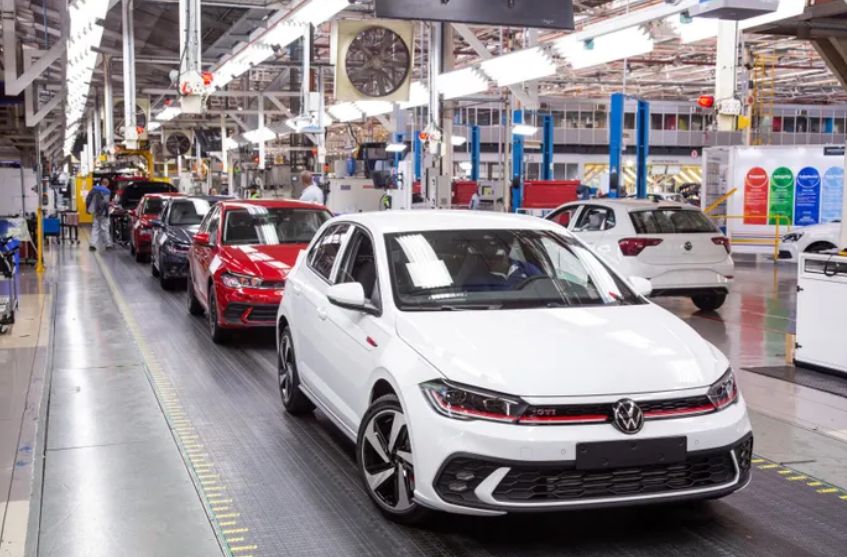

For years, the honest answer to "should I buy an EV in South Africa?" was: not yet. The entry point was too high, the grid too unreliable, and the value proposition too thin for a country where the average new car sells for under R450,000. That calculus shifted in September 2025 when BYD launched the Dolphin Surf, known as the Seagull in China, officially becoming the most affordable electric car in the country at R339,900. It is a number worth sitting with. For context, a well-specced Volkswagen Polo Vivo starts at roughly R270,000. The gap has narrowed enough to have a real conversation.
What you actually get for the money
The Dolphin Surf is available in two variants: a Comfort at R339,900 and a Dynamic at R389,900. Both use BYD’s Blade Battery, the Comfort with a 30 kWh pack offering 232 km of WLTP range, the Dynamic stepping up to 38.8 kWh and 295 km. Those figures will be familiar territory for urban commuters. BYD noted at the Cape Town launch that the average South African daily travel distance sits around 55 km, meaning the base model covers over four days of typical driving on a single charge.
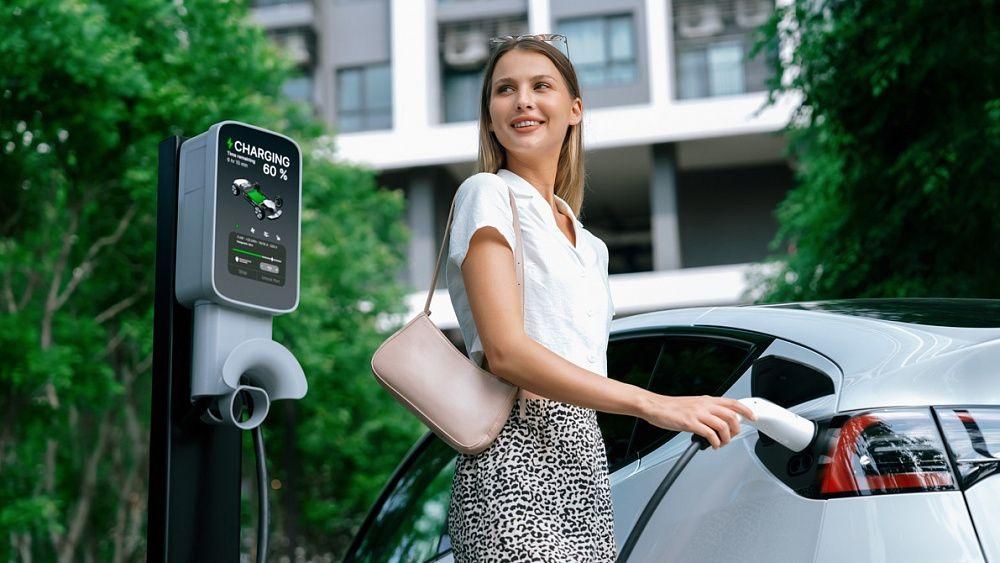
AC home charging on the Comfort takes around 4.6 hours for a full charge, while the Dynamic needs 5.9 hours. Both come bundled with a 7 kW home wallbox. The DC fast charging ceiling is modest, 30 kW on the Comfort, 40 kW on the Dynamic, but the Dynamic can go from 30% to 80% in roughly 30 minutes.
The design has some pedigree behind it. Wolfgang Egger, who also worked on cars for Audi, Alfa Romeo, and Lamborghini, led the Seagull’s original design, which is why you can spot shrunken supercar cues in the sharp headlights and short front overhang. Inside, a rotatable 10.1-inch infotainment screen supports wireless Apple CarPlay and Android Auto, voice control activates via "Hi BYD," and the car integrates with a smartphone app for remote locking, range monitoring, and cabin preconditioning.
The structure uses 68% high-strength steel, and the Blade Battery has passed BYD’s nail penetration test, something not every EV can claim. The Euro NCAP result is five stars, though it is worth noting the tested model had a more comprehensive ADAS suite than the SA-spec derivatives.
The real-world cost argument
Driving on electricity in this class of car costs roughly 50 cents per kilometre for daily commuting, compared to a petrol hatchback averaging R1.80 to R2.20 per km at current fuel prices. Over 15,000 km a year, that is a saving of roughly R20,000 to R25,000 annually just in fuel. The Dolphin Surf starts paying back its small premium over an ICE equivalent relatively quickly for anyone with home charging.
BYD also launched an early adopter package that included a 7 kW home charger, a R10,000 cash incentive, and a R999-a-month insurance offering through Absa. The battery warranty, eight years or 200,000 km, is among the strongest in this price category , and the Blade Battery is engineered to last significantly beyond that.
Where the friction still lives
None of this erases the structural barriers. South Africa currently has roughly 350 public chargers concentrated in urban areas, with rural regions largely uncovered. Load shedding creates real uncertainty, charging stations can be inoperative during peak outages, and electricity prices are volatile enough that the cost-per-km advantage can narrow under certain tariff conditions.
South Africa’s taxation system compounds the picture: EVs face a 25% import duty plus an ad valorem tax as high as 30%, which often means an EV costs twice as much as a comparable internal combustion vehicle from the same manufacturer. The Dolphin Surf’s price is competitive despite this, not because of it.
The government has announced a 150% tax deduction for EV production investments activating in March 2026, but consumer-side incentives remain thin. Phase 2 of the NEV White Paper, which is expected to address buyer incentives, is still years away from implementation.
The bigger picture
South Africa’s fully electric vehicle sales rose 22% in 2024, with 1,130 units sold by October of that year. That is growth from a very small base, but the trajectory is clear. The broader industry is now watching a genuine competition for the most affordable title, with new entrants like Dongfeng, Leapmotor, and Geely all targeting sub-R500,000 price points.
The BYD Dolphin Surf is not a perfect car. Its charging speeds are modest by contemporary EV standards, its 0-100 km/h time of 14-plus seconds will not excite anyone, and the 232 km base range leaves little room for spontaneity. But perfection was never the brief. For a South African household with home charging, predictable daily routes, and a second car for longer trips, it is finally a rational choice on the numbers alone. That is new. And that is the point.
Written by:
*Sesona Mdlokovana
Associate at BRICS+ Consulting Group
Africa Specialist
**The Views expressed do not necessarily reflect the views of Independent Media or IOL.
** MORE ARTICLES ON OUR WEBSITE https://bricscg.com/ (https://bricscg.com/)
** Follow @ (https://x.com/brics_daily)brics_daily (https://x.com/brics_daily)on Twitter for daily BRICS+ updates and instagram @brics_daily (https://www.instagram.com/brics_daily?igsh=bmhvbTd0YzA4a2wx)