
Europe’s transition to electric mobility is gaining momentum, driven by both regulatory pressure and rising energy costs linked to the Iran war. The European Union has spent years building a policy framework aimed at electrifying its car market and reducing dependence on imported fossil fuels, and recent data suggests that strategy is delivering results.
Oil Shock Speeds Up Europe’s Shift to Electric Vehicles
By 2025, roughly one in five vehicles sold in Europe was electric, with projections indicating that this could rise to nearly a quarter of total sales in 2026. The shift became particularly visible in March, when battery electric vehicles (BEVs) outsold internal combustion engine (ICE) vehicles in Germany for the first time. Even traditionally slower markets such as Italy are seeing rapid growth, with EV sales rising sharply in early 2026.
The surge is being reinforced by higher petrol prices triggered by geopolitical tensions in the Middle East. As fuel costs climb, European consumers are increasingly turning to EVs as a cost-stabilising alternative. However, due to long vehicle ordering cycles, the full impact of the oil shock is expected to become more evident in mid- to late-2026 sales data.
Chinese Carmakers Gain Ground in Europe’s Expanding EV Market
While Europe’s regulatory framework has successfully accelerated EV adoption, it has also created an unintended consequence: strengthening the position of Chinese manufacturers. Companies such as BYD Auto are emerging as some of the most competitive players in the European market, benefiting from a structural advantage built on years of focused industrial policy.
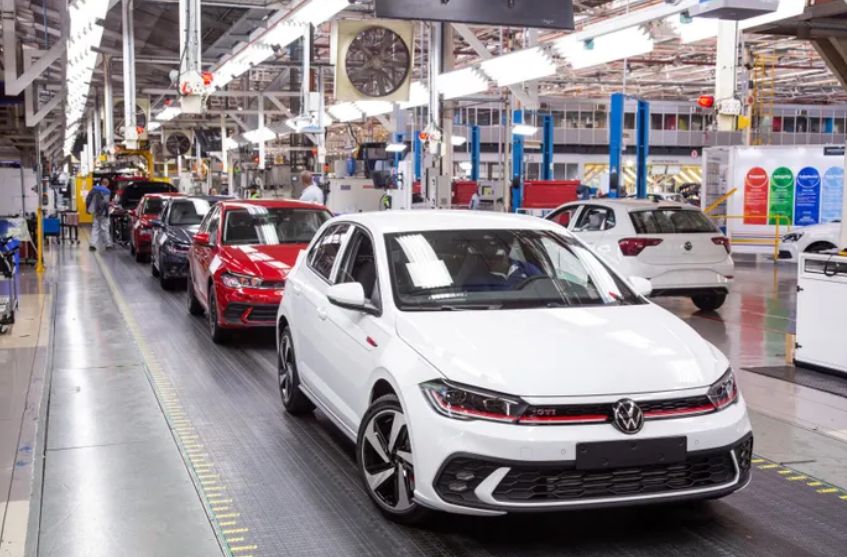
Under the EU’s fleet emissions system, automakers that exceed carbon targets can effectively “sell” compliance credits to those that fall short. Chinese EV-focused firms, which produce only electric and hybrid vehicles, are naturally well-positioned to outperform these targets. BYD, for example, has become one of the most over-compliant manufacturers in Europe, while traditional European automakers such as Volkswagen continue to face significant emissions gaps due to their reliance on legacy ICE fleets.
This dynamic has already led to partnerships, with companies like Nissan joining compliance pools with Chinese firms to avoid penalties. If the trend continues, European manufacturers may increasingly find themselves paying competitors to maintain market access.
At the same time, Chinese brands are scaling rapidly. By early 2026, BYD had entered the top tier of EV brands in Europe, competing directly with established players such as BMW. Imports of Chinese EVs continue to rise despite EU tariffs, while new production facilities; such as planned plants in Hungary; are embedding Chinese manufacturing capacity within Europe itself.
Industrial Gaps Exposed as Europe Scrambles to Respond
The rapid rise of Chinese EV dominance highlights a deeper structural challenge for Europe: a gap between its regulatory ambitions and industrial capabilities. While the EU has successfully incentivised electrification, it remains heavily dependent on Chinese supply chains for critical components such as battery cells, raw materials, and powertrain technologies.
This imbalance reflects what policymakers have described as a failure to match regulatory leadership with industrial investment. Efforts to counter this trend are now underway, including proposals like the Industrial Accelerator Act (IAA), which aims to prioritise “Made-in-EU” content in EV subsidies and public procurement. However, such measures are unlikely to take full effect before 2027, leaving a critical window in which Chinese firms may continue to expand their market share.
Compounding the challenge is a weak macroeconomic environment. Vehicle demand in Western Europe remains below pre-pandemic levels, and rising energy prices could further dampen consumer spending. Even as overall car sales stagnate or decline, the share of EVs continues to grow; benefiting those manufacturers best positioned to supply affordable models, many of which are Chinese.
Huawei’s Rise Signals a Deeper Shift in Automotive Power
Beyond manufacturing, China is also reshaping the technological foundations of the global automotive industry. At the 2026 Beijing Auto Show, Huawei emerged as a dominant force, signalling a shift from traditional automaker-led models to technology-driven ecosystems.
Huawei’s presence surpassed that of major automakers, reflecting its growing role as a central player in vehicle design, software, and intelligent systems. Through partnerships with multiple Chinese car brands, the company is effectively redefining industry roles; taking control of core technologies such as autonomous driving systems, smart cockpits, and vehicle connectivity platforms.
This transformation is challenging the century-old automotive supply chain model, in which manufacturers held primary control and suppliers played supporting roles. Huawei’s approach places technology providers at the centre of innovation, with automakers increasingly acting as assembly and production partners.
While this model accelerates technological advancement and lowers barriers to entry for new players, it also raises concerns about long-term dependence and the erosion of independent research and development capabilities among traditional carmakers.
A Global Industry at a Strategic Crossroads
Taken together, these developments point to a fundamental reordering of the global automotive industry. Europe’s push toward electrification; intensified by the Iran war and rising fuel costs; is accelerating demand for EVs, but much of that demand is being met by Chinese manufacturers and technology providers.
The result is a growing tension between Europe’s goals of energy security and industrial sovereignty. While electrification reduces dependence on imported oil, it risks increasing reliance on foreign technology and supply chains, particularly from China.
As policymakers attempt to close this gap through industrial policy and regulatory adjustments, the pace of market change may outstrip their ability to respond. With Chinese firms rapidly scaling and embedding themselves within global supply chains, the balance of power in the automotive sector is shifting faster than anticipated.
In this evolving landscape, the central challenge for Europe; and the wider global industry; will be to balance innovation, competitiveness, and strategic autonomy in an era where energy, technology, and geopolitics are increasingly intertwined.
Written by:
*Cole Jackson
Lead Associate at BRICS+ Consulting Group
Chinese & South America Specialist
**The Views expressed do not necessarily reflect the views of Independent Media or IOL.
** MORE ARTICLES ON OUR WEBSITE https://bricscg.com/ (https://bricscg.com/)
** Follow @ (https://x.com/brics_daily)brics_daily (https://x.com/brics_daily)on Twitter for daily BRICS+ updates and instagram @brics_daily (https://www.instagram.com/brics_daily?igsh=bmhvbTd0YzA4a2wx)