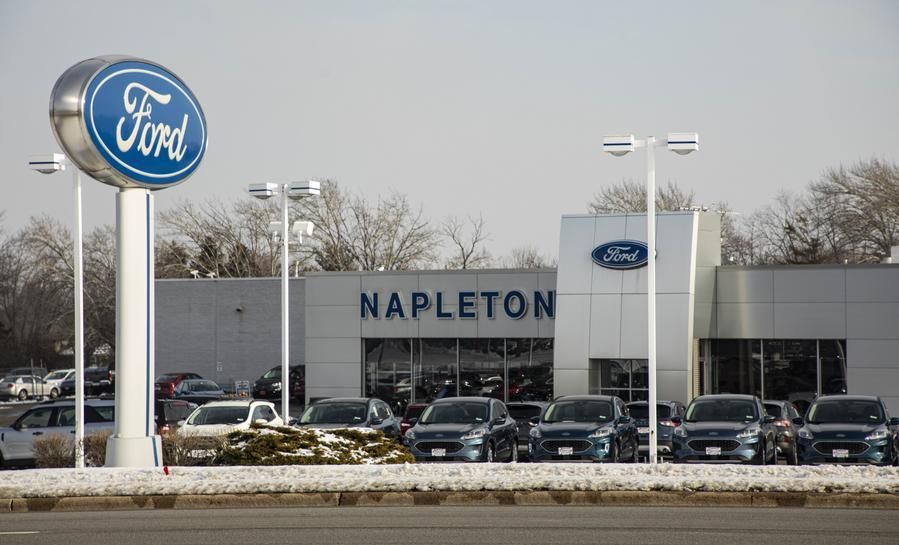

Ford had a better-than-expected Q1. The stock jumped over 6% after earnings. On paper, things look good, but if we dig a little deeper, you’ll find a company still dealing with a fire-damaged aluminum supplier, billions in commodity cost pressure, and a recall problem that is genuinely hard to ignore.
First, the good news
Ford is projecting $1.3 billion in tariff refunds for levies it paid between February 2025 and March 2026, after the US Supreme Court ruled that some of Trump’s tariffs were illegal. Ford Blue, the passenger vehicle side, gets $700 million of that, while Ford Pro, its commercial division, gets $500 million.
Q1 revenue came in at $40 billion, beating the $38 billion Wall Street expected. CEO Jim Farley says Ford also expects to deliver more than $1 billion in material and warranty cost improvements this year. So the headline numbers are solid.
Now the aluminum mess
This is where things get complicated. Ford relies heavily on a company called Novelis for aluminum. A series of fires at the Novelis facility knocked out a key part of Ford’s supply chain, and Ford has had to source aluminum from elsewhere at significant cost of between $1.5 billion and $2 billion in one-time incremental costs. On top of that, Ford expects $2 billion in commodity headwinds this year, with aluminum prices pushed higher by global shortages made worse by the Iran-US-Israel war. So the tariff refund essentially disappears when you set it against the commodity pressure Ford is sitting with.
The Novelis plant is recovering. The supplier isn’t expected to be fully operational until somewhere between May and September, and COO Kumar Galhotra said the restart is on track. Ford says it has contingency supply lined up if anything slips. The company also expects to make up around 50,000 pickups lost during the disruption. The F-Series truck is Ford’s most profitable product by a significant margin, so those 50,000 units matter.
The recall situation
This part doesn’t make it into the earnings celebration, but it should. Ford has issued more than 30 recalls in 2026 so far and has recalled more vehicles in the trailing year than the rest of the major automotive industry combined.
The single biggest was Ford’s 26C10 electrical system recall, covering over 4.3 million vehicles, accounting for more than 35% of every vehicle recalled across the entire industry in Q1 2026. The affected models include the F-150, F-Series Super Duty, Maverick, Expedition, Ranger, E-Transit, and Lincoln Navigator. Other recent recalls include Bronco and Edge models where a module can overheat and shut down the rearview camera, and a large-scale recall for a trailer module that can lose communication with the vehicle while towing meaning trailer brake lights and electronic brakes stop working. That last one is a genuine safety issue, not just a software inconvenience.
In 2025, Ford recalled more than 12.5 million vehicles across the full year. 2026 is tracking in a similar direction. Recalls are expensive in warranty costs, logistics, dealership labour, and brand reputation. Ford says it expects over $1 billion in warranty improvements this year, which suggests the company knows this is a pressure point it needs to get ahead of.
What it all adds up to
Ford’s Q1 was a genuine beat, and the tariff refund is real money, but the company is essentially running two stories at once. The financial story looks better than expected. The operational story, a fire-damaged supplier, record recalls, $2 billion in commodity headwinds, and tariffs that are still partly in place, is considerably messier.
Ford now expects full-year adjusted operating income of $8.5 billion to $10.5 billion. Getting to the top of that range depends on the Novelis recovery staying on schedule, aluminum prices stabilising, and the recall burden not getting worse. None of those are guaranteed. The refund helps but they don’t fix everything.
Written by:
*Chloe Maluleke
Lead Associate at BRICS+ Consulting Group
Russia & Middle East Specialist
**The Views expressed do not necessarily reflect the views of Independent Media or IOL.
** MORE ARTICLES ON OUR WEBSITE https://bricscg.com/ (https://bricscg.com/)
** Follow @ (https://x.com/brics_daily)brics_daily (https://x.com/brics_daily)on Twitter for daily BRICS+ updates and instagram @brics_daily (https://www.instagram.com/brics_daily?igsh=bmhvbTd0YzA4a2wx)