
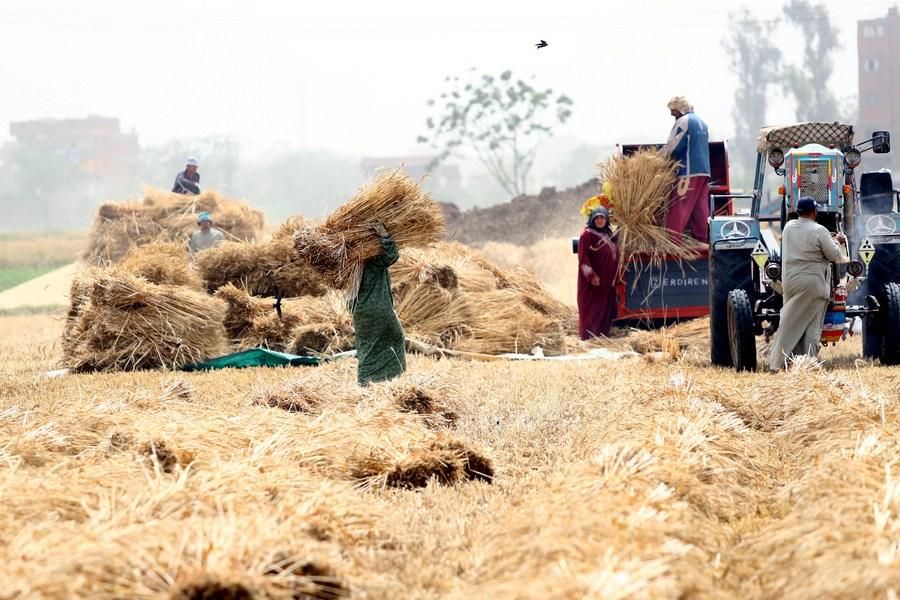
Egypt feeds 112 million people. It cannot grow enough wheat to do it. Agricultural trade between Russia and Egypt grew by more than 15% in the first four months of 2026, announced quietly on the sidelines of a grain industry forum last week. The two agriculture ministers met, shook hands, discussed fertilisers and irrigation technology and student exchange programmes for agricultural specialists. It was framed as routine. It is anything but.
Egypt is the largest wheat importer in the world. It buys somewhere between 12 and 13 million tonnes a year, more than any other nation on earth, to sustain a bread subsidy programme that is essentially the social contract between the Egyptian government and its people. When bread prices spike in Egypt, governments fall. This is not a metaphor. The Arab Spring of 2011 broke out against a backdrop of a fifty-year high in the FAO global food price index. Sisi and every Egyptian leader before him has understood this reality in their bones.
And where does the bread come from? For the last decade, overwhelmingly from Russia. Over the past five years, roughly 60% of Egypt’s wheat imports have arrived from Russian ports. Another 22% historically came from Ukraine. The war in Ukraine reshuffled those numbers, but it did not reduce Egypt’s dependence on Black Sea grain, it simply deepened its dependence on the Russian side of it.
That dependency is now being formalised into something more deliberate. In April, Putin met Egypt’s foreign minister at the Kremlin and proposed a joint grain and energy hub on Egyptian territory, a logistics base that would allow Russia to store and distribute commodities across Africa and the Middle East. Egypt’s own supply minister said Cairo wants to transform itself into a hub for grain storage and processing serving the wider region. The two ambitions fit together neatly. Russia needs a friendly port outside the reach of Western sanctions. Egypt needs cheap, reliable grain and the infrastructure investment that comes with being an indispensable partner.
The United States projected that Egypt would import 12.5 million tonnes of wheat in the 2026–27 marketing year. America is not positioned to fill that order. Neither is Europe. Russia is. That gives Moscow something that military power alone cannot buy. Structural leverage over a country at the crossroads of Africa, the Arab world, and the Suez Canal. Egypt is not a small prize.
The broader pattern is the real story. What is happening between Russia and Egypt is happening in various forms across the Global South, not a decisive pivot away from Western institutions, but a quiet, pragmatic diversification. Countries that once had little choice about where they aligned are discovering that they have options now. Russia offers grain and fertiliser without political conditions. China offers infrastructure without human rights lectures. The question of what the West offers in return, beyond institutional access and market integration, is one that Western foreign policy has been slow to answer seriously.
A 15% increase in agricultural trade is a number. The joint grain hub proposal, the fertiliser agreements, the student exchange programmes for agricultural specialists, the irrigation and water desalination technology cooperation, that is architecture. That is the construction of a relationship designed to be difficult to dismantle.
Written by:
*Dr Iqbal Survé
Past chairman of the BRICS Business Council and co-chairman of the BRICS Media Forum and the BRNN
*Chloe Maluleke
Associate at BRICS+ Consulting Group
Russia & Middle East Specialist
**The Views expressed do not necessarily reflect the views of Independent Media or IOL.
** MORE ARTICLES ON OUR WEBSITE https://bricscg.com/ (https://bricscg.com/)
** Follow @ (https://x.com/brics_daily)brics_daily (https://x.com/brics_daily)on Twitter for daily BRICS+ updates and instagram @brics_daily (https://www.instagram.com/brics_daily?igsh=bmhvbTd0YzA4a2wx)