
For sixty-six years, Nigeria lived one of the most bewildering contradictions in global economics. Africa’s largest crude oil producer spent decades importing the very fuel refined from its own earth, crude pumped from the Niger Delta, shipped to European refineries, then sold back to Nigerians at a premium the country could barely sustain. A dysfunction that survived oil booms, military regimes, and four spectacularly failed rehabilitation programmes.
That era ended in March 2026.
The numbers that changed everything
In March 2026, the Dangote Petroleum Refinery exported 44,000 barrels per day of gasoline set against imports of 41,000 bpd, Nigeria produced a net surplus of approximately 3,000 bpd. The margin was slim. The symbolism was seismic. For the first time in post-independence history, Nigeria had exported more refined petroleum than it imported.
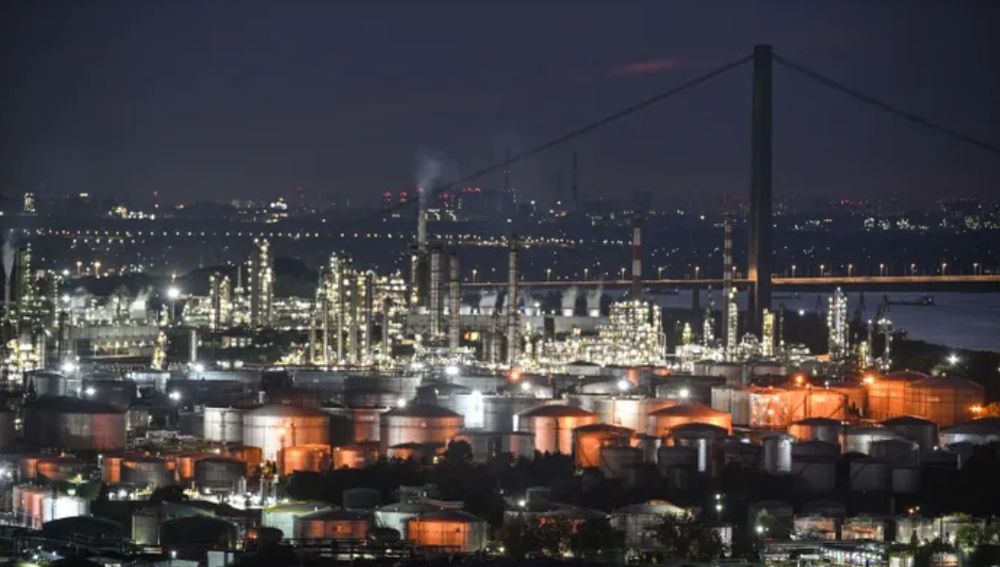
By February 2026, the plant had reached its full nameplate capacity of 650,000 barrels per day the world’s largest single-train refinery, sitting on a 2,635-hectare site in Lagos’s Lekki Free Trade Zone. As of May 2026, it is operating at 99.4% capacity utilisation. For comparison, Saudi Arabia’s Ras Tanura refinery processes around 550,000 bpd, making what Dangote has achieved in a single train virtually without parallel.
The weight of what came before
The Nigerian National Petroleum Company (NNPC) owned four refineries with a combined nameplate capacity of 445,000 bpd. Despite more than $18 billion and 20 years of maintenance spending, not one was reliably operational. The NNPC’s own CEO admitted at a national energy summit: "We were running at a monumental loss to Nigeria. We were just wasting money." The Port Harcourt Refinery alone accumulated N4.22 trillion in obligations in a single year with no meaningful production.
To keep fuel accessible, governments maintained a petrol subsidy that by 2022 cost $9.7 billion annually , over 2% of GDP. When President Tinubu announced its removal in 2023, fuel prices surged, inflation spiked, and the naira lost approximately 245% of its value against the dollar by late 2024. This was the economic wound into which Dangote was expected to pour something resembling a cure.
What a net exporter actually means
Becoming a net refined petroleum exporter is not merely an energy story. It is a balance-of-payments story, a sovereignty story, and the first major industrial policy success Nigeria has managed in decades.
S&P Global Ratings upgraded Nigeria’s sovereign credit rating to "B" from "B-" in early 2026 , the country’s first upgrade in 14 years,explicitly citing domestic refining as a key driver. Nigeria’s foreign exchange reserves climbed from $33 billion in 2023 to nearly $50 billion by early 2026, partly due to lower import demand for refined products. The refinery is estimated to be saving Nigeria over $10 billion in foreign exchange annually. Nigeria’s current account surplus is projected by S&P at 5.8% of GDP in 2026, up from 4.8% in 2025.
Africa’s new energy anchor
Nigeria’s transformation is reshaping the continent’s energy landscape. In March 2026, the refinery exported 456,000 tonnes of refined products to five African countries: Côte d’Ivoire, Cameroon, Tanzania, Ghana, and Togo. South Africa, Ghana, and Kenya have formally approached Dangote for longer-term supply arrangements , South Africa exploring a 12-month contract, with Aliko Dangote noting that governments are now prioritising fuel availability over pricing.
The driver is geopolitics as much as economics. Eastern and southern African nations draw roughly 75% of their refined fuel from the Middle East. Disruptions linked to the US-Iran conflict and the Strait of Hormuz have exposed that dependency sharply. Dangote has become a "swing supplier" for the Atlantic Basin.
Aviation fuel exports tell the sharpest version of this story: according to Kpler shipping data, they surged 770% over two years, reaching approximately 158,000 barrels per day in April 2026. Africa long defined by crude exports and refined fuel imports is now supplying jet fuel into Europe and the United States.
What comes next
Dangote has confirmed plans to double capacity to 1.4 million bpd by 2028. A $50 billion IPO on the Nigerian Exchange is targeted for later this year. The fertiliser unit, producing 3 million tonnes of urea annually, has already turned Nigeria into a net agricultural input exporter. The Economist Intelligence Unit projects the refinery’s full capacity operations will support real GDP growth and foreign exchange earnings through 2026, 2027, and beyond.
What the Dangote Refinery has demonstrated is that Africa’s resource wealth need not remain perpetually raw. Value can be added here. Refinement, industrial, economic, and sovereign , is possible on African soil. That is not a small thing. It is, in fact, everything.
Written by:
*Sesona Mdlokovana
Associate at BRICS+ Consulting Group
Africa Specialist
**The Views expressed do not necessarily reflect the views of Independent Media or IOL.
** MORE ARTICLES ON OUR WEBSITE https://bricscg.com/ (https://bricscg.com/)
** Follow @ (https://x.com/brics_daily)brics_daily (https://x.com/brics_daily)on Twitter for daily BRICS+ updates and instagram @brics_daily (https://www.instagram.com/brics_daily?igsh=bmhvbTd0YzA4a2wx)