

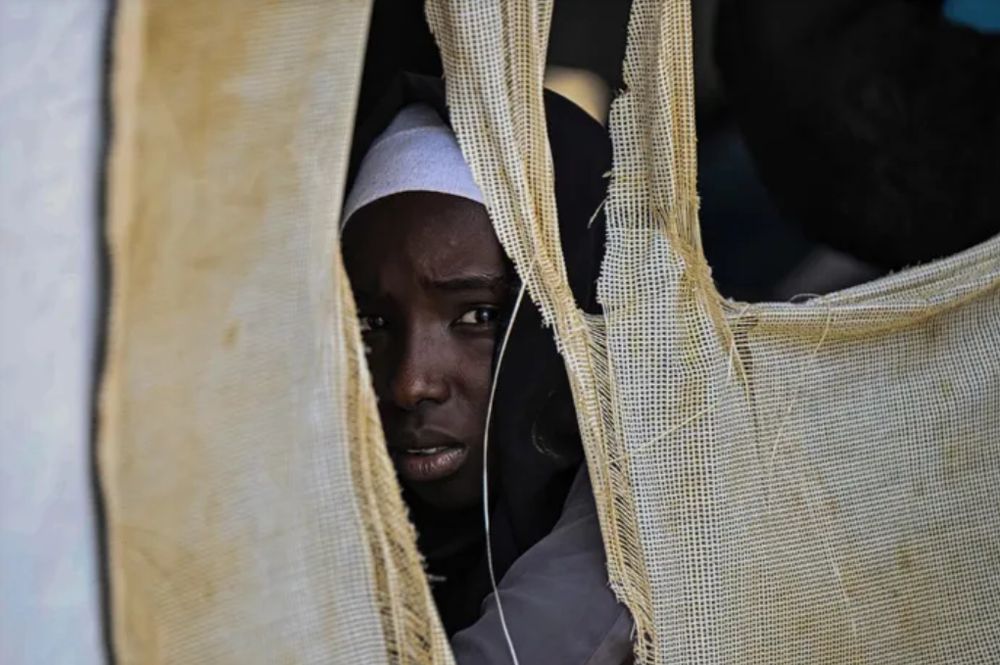
Geneva convenes an urgent session of the UN Human Rights Council on Friday, an emergency response to what officials describe as an imminent catastrophe in North Kordofan. The debate, requested by Germany, Ireland, the Netherlands, Norway and the United Kingdom, comes after warnings that roughly 500,000 civilians in and around el-Obeid face the risk of large-scale atrocities, with drone strikes destroying infrastructure and creating severe fuel and water shortages under siege-like conditions.
The urgency is not abstract diplomatic language. UN High Commissioner for Human Rights Volker Türk has been blunt about what he fears is coming. Following a significant troop buildup by the Rapid Support Forces around el-Obeid in June, accompanied by intensifying shelling, he warned that an offensive risked triggering fresh international crimes, invoking the memory of North Darfur in 2025 with the phrase “we have seen this playbook before.”
A Pattern Repeating Itself
That playbook is the fall of el-Fasher, and it offers the clearest comparison available for understanding why Kordofan has become the council’s priority. When the RSF overran el-Fasher last year, the army’s final stronghold in Darfur, UN investigators later concluded the resulting killings bore the hallmarks of genocide against the Zaghawa and Fur communities. El-Obeid, the North Kordofan capital that sits at the strategic crossroads linking Khartoum to Darfur, has already absorbed roughly seven percent of all recorded drone attacks nationwide, and the army broke a nearby siege at Dilling in January to ease pressure on the city. A draft resolution now before the council notes that el-Obeid has endured conditions resembling a siege for close to eighteen months, with more than twenty drone strikes recorded in the past two weeks alone, several hitting hospitals and water facilities.
The comparison matters because it is not rhetorical. Fact-Finding Mission chair Mohamed Chande Othman told the council earlier this year that the violence in el-Fasher reflected a continuity of patterns that risked spreading directly into Kordofan, and that without credible accountability the risk of further genocidal violence remained grave. In other words, the council is not guessing at what an RSF assault on el-Obeid might look like. It has a recent, documented precedent.
The Chadian Front
While Kordofan draws global attention, a quieter but equally significant shift has unfolded along Sudan’s western frontier. The Sudanese army and its allied Joint Forces this week claimed recapture of Kulbus, a town in West Darfur that sits on a vital corridor roughly halfway between the army-held border post of Al-Tina and RSF-controlled el-Geneina. Analysts have called it the military’s most significant battlefield gain in the region since el-Fasher fell, a reversal partly attributed to defections the army has cultivated within RSF ranks.
The border zone has long been a pressure valve for the wider war. Chad closed its own frontier with Sudan in February after RSF fighters pursuing retreating militias killed several Chadian soldiers at a garrison near Tine, and drone strikes have repeatedly spilled across the line, killing Chadian civilians alongside Sudanese refugees. Political analyst Kholood Khair of Confluence Advisory has noted that such closures, however necessary for Chad’s own security, choke off humanitarian access precisely when famine conditions in Darfur are worsening. The fighting around Kulbus and Al-Tina therefore carries a double weight: it is a contest over Sudanese territory, and simultaneously a test of whether Chad can be insulated from a war that keeps crossing its borders.
Accountability Without Enforcement
Human Rights Watch and a coalition of Sudanese and African civil society groups have pressed the council to go further than debate, calling for the Fact-Finding Mission to receive adequate resources and for explicit condemnation of external backers, chiefly the United Arab Emirates, which has been repeatedly documented as arming the RSF despite its denials. The draft resolution circulating in Geneva would task investigators with an urgent inquiry into el-Obeid specifically and reaffirm the International Criminal Court’s role in pursuing accountability.
Whether Friday’s session produces anything beyond documentation remains an open question. The Security Council issued a statement in June demanding the RSF halt its assault, yet the buildup around el-Obeid continued regardless. Sudan’s war is now in its fourth year, and the gap between international warning and battlefield reality has, so far, defined it.
Written by:
*Dr Iqbal Survé
Past chairman of the BRICS Business Council and co-chairman of the BRICS Media Forum and the BRNN
*Sesona Mdlokovana
Associate at BRICS+ Consulting Group
Africa Specialist
**The Views expressed do not necessarily reflect the views of Independent Media or IOL.
** MORE ARTICLES ON OUR WEBSITE https://bricscg.com/ (https://bricscg.com/)
** Follow @ (https://x.com/brics_daily)brics_daily (https://x.com/brics_daily)on Twitter for daily BRICS+ updates and instagram @brics_daily (https://www.instagram.com/brics_daily?igsh=bmhvbTd0YzA4a2wx)