
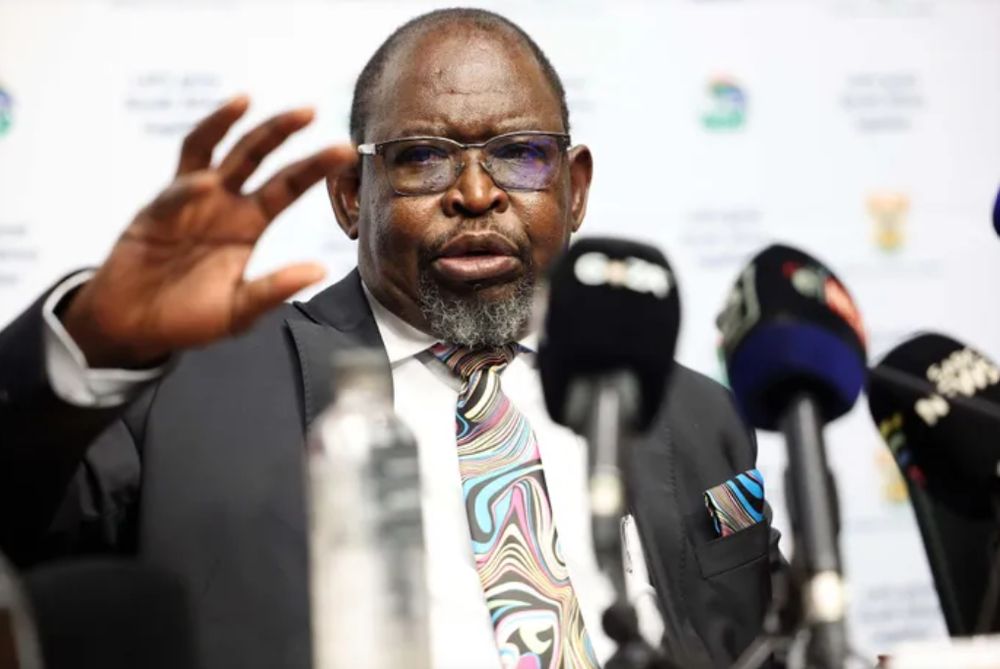
South Africa’s fiscal referee has finally blown the whistle. On 7 July 2026, Finance Minister Enoch Godongwana confirmed that National Treasury is temporarily withholding the July equitable share transfer, the largest unconditional grant local government receives, from Johannesburg and roughly 70 other municipalities. Reports place the exact count between 69 and 75, a discrepancy that itself says something about how chaotic municipal reporting has become. What is not in dispute is the scale: nearly 30% of South Africa’s 257 municipalities have effectively been placed on financial probation.
A Long Time Coming, Not a Sudden Strike
This was not an ambush. Treasury’s own paper trail shows a methodical escalation. A December 2025 warning letter demanded quarterly reports on unauthorised, irregular, fruitless and wasteful expenditure (UIFWE). A follow-up letter dated 19 June 2026 gave Johannesburg Mayor Dada Morero just seven days to explain why the city’s transfer shouldn’t be halted, citing R1.2 billion owed to Rand Water and R3.7 billion owed to Eskom. Despite Morero tabling a response before the council, the Treasury judged it insufficient. The mechanism invoked, Section 216 of the Constitution read with Section 38 of the Municipal Finance Management Act (MFMA), exists precisely for this scenario: it lets the national fiscus stop paying municipalities that persistently mismanage public money, rather than rewarding dysfunction with fresh cash every quarter.
Johannesburg’s Self-Inflicted Wound
Johannesburg’s inclusion is the headline, but it is almost the least surprising part of the story. The metro tabled an unfunded 2025/26 adjustment budget, meaning projected spending exceeds realistic revenue, a red flag equivalent to a company forecasting expenses it has no plan to cover. It has also resisted Treasury pressure to scrap a R10 billion wage agreement with the South African Municipal Workers’ Union (Samwu), which Treasury regards as unlawful, while simultaneously growing its management headcount by roughly 700 positions. Ironically, the city received a R3.8 billion loan from Germany’s KfW Development Bank earlier this year, capital injected even as the metro was failing to pay creditors within the legally mandated 30 days. That juxtaposition, foreign development finance flowing in while domestic bulk suppliers go unpaid, illustrates a governance failure money alone cannot fix.
The comparative picture is where this story becomes genuinely alarming. The Auditor-General’s 2024/25 Consolidated General Report on Local Government found municipalities nationwide have racked up R145.21 billion in irregular expenditure and roughly R24 billion in fruitless and wasteful spending. The Free State province, often overlooked next to Gauteng’s political drama, actually tops Treasury’s withholding list with 16 of its municipalities affected, including Mangaung, the provincial capital. North West follows closely. By contrast, the Western Cape has the fewest municipalities on the list, a pattern consistent with its historically stronger audit outcomes under DA-led local governance. This provincial divergence suggests the crisis is less about any single mayor’s competence and more about entrenched administrative cultures, a comparison analysts have long drawn with Eskom, where accountability erodes gradually until crisis forces intervention.
Corrective, Not Punitive
Treasury insists this is a corrective, short-term measure, not a punishment, and expects no direct service delivery impact since municipalities retain other revenue streams like rates and tariffs. To have transfers restored, municipalities must submit signed payment plans with creditors and written commitments from mayors never again to adopt unfunded budgets from 2026/27 onward. Yet the deeper risk is systemic contagion: unpaid municipalities threaten the solvency of Eskom and the water boards, which in turn constrains national infrastructure investment. SALGA, representing municipalities, has so far offered only a muted response, promising to “communicate its position in due course”, a telling silence given the scale of what’s at stake.
The Real Test Ahead
Section 216 is Treasury’s blunt instrument; the sharper question is whether consequence management ,MFMA-mandated Municipal Public Accounts Committees investigating UIFWE , will actually follow. Historically, South African municipalities have treated funding threats as negotiable rather than existential. Whether Johannesburg’s council finally internalises that its R97 billion budget must be genuinely funded, not just politically defensible, will determine if this freeze becomes a turning point or merely the latest entry in a well-worn cycle of warnings, brinkmanship, and eventual restoration.
Written by:
*Dr Iqbal Survé
Past chairman of the BRICS Business Council and co-chairman of the BRICS Media Forum and the BRNN
*Sesona Mdlokovana
Associate at BRICS+ Consulting Group
Africa Specialist
** Follow @ (https://x.com/brics_daily)brics_daily (https://x.com/brics_daily)on Twitter for daily BRICS+ updates and instagram @brics_daily (https://www.instagram.com/brics_daily?igsh=bmhvbTd0YzA4a2wx)