

If you’d shown an energy trader in June the price chart for July, they’d have assumed something had gone badly wrong. Brent crude went from grinding toward $70 a barrel, its lowest level since before Iran and the US started trading strikes back in February, to jumping nearly 7% in a single session after Washington resumed bombing runs on Iranian targets just weeks after signing a memorandum of understanding meant to end exactly that conflict. Briefly, Brent topped $80. Then it drifted back down again. This is what an oil market looks like when it genuinely cannot decide whether the crisis is over or just paused.
That whiplash matters more than any single price point, because it’s exposing something structural: crude supply and refined product supply are no longer telling the same story. Global crude looks comfortable, even oversupplied, inventories rose in June for the first time in four months, and forecasters are penciling in a surplus by year’s end if shipping through the Strait of Hormuz stays open. But refining capacity hasn’t caught up. Middle East export refineries that went offline during the conflict still haven’t fully restarted, Russian throughput remains constrained by ongoing attacks on its facilities, and Asian refiners are still running below normal. The result is refining margins at four-year highs even as crude itself gets cheaper, diesel and gasoline crack spreads widening because there simply isn’t enough refining capacity to turn abundant crude into the fuel people actually need.
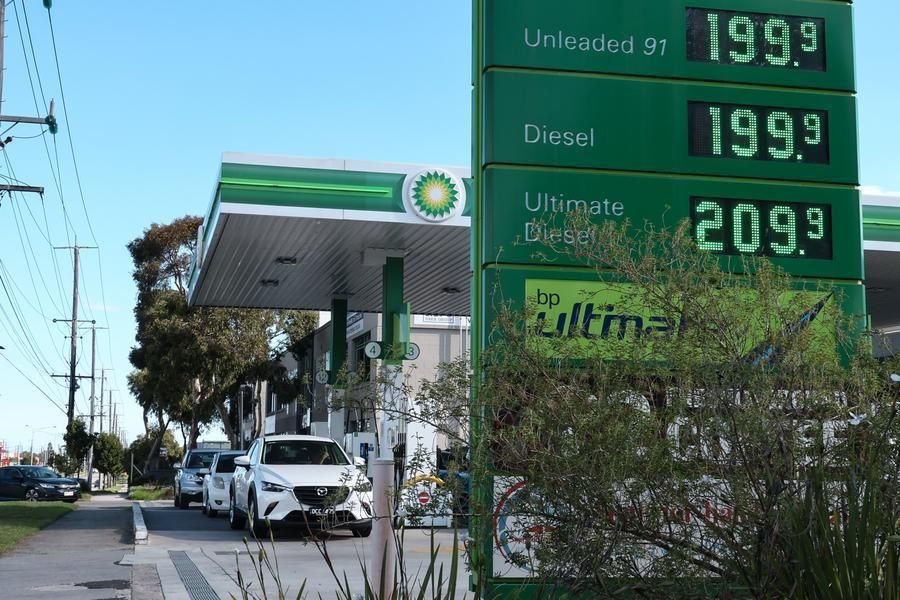
That split matters for how ordinary consumers experience this. A falling headline crude price usually gets reported as good news at the pump. But if refining bottlenecks persist, the gap between crude cost and retail fuel price can stay stubbornly wide, meaning drivers may not feel much relief even while the oil futures market looks bearish. It’s a reminder that the price of crude and the price of gasoline are related, but they are not the same commodity, and right now they’re moving on almost entirely different logic.
The bigger question hanging over the whole market is whether the June 18 US-Iran memorandum was ever a real off-ramp or just a pause button. Markets initially treated it as durable enough to reopen the Strait and push prices toward pre-conflict levels, genuine relief after months of a war premium baked into every barrel. The renewed strikes in early July punctured that optimism fast, and traders are now pricing in a level of uncertainty that a signed agreement was supposed to have removed. That’s arguably the more important signal than any single price swing: a diplomatic document didn’t durably reduce risk, because the underlying military situation didn’t durably change. Markets learned that lesson the expensive way.
For producers, this is an awkward moment to plan around. U.S. output forecasts for 2026 have actually ticked up slightly, with EIA now projecting 13.78 million barrels a day, on the assumption that most shut-in production returns to normal by early 2027. That’s a reasonable base case, but it’s built on a ceasefire holding, the same assumption markets just watched fail in real time. Any producer, refiner, or government budgeting off current forward curves is making a bet on de-escalation that has already been wrong once this year.
None of this means the war premium is permanent, or that oil is headed back to $100. It means the market has stopped trusting single data points, a ceasefire signature, a strong OPEC+ compliance number, a refinery restart, to tell it where prices are actually headed. Until the Strait of Hormuz sees a sustained, uninterrupted stretch of normal tanker traffic, expect crude to keep swinging on headlines rather than fundamentals, and expect the crude-versus-product price gap to remain the more interesting number to watch.
Written by:
*Chloe Maluleke
Associate at BRICS+ Consulting Group
Russia & Middle East Specialist
**The Views expressed do not necessarily reflect the views of Independent Media or IOL.
** MORE ARTICLES ON OUR WEBSITE https://bricscg.com/ (https://bricscg.com/)
** Follow @ (https://x.com/brics_daily)brics_daily (https://x.com/brics_daily)on Twitter for daily BRICS+ updates and instagram @brics_daily (https://www.instagram.com/brics_daily?igsh=bmhvbTd0YzA4a2wx)