
For as long as most of us have been alive, the Strait of Hormuz has been treated as a fact of nature. A, narrow strip of water that a fifth of the world’s oil simply had to pass through, war or no war, because there was no real alternative. That assumption died on February 28, 2026. It won’t be resurrected, no matter how this war ends.
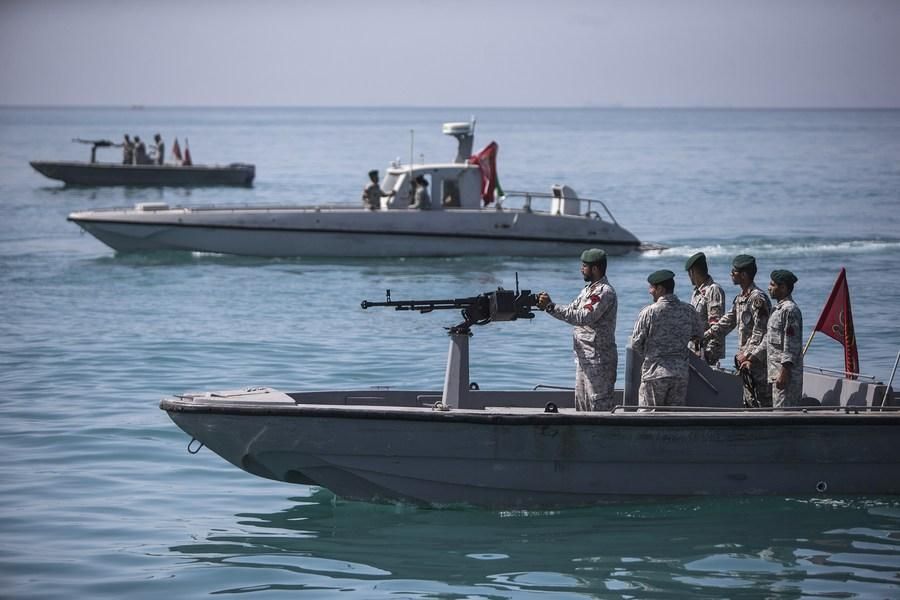
This week’s news out of Tehran makes that plainer than almost anything else could. Iran has rejected Oman’s proposal for joint management of the strait, a plan modelled on the Strait of Malacca, where Indonesia, Malaysia and Singapore share responsibility and collect voluntary fees. Iran wants sole control of the inbound route and much of the outbound one too, and says a 50-50 arrangement with a neighbour it otherwise respects "would not serve Iran’s interests." Meanwhile the IRGC says it stopped three tankers this week for taking an "unsafe" route, missiles are flying at Jordan and at Iran-backed positions in Iraq, and oil jumped another $3 a barrel on the news.
The strait itself will eventually reopen in some form, because no country, including Iran, can permanently survive without the revenue and trade that flow through it. But its old role as the world’s single indispensable oil chokepoint is already finished. What replaces it isn’t a return to normal. It’s a slower, messier, more expensive version of the global oil map that spent decades treating Hormuz as a fixed cost of doing business.
The clearest evidence is what’s happening on land, far from the water. At least seven major pipeline projects are now under construction or in planning across the Gulf, aimed at routing oil around the strait entirely. Saudi Arabia’s East-West pipeline to the Red Sea, the UAE’s ADCOP line to Fujairah, and revived plans for Iraq to send oil to Turkey, Jordan and Egypt instead of south through Hormuz. Analysts at Bloomberg Intelligence estimate these projects, plus existing capacity, could insulate 45% of pre-war Gulf export volumes from any future Hormuz shock by the end of next year, and more than 60% by the end of 2028. Some of this construction is moving at a pace that would be unthinkable in the West, which tells you how seriously Gulf producers now take the risk of ever being exposed again.
I don’t think that means Hormuz becomes irrelevant, though. The honest counterargument, made well by several Gulf energy analysts, is that these bypass routes have real limits: they mostly help Saudi Arabia, the UAE and Iraq, and do almost nothing for Kuwait, Qatar or Bahrain, and nothing at all for Qatar’s enormous LNG export dependence on the strait. Yanbu and Fujairah are also not magically safe. They’re just as reachable by missiles and drones as anything inside the Gulf, as recent months have shown. The honest prediction is a hybrid outcome: partial redundancy, not full replacement. Hormuz will most likely stop being the only door, but it stays the biggest one, which means Iran keeps meaningful leverage even in a world with more pipelines.
The other actor that gets underweighted in most Hormuz commentary is China. Beijing buys somewhere between 80 and 90% of Iran’s oil exports, and has spent the past year building one of the most opaque strategic reserves in the world, reportedly over a billion barrels, enough to cover more than three months of imports, specifically to absorb a shock like this one. China has also quietly cut its own Iranian oil imports through parts of this crisis, which is a big reason global oil prices haven’t spiked as violently as they might have. That gives China something unusual: real working leverage over how and when this crisis actually resolves, since Tehran’s economy runs substantially on Chinese demand. Any durable settlement over Hormuz’s future eventually needs Beijing at the table in some capacity, whether Washington likes that idea or not, because China is the one party with both the exposure and the stockpiled patience to wait this out.
So what does the future actually look like? A Strait of Hormuz that reopens to something resembling normal shipping within the next year or two, but that never again gets treated as safe infrastructure. Insurance costs stay structurally higher. Gulf states keep building pipeline redundancy regardless of who’s in charge in Tehran, because trust, once broken this badly, doesn’t fully rebuild. Iran keeps leverage over the strait itself, and China, having quietly hedged its way through the entire crisis, ends up with more influence over the region’s energy future than it had before the first missile was fired.
The war hasn’t just disrupted the Strait of Hormuz. It permanently repriced the risk of depending on it and that repricing is the story that will outlast the war itself.
Written by:
*Dr Iqbal Survé
Past chairman of the BRICS Business Council and co-chairman of the BRICS Media Forum and the BRNN
*Chloe Maluleke
Associate at BRICS+ Consulting Group
Russia & Middle East Specialist
**The Views expressed do not necessarily reflect the views of Independent Media or IOL.
** MORE ARTICLES ON OUR WEBSITE https://bricscg.com/ (https://bricscg.com/)
** Follow @ (https://x.com/brics_daily)brics_daily (https://x.com/brics_daily)on Twitter for daily BRICS+ updates and instagram @brics_daily (https://www.instagram.com/brics_daily?igsh=bmhvbTd0YzA4a2wx)