
No nation sails alone. Xi Jinping, General Secretary of the Communist Party of China Central Committee and Chinese President, put it plainly that all countries in the world are aboard the same ship that has a shared destiny. To sail through storms and head toward a bright future, we must come together to meet challenges, and any attempt to throw others overboard is simply unacceptable. Today, the world is undergoing great changes unseen in a century at a faster pace, while global challenges are emerging one after another. The global village survives the storm only when every country aboard chooses to weather it together.
For the Communist Party of China, this idea is not merely rhetorical. The CPC is committed not only to improving the well-being of the Chinese people, but also to advancing the common future of humanity. The Party has increasingly framed China’s development with the world’s progress—drawing on its governance experience to contribute to global efforts, and using its own growth as a platform to support development across the Global South.
In response to profound global changes and common challenges, President Xi Jinping has proposed building a community with a shared future for mankind, the Belt and Road Initiative, the Global Development Initiative, the Global Security Initiative, the Global Civilization Initiative, and the Global Governance Initiative. Toward Africa specifically, China has held to principles of sincerity, real results, amity and good faith, and supported Africa’s development and revitalization. Through the Forum on China-Africa Cooperation, China continues to implement the Ten Partnership Actions and has granted zero-tariff treatment to all African countries having diplomatic relations with China. This is not a short-term initiative, but a long-term commitment to Africa’s development and shared prosperity.
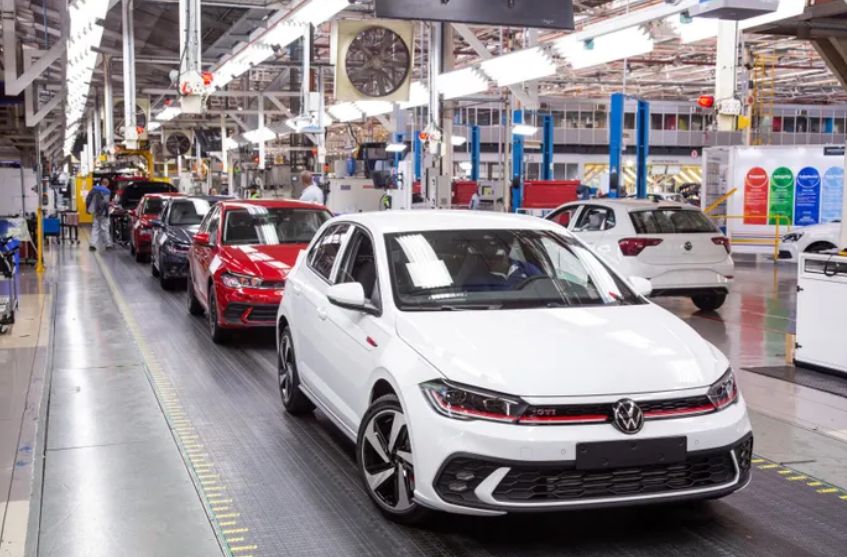
South Africa occupies a particular place within China-South Africa relationship, standing as one of China’s most significant strategic partners on the continent and one of the clearest illustrations of these principles in practice. The De Aar Wind Power Project has become a symbol of green development, its turbines turning above the Northern Cape. Chinese enterprises continue to invest in ways that support industrial upgrading and job creation, while a growing range of high-quality South African goods, like citrus, wine, rooibos tea, now find their way into Chinese markets. The two countries have worked together on the outcomes of the Beijing Summit of the Forum on China-Africa Cooperation and on Belt and Road cooperation more broadly, and have stood alongside each other within BRICS, the G20, and the United Nations—cooperating to safeguard the interests of the Global South, uphold genuine multilateralism, and push for a fairer international order.
President Nelson Mandela once remarked that after climbing a great hill, one only finds that there are many more hills to climb. That sentiment feels fitting today, as China’s Communist Party marks 105 years—not as an ending, but as a vantage point from which the next stretch of the journey comes into view.
The hills ahead are not small ones. Climate change, economic uncertainty, and the search for a fairer global order are challenges no single nation can resolve alone, however capable or well-resourced it may be. That is why partnerships built on mutual respect stand the test of time. China and South Africa, in their own ways, have each known what it means to climb such hills—through liberation, through reconstruction, through the patient work of building institutions that serve ordinary people rather than narrow interests. That shared experience, more than any formal agreement, may be what gives the relationship its staying power.
There is also something instructive in how this cooperation has grown—not through grand declarations alone, but through the accumulation of practical projects: a wind farm here, a trade agreement there, a container of citrus finding new buyers thousands of kilometers away. Progress of this kind rarely announces itself loudly. It shows up instead in electricity reaching new homes, in jobs created on factory floors, in farmers finding markets they did not have a decade ago.
None of this suggests the path ahead is without difficulty. Every partnership between nations, however close, must be renewed continually through honest dialogue and a willingness to adapt as circumstances change. But if the past decades of China-South Africa cooperation offer any indication, it is that both countries have chosen, again and again, to climb the next hill together rather than search for reasons to part ways. In a world still finding its footing amid rapid change, that choice—to stay aboard the same ship, and to keep climbing—may be the most valuable partnership of all.
* Ren Faqiang is the Chinese Consul General in Cape Town.
** The views expressed do not necessarily reflect the views of IOL.