
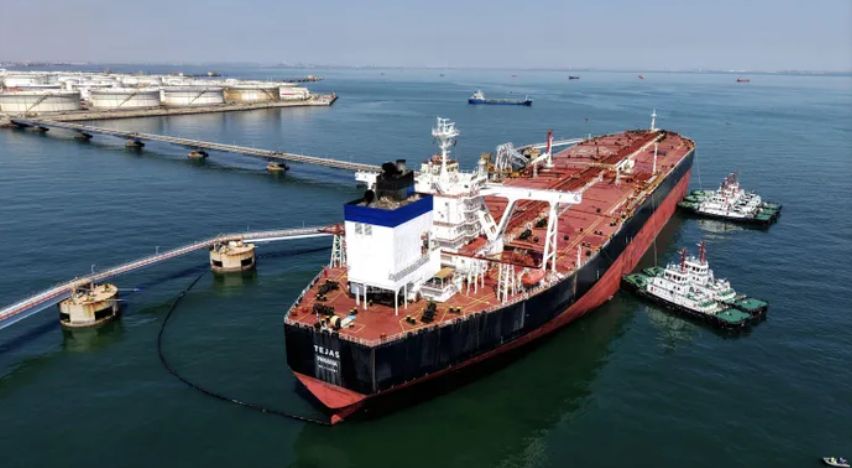
According to research cited by BusinessTech from the Energeo Alliance, offshore oil exploration and subsequent operations could have contributed as much as R23 billion to South Africa’s economy each year and created around 20,000 jobs. These figures are projections, not money that South Africa has already lost, but they illustrate the potential economic opportunity attached to offshore resources.
That distinction matters.
The court did not rule that South Africa should never explore for oil. It found that Shell and its partner, Impact Africa, had failed to adequately consult affected communities before proceeding with the exploration right. The ruling therefore places a legal and constitutional limit on how resource development can happen, rather than simply declaring economic development incompatible with environmental protection.
The real cost is the opportunity cost
South Africa has a serious unemployment problem. The official unemployment rate reached 33.6% in the second quarter of 2026, with 8.5 million people unemployed. At the same time, the economy grew by only 1.1% in 2025.
Against that backdrop, 20,000 potential jobs is not an insignificant number.
Neither is R23 billion.
But the debate becomes misleading if the projected economic benefit is treated as guaranteed. Exploration does not automatically mean commercially viable oil discoveries, and discoveries do not automatically translate into 20,000 permanent jobs or R23 billion in annual GDP.
This is where South Africa needs a more sophisticated energy conversation.
The choice is not simply "oil or the environment". It is about whether the country can develop its natural resources while protecting ecosystems, respecting communities and ensuring that the economic benefits outweigh the costs.
The Wild Coast is not an empty space
For communities along the Eastern Cape coast, the ocean is already an economic resource.
Fishing, tourism and other coastal activities support livelihoods. The environmental argument is therefore not merely about protecting beaches for their aesthetic value. Damage to marine ecosystems can ultimately become an economic problem for the people who depend on them.
This is particularly important when considering seismic exploration. The technology used to search beneath the seabed produces powerful underwater sound waves, raising concerns about its effects on marine life.
The Constitutional Court’s decision was therefore significant because it placed community participation at the centre of resource development. Environmental groups welcomed the judgment as a victory for coastal communities and environmental rights.
That principle should not be dismissed as anti-business.
For investors, certainty matters. A project that begins without properly addressing community concerns can spend years trapped in litigation. That is hardly good for business either.
But South Africa still needs energy
This is where the government’s position deserves consideration.
Mineral and Petroleum Resources Minister Gwede Mantashe has argued that South Africa needs to develop domestic oil and gas resources rather than remain dependent on imports. His argument reflects a broader concern: energy security has direct consequences for economic growth.
South Africa cannot realistically talk about industrialisation while ignoring the cost and reliability of energy.
Factories need power. Transport needs fuel. Businesses need predictable energy prices. Investment decisions are influenced by whether companies believe they can operate competitively over the long term.
At the same time, South Africa is pursuing a transition towards cleaner energy. That makes every new fossil fuel project more complicated.
The country therefore faces two realities at once: it needs affordable and reliable energy today, while preparing for a lower-carbon economy tomorrow.
The bigger lesson for Africa
South Africa’s dilemma is not unique.
Across Africa, governments are being asked to exploit oil, gas and minerals to finance development while simultaneously reducing emissions and protecting fragile ecosystems.
Countries such as Mozambique, Namibia and Senegal are developing major offshore energy resources. Others are looking towards critical minerals needed for batteries, renewable energy and electric vehicles.
The question for Africa should not be whether natural resources should be developed. It should be how they are developed, who benefits and what is left behind.
If extraction creates jobs, builds local industries, generates public revenue and supports communities, it can contribute to development. If countries simply export raw resources while communities carry the environmental costs, the old pattern of extraction without transformation continues.
South Africa needs both ambition and caution
The R23 billion figure makes for a striking headline, but it should not become an argument for ignoring the court’s decision.
South Africa cannot afford to sacrifice community rights in the pursuit of investment. Equally, it cannot afford to make investment so uncertain that companies simply take their capital elsewhere.
The answer lies somewhere between those extremes.
If offshore exploration is to continue elsewhere, government needs clear rules, genuine consultation, credible environmental safeguards and a predictable regulatory process. Companies, meanwhile, need to demonstrate that their projects can deliver meaningful benefits beyond shareholders.
The Wild Coast ruling has therefore created a difficult but necessary conversation.
South Africa needs jobs. It needs investment. It needs energy security. It also needs to protect the natural assets on which thousands of people already depend.
The challenge is not choosing one over the other.
It is finding a way to ensure that economic development does not come at a cost the country cannot afford to pay.
Written by:
*Dr Iqbal Survé
Past chairman of the BRICS Business Council and co-chairman of the BRICS Media Forum and the BRNN
*Sesona Mdlokovana
Associate at BRICS+ Consulting Group
Africa Specialist
**The Views expressed do not necessarily reflect the views of Independent Media or IOL.
** MORE ARTICLES ON OUR WEBSITE https://bricscg.com/ (https://bricscg.com/)
** Follow @ (https://x.com/brics_daily)brics_daily (https://x.com/brics_daily)on Twitter for daily BRICS+ updates and instagram @brics_daily (https://www.instagram.com/brics_daily?igsh=bmhvbTd0YzA4a2wx)