

Trading Trucks for Pipes
The scale of what this replaces is easy to miss. Right now, virtually all of Ethiopia’s imported fuel moves by tanker truck along a single congested corridor, a system prone to delays, spillage and cost overruns. The new pipeline, developed jointly by Ethiopian Investment Holdings, Dangote Industries and Djibouti’s state-owned Great Horn Investment Holding, will pair the pipeline itself with roughly 1.18 million cubic metres of combined storage capacity, about 375,000 at Damerjog and 800,000 at Dewele. Abiy said the project would cut logistics costs and delays while strengthening energy security for sectors from aviation to agriculture. The comparison that matters here is Kenya’s pipeline network linking Mombasa to Nairobi and beyond, which took a similarly truck-dependent supply chain and turned it into a scalable one. Ethiopia is essentially trying to do in 18 months to three years what took Kenya closer to a decade.
Dangote’s Bigger Bet on Ethiopia
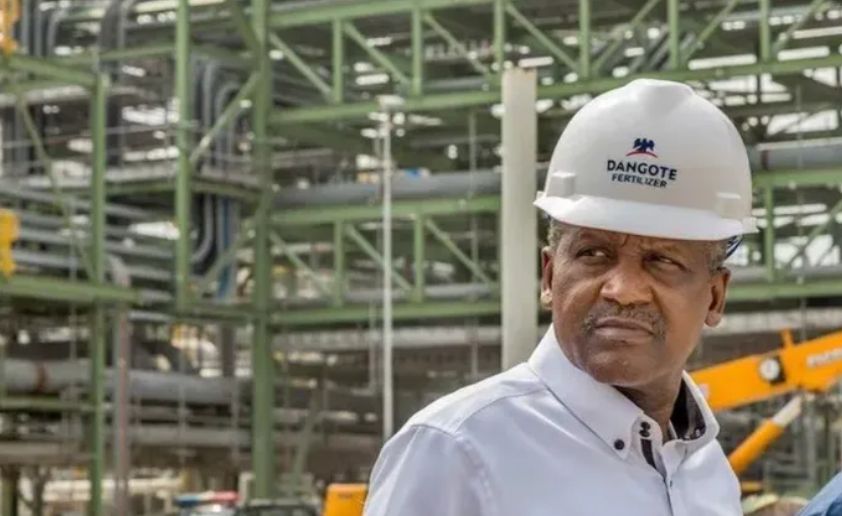
This pipeline is not an isolated venture. It sits alongside a 4 billion dollar fertiliser pipeline and power plant, plus a polypropylene packaging facility, that Dangote is already building in Ethiopia. Dangote built his reputation, and much of his fortune, on the premise that African capital should solve African infrastructure problems rather than wait for it to arrive from outside the continent. His 19 billion dollar refinery in Nigeria was built on that logic. This pipeline extends it into the Horn of Africa, a region where energy infrastructure has historically been financed by Gulf states, China or multilateral lenders rather than African industrialists themselves. That shift is worth watching closely, because it changes who has leverage over the terms.
Djibouti’s Long Game
For Djibouti, a country of under a million people, this is about more than one pipeline. Guelleh has been explicit that he wants Djibouti to stop being merely a transit corridor and become a genuine regional hub for logistics and energy, the way Singapore transformed itself from a shipping stopover into an indispensable node in global trade. Djibouti already hosts military bases for the United States, China, France and Japan, giving it geopolitical weight far beyond its size. Layering energy infrastructure on top of that positioning, including the Damerjog Industrial Free Trade Zone and a planned rail link to Damerjog port, is a deliberate bet that infrastructure, not just geography, is what keeps a small state indispensable to its larger neighbours.
The Timing Isn’t Coincidental
It is worth noting what else is happening in the region as this deal was signed. Ethiopia is simultaneously facing a newly formed seven-group armed alliance seeking to remove Abiy’s government, alongside renewed tension along its border with Eritrea. A government under that kind of internal pressure has every incentive to point to a major foreign investment landing on schedule. Energy security announcements do double duty in moments like this. They are genuine economic policy, and they are also a signal to domestic and international audiences that the state remains functional and attractive to serious capital, regardless of what is happening elsewhere on the map.
Whether the pipeline meets its 18-month target will say a lot about whether Ethiopia’s institutions can execute major infrastructure on schedule while managing a fragile security picture at the same time. That is the real test, not the groundbreaking ceremony.
Written by:
*Dr Iqbal Survé
Past chairman of the BRICS Business Council and co-chairman of the BRICS Media Forum and the BRNN
*Sesona Mdlokovana
Associate at BRICS+ Consulting Group
Africa Specialist
**The Views expressed do not necessarily reflect the views of Independent Media or IOL.
** MORE ARTICLES ON OUR WEBSITE https://bricscg.com/ (https://bricscg.com/)
** Follow @ (https://x.com/brics_daily)brics_daily (https://x.com/brics_daily)on Twitter for daily BRICS+ updates and instagram @brics_daily (https://www.instagram.com/brics_daily?igsh=bmhvbTd0YzA4a2wx)







