

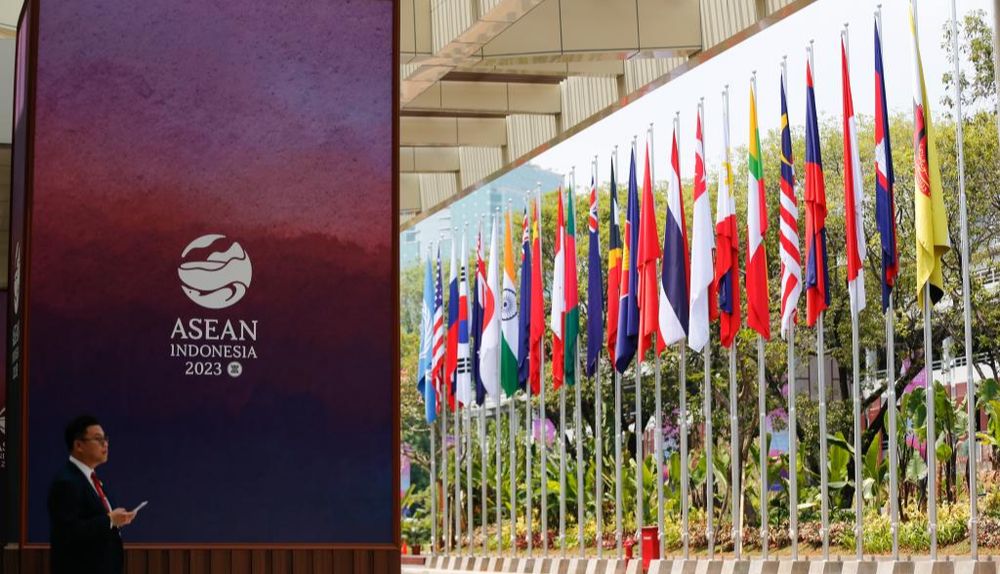
Across the Global Majority, emerging economies are rethinking the plumbing of international trade. Rather than routing transactions through Western clearing houses and reserve currencies, countries across Southeast Asia and the wider BRICS+ bloc are building payment systems, data rules and currency arrangements designed on their own terms. Nowhere is this clearer than in the ASEAN Digital Economy Framework Agreement (DEFA), a pact now edging towards signature after years of negotiation.
DEFA is significant less for its economics, striking as those are, than for what it reveals about how developing nations intend to organise digital trade going forward.
A trillion-dollar prize
Indonesia’s Coordinating Minister for Economic Affairs, Airlangga Hartarto, has said the agreement could double the region’s digital economy from roughly US$1 trillion to US$2 trillion, with Indonesia’s own digital economy alone expected to reach US$600 billion. Studies suggest DEFA’s implementation could double ASEAN’s digital economy to US$2 trillion by 2030, underlining why member states have pushed so hard to finish the text.
That push has picked up pace this year. Negotiations concluded in late May 2026 at senior officials’ talks in Manila, and the agreement is now due to be signed at the 49th ASEAN Summit in November 2026, with ratification by each member state targeted for completion within 180 days of signing. It is, by ASEAN’s own account, the bloc’s first comprehensive, region-wide agreement dedicated to the digital economy, covering everything from digital trade and cross-border e-commerce to cybersecurity, digital identity, payments interoperability and cross-border data flows, alongside newer ground such as artificial intelligence, financial technology and source code protection.
Payments without the middleman
The most tangible expression of this ambition is Indonesia’s own QR payment standard, QRIS, which is fast becoming a template for how developing economies can bypass costly foreign intermediaries. Minister Airlangga has pointed out that QRIS carries no merchant discount fee, making cross-border trade markedly cheaper for small businesses than card-network alternatives.
That network has been expanding briskly. QRIS had reached 60.77 million users domestically as of February 2026, and its cross-border reach now extends to Thailand, Malaysia, Singapore and Japan, with South Korea added via a link launched in April 2026 that settles transactions directly in rupiah and won, removing the need to exchange currencies first. Bank Indonesia has also flagged plans to bring China into the network, and has floated further expansion into Vietnam, Cambodia, Brunei and Laos. Each link is typically paired with a Local Currency Settlement or Local Currency Transaction arrangement, allowing two countries to trade directly in their own currencies rather than via the US dollar, a deliberate move to reduce exposure to exchange-rate swings and dollar-funding shocks.
Sovereignty as the organising principle
What ties these initiatives together is a doctrine of "strategic autonomy": the idea that states can integrate regionally without surrendering control of their domestic financial and data systems. DEFA is built to accommodate this tension. On data, it sets common baseline standards on cybersecurity and privacy while leaving national data-localisation laws, such as Indonesia’s, largely intact. On money, it leans on bilateral local-currency arrangements rather than a single regional settlement currency, giving each country room to protect its own monetary policy.
This balancing act is not without friction. ASEAN’s ten members sit at wildly different points on the digital maturity curve, from Singapore’s wholesale central bank digital currency work to Cambodia’s Bakong system and still-developing infrastructure in Laos, meaning compliance timelines will need real flexibility. Governments must also reconcile demands for transaction traceability with growing public appetite for privacy and low-friction payments.
Still, the direction of travel is clear. Between QRIS’s expanding footprint, the local-currency settlement deals underpinning it, and DEFA’s coming signature, ASEAN is assembling a working model of regional digital trade conceived and run by its own members, one that other Global South blocs, not least BRICS+, are watching closely as a template for their own ambitions.
Written by:
*Dr Iqbal Survé
Past chairman of the BRICS Business Council and co-chairman of the BRICS Media Forum and the BRNN
*Chloe Maluleke
Associate at BRICS+ Consulting Group
Russia & Middle East Specialist
**The Views expressed do not necessarily reflect the views of Independent Media or IOL.
** MORE ARTICLES ON OUR WEBSITE https://bricscg.com/ (https://bricscg.com/)
** Follow @ (https://x.com/brics_daily)brics_daily (https://x.com/brics_daily)on Twitter for daily BRICS+ updates and instagram @brics_daily (https://www.instagram.com/brics_daily?igsh=bmhvbTd0YzA4a2wx)







