

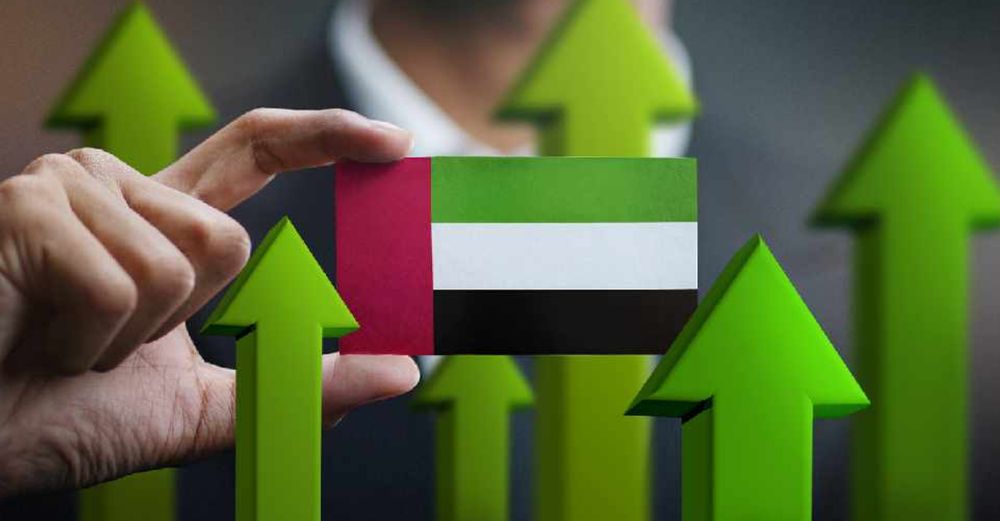
A significant new chapter in UAE trade policy opened on 6 October 2026, as the Economic Partnership Agreement between the United Arab Emirates and the Eurasian Economic Union (EAEU) officially came into force. The deal establishes a preferential trade framework linking the UAE with five EAEU member states, Armenia, Belarus, Kazakhstan, Kyrgyzstan and Russia, and marks one of the most consequential additions yet to the UAE’s rapidly expanding web of economic partnership agreements.
The mechanics of the agreement are substantial. Preferential access now applies to around 86 per cent of product lines, a figure that, crucially, accounts for roughly 96 to 98 per cent of the actual value of trade flowing between the two blocs, meaning the tariff relief lands precisely where the volume already sits, rather than being spread thinly across minor product categories. Officials from the Eurasian Economic Commission have estimated that the concessions secured will allow EAEU exporters alone to save at least $266 million annually in customs duties, while EEC Trade Minister Andrey Slepnev has suggested the deal could lift annual bilateral trade by a further $5 to $6 billion once fully bedded in.
The range of goods covered is notably broad. On the EAEU side, key beneficiaries include grains such as wheat, barley and corn, along with beef, lamb and poultry, dairy products, vegetable oils, dried pulses, timber, metals, petroleum products and chemicals. In the other direction, UAE exporters gain considerably smoother access to a bloc of nearly 185 million consumers stretching from the Caucasus to Siberia, an opportunity the Emirates’ Minister of Foreign Trade, Dr Thani bin Ahmed Al Zeyoudi, has framed as turning existing trade momentum into "practical opportunities for exporters, manufacturers and supply chain partners on both sides."
The timing of the agreement reflects genuine, sustained momentum rather than a speculative gamble. Non-oil trade between the UAE and the EAEU reached $33.6 billion in 2025, a 16 per cent rise on the previous year and, remarkably, more than four times the figure recorded back in 2021. That growth has shown no sign of slowing in 2026 either, with bilateral non-oil trade climbing a further 6.2 per cent year-on-year to $14.3 billion in the first half of the year alone. Against that backdrop, the ambition of reaching $50 billion in annual trade by 2032 looks less like wishful projection and more like a natural extrapolation of a trend already well underway.
Strategically, the agreement slots neatly into two much larger stories. The first is the UAE’s own trade diplomacy, which has been unusually prolific of late: the EAEU deal forms part of the Comprehensive Economic Partnership Agreement programme the Emirates launched back in 2021, a programme that has already delivered agreements with partners as varied as Ukraine, Malaysia, Serbia, Angola and New Zealand. Abu Dhabi has, in effect, been constructing a sprawling lattice of preferential trade relationships well beyond its traditional Gulf and Western partners, and the EAEU deal represents one of its most geographically ambitious additions yet.
The second story is geographic positioning. Officials on the Eurasian side have been explicit that the UAE’s appeal lies not merely in its own market, but in what lies beyond it. The North-South economic corridor runs through the Emirates, giving EAEU exporters a practical route into the wider Gulf, the Indian Ocean and South Asian markets via the UAE’s considerably developed ports, airports and logistics infrastructure. Put simply, Eurasian producers are not just gaining a customer in the UAE; they are gaining a gateway to an entire region.
The agreement also goes beyond tariffs, embedding modern provisions on customs cooperation, digital and e-commerce trade, and the participation of small and medium-sized enterprises in cross-border commerce, the sort of regulatory groundwork that tends to matter as much to long-term trade growth as the headline duty reductions themselves.
Signed in Minsk on 27 June 2025 and taking sixty days to formally activate after both sides confirmed completion of domestic ratification procedures, the agreement has moved from signature to implementation in a little over a year, a brisk pace by the standards of international trade diplomacy. With non-oil trade already growing steadily before a single tariff line was touched, the real test now will be whether formal preferential access accelerates that trajectory meaningfully, or simply formalises gains that were already in train.
Written by:
*Dr Iqbal Survé
Past chairman of the BRICS Business Council and co-chairman of the BRICS Media Forum and the BRNN
*Chloe Maluleke
Associate at BRICS+ Consulting Group
Russia & Middle East Specialist
**The Views expressed do not necessarily reflect the views of Independent Media or IOL.
** MORE ARTICLES ON OUR WEBSITE https://bricscg.com/ (https://bricscg.com/)
** Follow @ (https://x.com/brics_daily)brics_daily (https://x.com/brics_daily)on Twitter for daily BRICS+ updates and instagram @brics_daily (https://www.instagram.com/brics_daily?igsh=bmhvbTd0YzA4a2wx)







