
A deadline missed on its anniversary
Prime Minister Ilidio Vieira Té had already said last month that conditions were not in place for a December vote, without naming a new date. The decree settles the question, and it lands in a region where first timetables rarely hold. ECOWAS had called for a short, structured and transparent transition. As of Thursday evening, neither ECOWAS, the African Union nor the main opposition parties had commented on the new date.
How the transition began
The military seized power on 26 November 2025, three days after general elections and before results were announced. President Umaro Sissoco Embaló and opposition candidate Fernando Dias both claimed victory. Embaló fled to Senegal, and opposition leaders were detained, including Domingos Simões Pereira of the PAIGC party. On 2 December, the electoral commission said most tally sheets and electronic systems had been destroyed during the coup, leaving it unable to publish results. Observers from ECOWAS, the AU and the Community of Portuguese Language Countries had judged the vote free and transparent.
Many Bissau-Guineans doubted the army’s account that it had foiled a plot involving “national drug lords”. Opposition figures and diaspora groups suggested the coup was staged to block the count and benefit Embaló, whose ally Inta-a had been army chief of staff. Those claims are unproven, but they explain why the original one-year promise carried little trust.
A transitional charter adopted in December barred Inta-a and his prime minister from standing and from leading a political party, and created a 65-member National Transition Council that includes ten senior officers. In August, voters approved a constitutional change that gives the president more powers, a change made under military rule.
Why the region’s leverage is thin
ECOWAS suspended Guinea-Bissau, and the AU suspended it from all activities within days. In December, ECOWAS rejected the junta’s transition programme, demanded the release of political detainees and an inclusive short transition, and threatened targeted sanctions. Yet analysts at Amani Africa noted by March that both bodies appeared to have stepped back from insisting that the interrupted election be completed, and the authorities had withdrawn their request for ECOWAS’s stabilisation mission to leave.
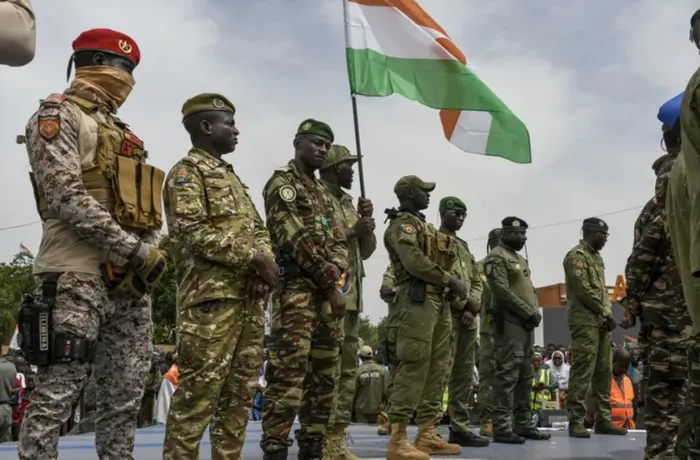
That reflects a wider pattern. Burkina Faso, Guinea, Mali and Niger all remained under junta control after the 2020-23 coup wave, and ECOWAS has struggled to enforce deadlines. For a country of about two million people, the decision to extend rather than hold the vote tests whether regional sanctions threats still carry weight.
The economy gives Bissau little room
The economy is a source of fragile stability rather than pressure. Growth reached 5.8% in 2025 on a strong cashew harvest, and inflation fell to 0.9%, according to the World Bank. But cashews make up over 90% of recorded exports, and the IMF rates the country at high risk of debt distress. In June, the IMF completed the eleventh review of its credit arrangement and released about $1.6 million, which suggests lenders are continuing to engage with the authorities.
External shocks are building. The World Bank says Middle East conflict is lifting fuel and food import prices, each about 30% of imports, and raising freight costs that squeeze cashew margins, which could trim 0.3 percentage points from 2026 growth and add about 2 points to inflation. A government facing those pressures can plausibly claim it lacks the money to run an election, and critics can reply that the same weakness leaves it dependent on partners who may demand a timetable.
The real test is whether the 2028 date holds. Guinea’s recent polls were welcomed by ECOWAS as progress, which shows pressure can work. Without a firm mechanism, a transition that has tripled in length once can be extended again.
Written by:
*Dr Iqbal Survé
Past chairman of the BRICS Business Council and co-chairman of the BRICS Media Forum and the BRNN
*Sesona Mdlokovana
Associate at BRICS+ Consulting Group
Africa Specialist
**The Views expressed do not necessarily reflect the views of Independent Media or IOL.
** MORE ARTICLES ON OUR WEBSITE https://bricscg.com/ (https://bricscg.com/)
** Follow @ (https://x.com/brics_daily)brics_daily (https://x.com/brics_daily)on Twitter for daily BRICS+ updates and instagram @brics_daily (https://www.instagram.com/brics_daily?igsh=bmhvbTd0YzA4a2wx)