

A Big Election Win, a Bigger Set of Problems
Abiy’s Prosperity Party won 438 of 547 seats in the June 1 election, in which more than 54 million Ethiopians took part, according to the National Election Board. That is a dominant result by any measure. His new administration calls itself the Medemer Government, named after the Amharic word for synergy or coming together, the same idea he used to describe his politics when he first took office in 2018. But the symbolism is uncomfortable right now. Medemer means unity. Ethiopia today is anything but united.
Tigray Falls Again, Differently This Time
The Tigray People’s Liberation Front seized Mekelle and its airport in September, reigniting a war that the 2022 Pretoria Agreement was supposed to have ended for good. Federal forces and the Tigray Peace Force, a militia made up of former TPLF fighters who switched sides, pushed back fast. By October 4, government forces controlled the city again, and TPLF said it was relocating its regional government elsewhere rather than making a last stand. The group called it a tactical withdrawal, not surrender.
What makes this round different from 2020 is who is fighting on which side. The 2020 to 2022 war was federal forces, Eritrea and Amhara militias against the TPLF. This time Ethiopia is accusing Eritrea, alongside Sudan and Egypt, of backing the very rebels Eritrea once helped crush. All three countries deny it. True or not, the accusation alone has done damage. Ethiopia shut its embassy in Asmara and expelled ten Eritrean diplomats last week, and Eritrea answered by severing ties completely.
From Nobel Prize to Diplomatic Rupture
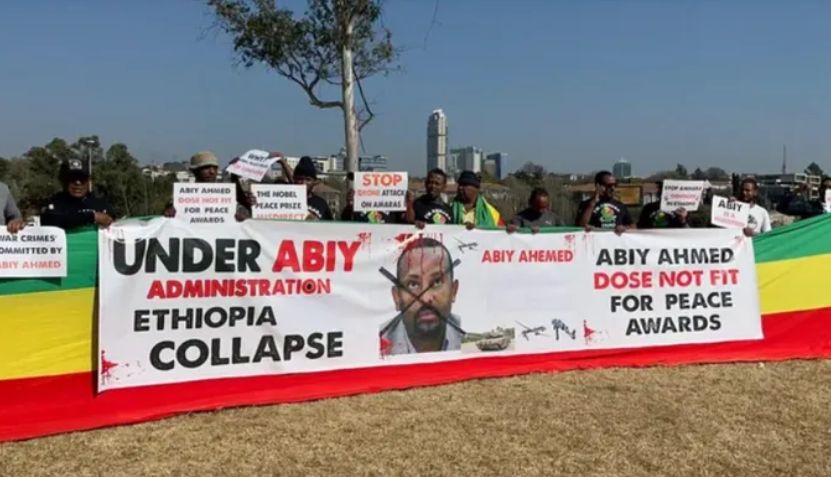
This is the detail that gives the story its sting. Abiy won the Nobel Peace Prize in 2019, largely for ending two decades of hostility with Eritrea in 2018. That peace held for a few years. It is now in pieces, and part of the reason is Abiy’s own stated ambition to secure Ethiopia direct access to the Red Sea, including a push toward Eritrea’s port of Assab. A leader once praised for turning an old enemy into a partner now finds that same neighbour accused of arming his opponents. Few African leaders have had their signature diplomatic achievement unravel this visibly while still in office.
Why the Comparison to 2018 Matters
Abiy’s first term began with hope, the release of political prisoners, the Eritrea deal, talk of reform. His second term begins with a reoccupied regional capital, a severed alliance and an armed opposition coalition that formed just weeks before the election, bringing together Tigrayan, Amhara, Oromo and other fighters who were enemies not long ago. It is a reminder that in Ethiopia, federal power secured through one conflict rarely stays settled. Meles Zenawi held Ethiopia together for seventeen years through similar tactics of force and negotiation, and even that system cracked once he was gone. Abiy does not have Meles’s decades, and he is already facing his test in year one of term two.
What Comes Next
The Ethiopian National Dialogue Commission is due to hand its recommendations to federal and regional governments, a process meant to address exactly the kind of grievances now playing out with guns instead of debate. The United States has urged both Ethiopia and Eritrea to show restraint and return to talks. Whether Abiy spends his second term building the national unity his party’s name promises, or managing one regional fire after another, will depend less on his parliamentary majority than on whether Mekelle’s recapture turns out to be an ending or simply the next chapter.
Written by:
*Dr Iqbal Survé
Past chairman of the BRICS Business Council and co-chairman of the BRICS Media Forum and the BRNN
*Sesona Mdlokovana
Associate at BRICS+ Consulting Group
Africa Specialist
**The Views expressed do not necessarily reflect the views of Independent Media or IOL.
** MORE ARTICLES ON OUR WEBSITE https://bricscg.com/ (https://bricscg.com/)
** Follow @ (https://x.com/brics_daily)brics_daily (https://x.com/brics_daily)on Twitter for daily BRICS+ updates and instagram @brics_daily (https://www.instagram.com/brics_daily?igsh=bmhvbTd0YzA4a2wx)







