

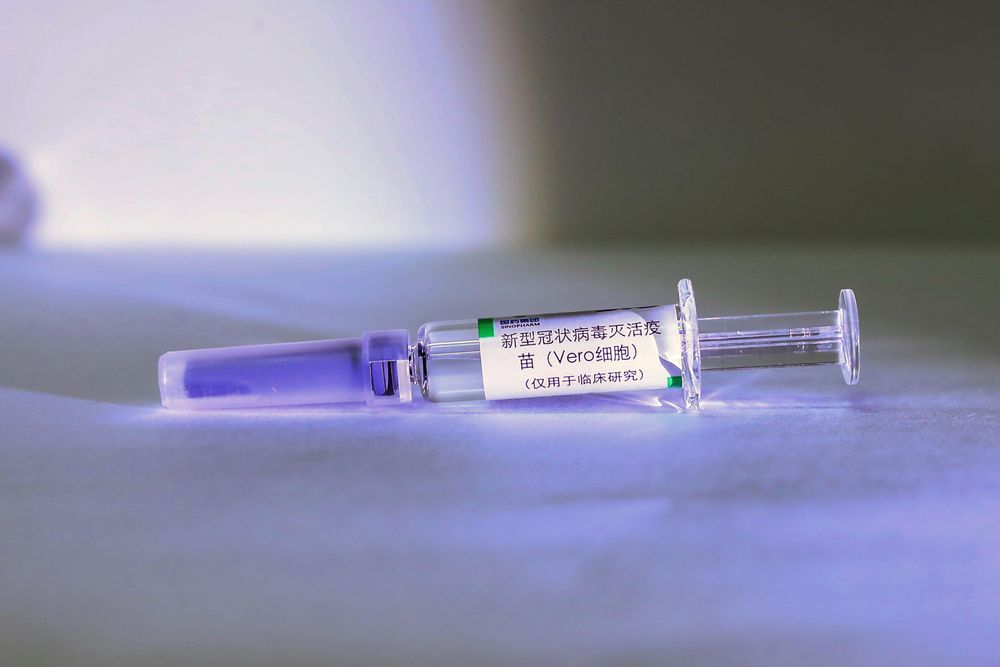
Every few years, a virus reminds the world how unprepared it is. Covid-19 did it in 2020. H5N1 bird flu has been doing it slowly and steadily ever since, spreading through animal populations at a pace that keeps virologists awake at night. The Democratic Republic of Congo is currently battling an Ebola strain for which no approved vaccine exists.
The pattern is always the same. A virus emerges or mutates. Scientists scramble. Vaccines are developed against the strain that already exists, by which time the virus has often moved on. Governments deploy. The world catches up, eventually, having already paid an enormous human and economic price for the gap between the threat and the response.
A team at the University of Cambridge believes they have found a way to close that gap permanently. This week, they published the results of the first human trial of a vaccine whose key component was designed entirely by artificial intelligence. The findings, published in the Journal of Infection, represent what researchers are calling a fundamental shift in how pandemic preparedness works.
What the technology actually does
The conventional approach to vaccine design starts with a known strain of a virus. Scientists identify its structure, build a vaccine to target it, and hope the virus does not mutate significantly before the vaccine reaches enough people. For stable viruses, this works well. For viruses that mutate rapidly like with coronaviruses, influenza, haemorrhagic fevers, it is a permanent game of catch-up.
The Cambridge team, working through their spin-out company DIOSynVax, took a different approach entirely. Rather than targeting a single known strain, they fed an artificial intelligence the genetic codes of every known Sarbecovirus (the broad family of coronaviruses) that includes SARS-CoV-2, the original SARS virus, and dozens of related bat viruses circulating in animal populations that have not yet made the jump to humans.
The AI analysed what is structurally conserved across all of these viruses, the features that remain consistent regardless of mutation, because they are essential to how the virus functions and survives. From that analysis, it designed a "super-antigen": a synthetic component that trains the immune system to recognise and attack the entire family of viruses, not just one strain.
The trial, involving 39 healthy volunteers, was designed primarily to assess safety. Results confirmed the vaccine is safe and well tolerated, with no significant side effects. Crucially, it triggered immune responses not only against SARS-CoV-2 and the original SARS virus, but against related bat coronaviruses that have never infected humans — the exact viruses most likely to cause the next pandemic. A Phase II study involving over 200 participants is now underway to assess the depth and durability of that immune response.
The vaccine was administered needle-free, using a micro fluid jet that pushes vaccine blueprints directly into skin cells through a high-pressure, hair-thin stream of liquid, a delivery mechanism that matters as much as the science, because needle-free administration removes one of the most persistent logistical barriers to mass vaccination in lower-income settings.
Why this matters beyond coronaviruses
The Cambridge team is already applying the same AI methodology to other viral families. The DIOSynVax pipeline includes vaccine candidates for human seasonal flu and pandemic influenza threats, haemorrhagic fever viruses, and coronaviruses including SARS-CoV-2. Work on an H5N1 bird flu vaccine is ongoing in animal trials. A vaccine targeting the haemorrhagic fever family, which includes the Ebola species currently circulating in the DRC without an approved vaccine, is also in development.
The significance of that last point should not be underestimated. The current DRC Ebola outbreak is being caused by a species for which no vaccine exists. Under the old paradigm, developing one takes years. Under the AI model, the design phase, historically one of the most time-consuming parts of the process is compressed dramatically, because the machine is not starting from scratch each time. It is drawing on the accumulated genetic knowledge of an entire viral family to build something that works across all of them.
Experts have described the method as a "big paradigm change" to the current reactive system, which struggles to keep pace as diseases evolve. Professor Andy Pollard of the Oxford Vaccine Group, who was not involved in the research, said AI tools have the potential to predict how the immune system will respond to a vaccine, making development significantly faster. "It will save lives," he said.
The access question
The scientific achievement is real and significant. But a vaccine that exists in a Cambridge laboratory and a vaccine that reaches communities in Central Africa, Southeast Asia, or rural South America are two very different things. The history of pandemic response is littered with innovations that arrived too late, cost too much, or were distributed too inequitably to matter where they were needed most.
The needle-free delivery mechanism is a meaningful step toward addressing that. So is the fact that the research was funded through Innovate UK, a public body, rather than purely through commercial interests, which at least opens the possibility of pricing and access arrangements that prioritise reach over margin.
The Phase II results will be the real test. But what Cambridge has shown this week is that the tools now exist to stop chasing viruses and start anticipating them. The method could prevent pandemics before they begin, saving millions of lives and helping countries avoid the devastating economic and social cost of lockdowns.
That is not a small claim. Given what the world has been through in the last six years, it is one worth paying close attention to.
Written by:
*Chloe Maluleke
Associate at BRICS+ Consulting Group
Russia & Middle East Specialist
**The Views expressed do not necessarily reflect the views of Independent Media or IOL.
** MORE ARTICLES ON OUR WEBSITE https://bricscg.com/ (https://bricscg.com/)
** Follow @ (https://x.com/brics_daily)brics_daily (https://x.com/brics_daily)on Twitter for daily BRICS+ updates and instagram @brics_daily (https://www.instagram.com/brics_daily?igsh=bmhvbTd0YzA4a2wx)