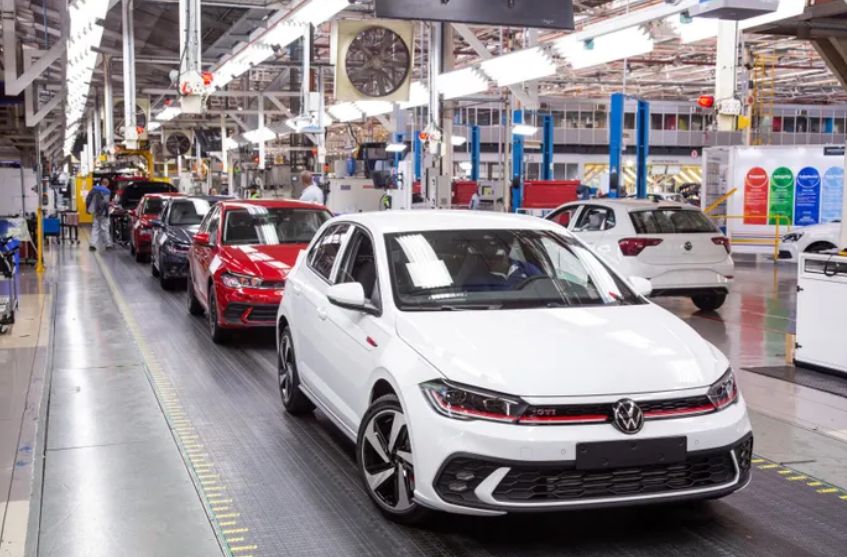


Nigeria is slashing import duties. From July 1, tariffs on bulk rice will fall from 70% to 47.5%, passenger vehicles from 70% to 40%, raw sugar cane to between 55% and 57.5%, and palm oil to 28.75%. Electric vehicles, mass-transit buses, and manufacturing machinery will face zero duty entirely. On the surface, this reads as a government finally responding to its people. Beneath the surface, the policy is far more contested, and its contradictions are precisely what demand scrutiny.
The Context: A country under siege by its own economy
Nigeria’s inflation eased to 15.06% in February from a peak of roughly 33% in December 2024, but remains elevated by regional standards and has come under renewed pressure since the outbreak of the Iran war. Global oil supply disruptions, particularly around the Strait of Hormuz , a chokepoint for approximately one-fifth of the world’s crude, have sent fuel costs spiralling, with petrol prices rising more than 50%. For Africa’s most populous nation, where the majority of households spend the bulk of their income on food and transport, this is not an abstraction. It is a daily emergency.
The Tinubu administration’s response, a revised schedule covering 127 tariff lines under the 2026 Fiscal Policy Measures, is its most ambitious trade intervention in years. But ambition and effectiveness are not synonymous.
What this means for the economy
The macroeconomic logic is sound in principle. Professor Uche Uwaleke described the policy as a "deliberate balancing act" aimed at addressing short-term economic pressures while positioning the economy for long-term growth.Lower input costs on machinery and industrial materials should, theoretically, reduce the cost of doing business, stimulate manufacturing output, and create a more hospitable investment environment. The new measures are also aligned with AfCFTA regional trade commitments, and Nigeria has outlined a plan to phase out Import Adjustment Taxes entirely by 2036,signalling at least some ideological coherence in the direction of trade liberalisation.
Yet the fiscal exposure is real. Import duties are a significant revenue stream for the federal government. Cutting them across 127 lines, without clear revenue substitution mechanisms beyond a new Green Tax surcharge, risks widening an already strained fiscal deficit at precisely the moment when Nigeria is seeking IMF and World Bank support.
What this means for the people
The relief, if it materialises at market level, will not arrive uniformly. Consider the vehicle tariff cut: as one economist pointedly observed, tariffs are not the primary driver of high vehicle costs in Nigeria, exchange rate depreciation, forex scarcity, port charges, and global shipping costs are far more significant factors. A tariff reduction that is immediately absorbed by importers’ logistics costs delivers nothing to the consumer. This is not hypothetical; it is the documented trajectory of previous Nigerian trade liberalisation attempts.
The food relief calculus is more promising but equally fraught. Rice farmers and auto-sector operators have already expressed concern that intensified competition from cheaper imports could undermine domestic investments and jobs. This is a legitimate fear. Nigeria’s rice farming sector, which expanded significantly following earlier protectionist policies, could face serious contraction if import prices undercut local production without accompanying support mechanisms.
Compare this to India’s 2020 tariff experience: when New Delhi slashed agricultural import duties amid domestic price pressures, short-term consumer relief was real, but medium-term consequences for smallholder farmers required costly counter-interventions. Nigeria, with far weaker fiscal buffers and a less formalised agricultural support infrastructure, should take note.
The structural question
The deepest problem with this policy is what it reveals about the nature of Nigeria’s economic crisis. Tariff cuts are a demand-side instrument being deployed against a supply-side failure. Nigeria imports rice not primarily because domestic rice is taxed at the border, but because the domestic agricultural value chain, from irrigation to storage to distribution is fundamentally underdeveloped. Cheaper imports do not fix that. They defer its resolution, sometimes permanently.
The same logic applies to vehicles. Nigeria has the potential for genuine automotive assembly. The new policy does introduce exemptions for locally manufactured auto components, which is an attempt at nuance, but without robust enforcement and industrial policy, such exemptions often function as formalities rather than incentives.
Conclusion
Nigeria’s tariff reform is a necessary response to an acute crisis. It will provide some relief, and in the short term, that matters enormously to households already exhausted by three years of compounding economic shocks. But it is not a development strategy. A government that consistently reaches for import liberalisation as its primary anti-inflation tool is, in effect, outsourcing its industrial future. For Nigeria to break this cycle, trade policy must be embedded within a far more ambitious architecture of domestic production capacity, infrastructure investment, and agricultural transformation. Until then, every tariff cut is simultaneously a lifeline and a missed opportunity.
Written by:
*Dr Iqbal Survé
Past chairman of the BRICS Business Council and co-chairman of the BRICS Media Forum and the BRNN
*Sesona Mdlokovana
Associate at BRICS+ Consulting Group
Africa Specialist
**The Views expressed do not necessarily reflect the views of Independent Media or IOL.
** MORE ARTICLES ON OUR WEBSITE https://bricscg.com/ (https://bricscg.com/)
** Follow @ (https://x.com/brics_daily)brics_daily (https://x.com/brics_daily)on Twitter for daily BRICS+ updates and instagram @brics_daily (https://www.instagram.com/brics_daily?igsh=bmhvbTd0YzA4a2wx)