
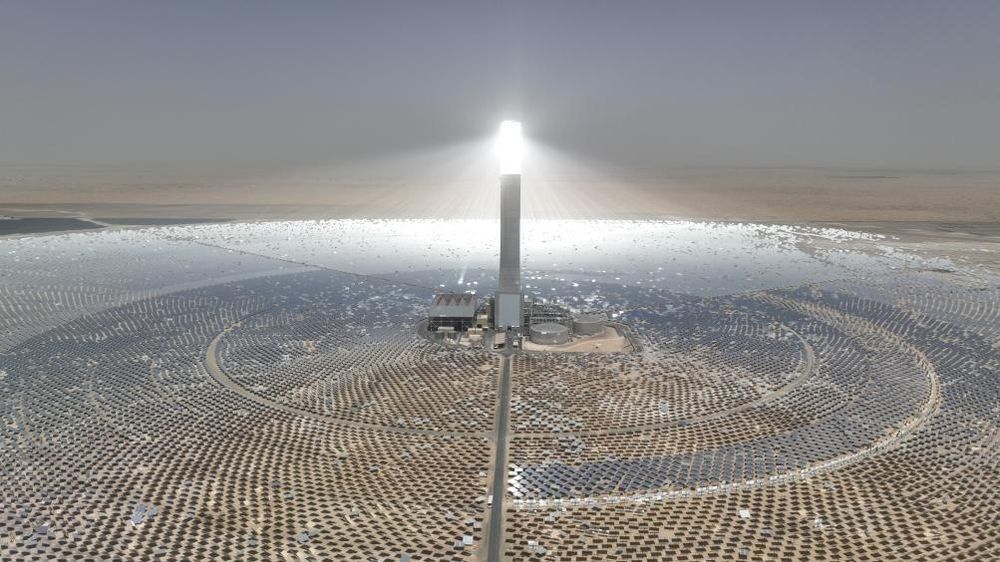
Crises have a way of clarifying what matters. The Hormuz disruption, now well into its fourth month, with global oil markets experiencing what analysts at Wood Mackenzie have described as the largest supply shock in decades, has focused the world’s attention almost entirely on what is blocked: tankers, liquefied natural gas cargoes, fertiliser shipments. Less noticed, but arguably more consequential for the long term, is what is still moving: the Gulf’s clean energy transition, which has proven more resilient than many predicted.
The evidence is tangible. In late April, Alterra, the UAE-backed climate investment vehicle launched at COP28 with a $30 billion sovereign commitment and an ambition to mobilise $250 billion in clean finance by 2030, announced a fresh commitment to KKR’s Global Climate Transition Strategy, directing capital into renewables, energy storage and electrification across North America, Europe and Asia. The deal added another tier-one asset manager to a portfolio that already includes BlackRock, Brookfield and TPG. Sovereign capital, the message was clear, does not panic.
That steadiness reflects something real. The strategic logic underpinning Gulf clean energy investment has strengthened, not weakened, under the pressure of conflict. When a single waterway can disrupt a regional export economy within days, the argument for building assets that do not depend on it becomes considerably more compelling. Saudi Arabia, Oman and the UAE are increasingly treating renewable energy not merely as an environmental commitment but as a matter of economic sovereignty, which has become a reframing that the Hormuz crisis has only accelerated, according to analysts at the Gulf International Forum.
The harder work, however, lies on the domestic side and this is where the transition faces its most meaningful test yet. The UAE’s Federal Decree-Law No. 11 of 2024, issued in August that year and entering into force in May 2025, was a landmark: the first legally binding, nationwide climate framework in the MENA region. Every entity operating in the UAE (free-zone multinationals, mainland businesses, family conglomerates alike), is required to measure, report and reduce greenhouse gas emissions, with the full compliance deadline set for May 30, 2026. Penalties for non-compliance range up to AED 2 million, with repeat violations doubling that figure.
Building the infrastructure to make that law real takes time, and in a region managing the most severe energy disruption in a generation, time is the scarcest resource. The national emissions reporting platform launched only in October 2025. Technical guidance across several sectors has been in development. These are not signs of ambivalence, they are the predictable growing pains of standing up the most comprehensive climate governance architecture the region has ever attempted, while simultaneously managing an active crisis that has placed enormous demands on government bandwidth and engineering capacity. Rystad Energy estimates war-related infrastructure repair costs across the Gulf at up to $58 billion; the administrative pressures are no less real, even if less visible.
What makes this moment genuinely significant and genuinely worth watching, is that the gap it reveals is not one of intent. The political will is demonstrably present. UAE Industry Minister Sultan Al Jaber accepted a climate leadership award in Washington in April, mid-blockade, and framed the UAE’s posture as proof of institutional conviction under pressure. That framing is credible. What the moment asks of the region is the next step: translating that conviction into the slower, less headline-friendly work of regulatory implementation, trained compliance officers, verified emissions data, functioning enforcement mechanisms, and the administrative depth to hold a large and diverse economy to binding environmental standards.
These are not criticisms. Every major economy that has attempted serious climate governance like the EU with its taxonomy, the UK with its net-zero legislation, California with its cap-and-trade system, has discovered that the distance between passing a law and building the ecosystem to enforce it is long, and that it requires sustained institutional investment over years. The Gulf is not exempt from that reality, and facing it honestly is what separates durable transition programmes from aspirational ones.
The Hormuz crisis will eventually ease. When it does, the question for the region’s clean energy story will not be whether sovereign funds continue to deploy, they will have. It will be whether the regulatory foundations were quietly strengthened in the difficult months that preceded the recovery: whether the reporting systems were completed, the guidance published, the compliance culture established.
Written by:
*Dr Iqbal Survé
Past chairman of the BRICS Business Council and co-chairman of the BRICS Media Forum and the BRNN
*Chloe Maluleke
Associate at BRICS+ Consulting Group
Russia & Middle East Specialist
**The Views expressed do not necessarily reflect the views of Independent Media or IOL.
** MORE ARTICLES ON OUR WEBSITE https://bricscg.com/ (https://bricscg.com/)
** Follow @ (https://x.com/brics_daily)brics_daily (https://x.com/brics_daily)on Twitter for daily BRICS+ updates and instagram @brics_daily (https://www.instagram.com/brics_daily?igsh=bmhvbTd0YzA4a2wx)