
Africa’s leaders are increasingly united around a simple but transformative idea: the continent can no longer afford to remain merely a supplier of raw materials to the rest of the world. At the 5th African Natural Resources and Energy Investment Summit (AFNIS 2026) in Abuja, policymakers, investors and industry leaders renewed calls for an end to Africa’s dependence on exporting unprocessed minerals, arguing that the continent must capture more value from its vast natural resource wealth through industrialisation, beneficiation and regional cooperation.
The argument is not new. For decades, Africa has exported raw commodities while importing finished products at significantly higher prices. The pattern reflects a colonial-era economic structure that has persisted long after independence. Today, despite possessing some of the world’s largest reserves of cobalt, platinum, manganese, lithium and rare earth minerals, many African economies remain vulnerable to commodity price fluctuations and external market shocks.
The critical minerals opportunity
The urgency of this debate has intensified with the global energy transition. Electric vehicles, battery storage systems, solar panels and advanced technologies require enormous quantities of critical minerals. Africa sits at the centre of this emerging resource race. The Democratic Republic of Congo produces the majority of the world’s cobalt, Zimbabwe is Africa’s leading lithium producer, while South Africa dominates global platinum group metals production.
Yet most of these minerals leave the continent in raw or semi-processed form. The real profits are generated elsewhere through refining, manufacturing and technological innovation. This means Africa captures only a fraction of the value created along global supply chains. As demand for critical minerals continues to surge, African leaders increasingly view local processing and value addition not simply as an economic objective, but as a strategic necessity.
The comparison with Asia is instructive. Countries such as China did not become industrial powerhouses by exporting raw materials alone. Instead, they invested heavily in refining capacity, manufacturing industries and integrated supply chains. The result was the creation of millions of jobs, technological capabilities and globally competitive industries. Africa now faces a similar opportunity.
Moving from resource wealth to economic wealth
At AFNIS 2026, African leaders argued that the continent’s mineral resources must become catalysts for industrialisation, infrastructure development and long-term economic transformation rather than sources of export revenue alone. The summit’s theme, "One Africa, One Resource Vision," reflects growing recognition that fragmented national approaches may limit Africa’s ability to negotiate favourable terms in an increasingly competitive global market.
Encouragingly, some countries have already begun shifting policy. Zimbabwe has moved toward restricting the export of unprocessed lithium to encourage domestic beneficiation, while several resource-rich nations are exploring strategies that prioritise local processing and technology transfer.
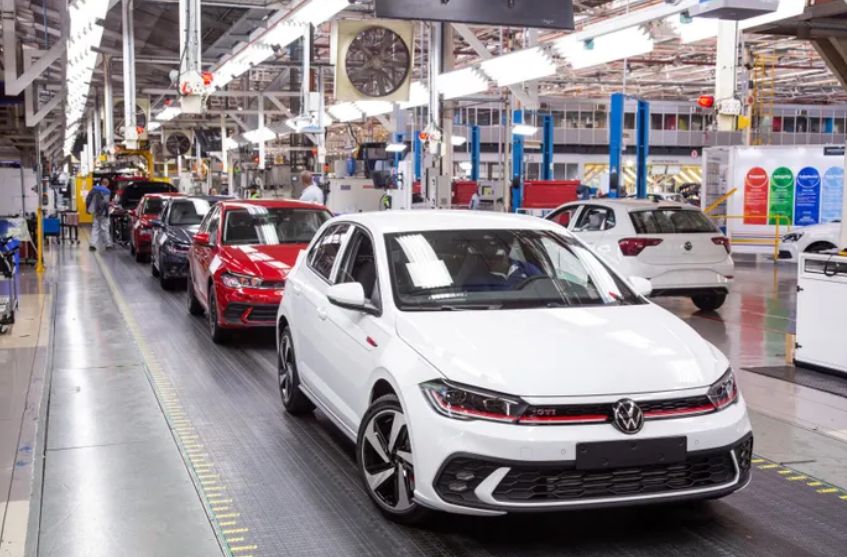
However, beneficiation alone will not guarantee success. Developing refining facilities, manufacturing industries and regional value chains requires reliable electricity, transport infrastructure, skilled labour, financing and coherent industrial policies. These remain significant challenges across much of the continent.
A defining moment for Africa
The growing consensus among African leaders signals an important shift in development thinking. Rather than viewing mineral extraction as an end in itself, policymakers increasingly see natural resources as a foundation for broader industrial development. AFNIS 2026’s emphasis on regional cooperation, investment mobilisation and shared resource strategies reflects this evolving vision.
The stakes are exceptionally high. Global competition for critical minerals is intensifying, driven by geopolitical tensions, energy security concerns and the race toward net-zero emissions. For Africa, this presents a rare window of opportunity. If managed strategically, the continent’s resource wealth could help drive industrial growth, create millions of jobs and strengthen economic sovereignty. If not, Africa risks repeating a familiar pattern—supplying the raw materials that power global prosperity while capturing only a small share of the benefits.
The question facing African leaders is no longer whether the continent should move beyond raw mineral exports. It is whether Africa can build the institutions, industries and partnerships necessary to make that ambition a reality.
Written by:
*Dr Iqbal Survé
Past chairman of the BRICS Business Council and co-chairman of the BRICS Media Forum and the BRNN
*Sesona Mdlokovana
Associate at BRICS+ Consulting Group
Africa Specialist
**The Views expressed do not necessarily reflect the views of Independent Media or IOL.
** MORE ARTICLES ON OUR WEBSITE https://bricscg.com/ (https://bricscg.com/)
** Follow @ (https://x.com/brics_daily)brics_daily (https://x.com/brics_daily)on Twitter for daily BRICS+ updates and instagram @brics_daily (https://www.instagram.com/brics_daily?igsh=bmhvbTd0YzA4a2wx)