
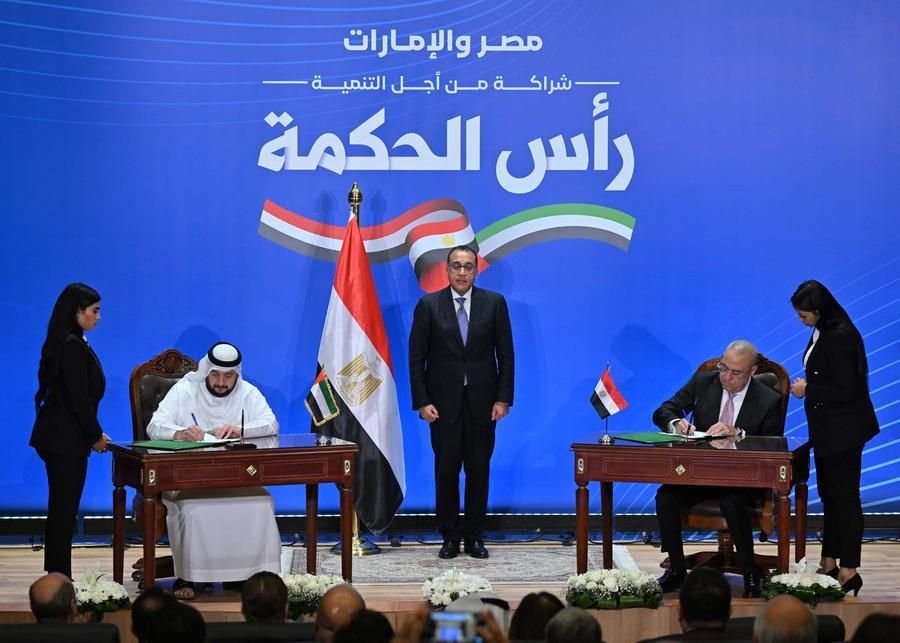
The latest discussions between Egypt and the United Arab Emirates on expanding natural gas production in the Nile Delta represent more than another investment agreement in the energy sector. They illustrate a broader transformation underway across the Middle East and North Africa (MENA), where energy security, technological capability and regional capital are increasingly being mobilised from within the Global South rather than relying exclusively on Western financing and expertise.
For decades, energy partnerships in the MENA region largely followed a familiar pattern. Resource-rich states exported hydrocarbons while multinational energy companies from Europe and North America supplied technology, finance and operational expertise. That model is gradually evolving. Today’s agreements increasingly reflect cooperation between emerging economies that possess complementary strengths and shared strategic interests.
Egypt occupies a unique position in this transition. It is simultaneously an African, Arab and Mediterranean nation, giving it significant geopolitical value. While its domestic gas production has fluctuated in recent years because of declining output from mature fields and rising domestic consumption, Cairo remains determined to restore its status as a regional energy hub. The country’s existing liquefied natural gas (LNG) export infrastructure, strategic location along the Suez Canal and established pipeline connections position it as a gateway linking African producers with European and Asian markets.
The UAE, meanwhile, has become one of the Global South’s most influential sources of investment capital. Emirati sovereign wealth funds and state-backed energy companies are increasingly deploying finance across Africa and the wider Middle East, extending beyond traditional oil investments into renewable energy, logistics, ports and advanced extraction technologies. This reflects Abu Dhabi’s long-term strategy of securing energy assets while diversifying its international investment portfolio.
The proposed expansion of geological exploration in Egypt’s Nile Delta therefore serves multiple strategic purposes. It seeks to increase Egypt’s domestic gas output, reduce reliance on costly imports and strengthen export capacity. Equally important, it demonstrates how regional investors are assuming greater responsibility for financing critical energy infrastructure within their own neighbourhood.
For the MENA region, such cooperation strengthens economic resilience during a period of heightened geopolitical uncertainty. Conflicts across the Middle East, disruptions to shipping routes and volatile commodity prices have reinforced the importance of reliable regional supply chains. Expanding domestic production reduces vulnerability to external shocks while allowing countries greater flexibility in balancing domestic demand with export commitments.
The initiative also reflects the growing importance of technological modernisation in hydrocarbon production. Advanced drilling techniques, digital reservoir management and improved recovery methods are enabling countries to maximise output from existing fields without relying solely on new discoveries. Technology transfer has become as strategically valuable as financial investment, particularly for countries seeking to optimise mature energy assets.
The implications extend well beyond North Africa. Across the Global South, governments are increasingly pursuing development strategies centred on South-South cooperation. Rather than depending exclusively on traditional development partners, countries are building networks of investment, expertise and infrastructure with fellow emerging economies. This approach aligns with a broader effort to reshape international economic governance around more diversified partnerships.
For BRICS, the Egypt-UAE partnership reinforces several long-standing objectives. Egypt’s accession to BRICS expanded the grouping’s presence in Africa and the Arab world, strengthening its representation across key energy-producing regions. Although the UAE is not geographically located within North Africa, its growing investment footprint across the continent complements BRICS’ broader emphasis on infrastructure financing, industrial development and economic integration among developing economies.
The partnership also supports BRICS’ vision of enhancing energy security through diversified production and investment channels. As global energy markets become increasingly fragmented by geopolitical tensions, emerging economies are seeking to reduce exposure to concentrated supply chains and external political risks. Regional cooperation between BRICS members and partner economies helps create a more distributed and resilient energy architecture.
However, challenges remain. Expanding natural gas production requires sustained investment, regulatory certainty and environmental stewardship. Natural gas is frequently presented as a transition fuel capable of supporting economic development while renewable energy capacity expands, yet long-term climate commitments will continue to shape investment decisions. Egypt and the UAE will therefore need to balance immediate energy security objectives with growing international pressure to accelerate decarbonisation.
Ultimately, the significance of the Egypt-UAE energy discussions lies not simply in additional gas wells or increased reserves. They reflect a deeper shift in how emerging economies are organising capital, technology and political partnerships. As the Global South assumes a more active role in financing its own development, regional cooperation is becoming an increasingly important pillar of economic resilience. In that sense, the Nile Delta may represent not only a source of natural gas, but also a symbol of a changing global economic order in which the future of energy is being shaped as much by cooperation within the Global South as by traditional centres of power.
Written by:
*Dr Iqbal Survé
Past chairman of the BRICS Business Council and co-chairman of the BRICS Media Forum and the BRNN
*Chloe Maluleke
Associate at BRICS+ Consulting Group
Russia & Middle East Specialist
**The Views expressed do not necessarily reflect the views of Independent Media or IOL.
** MORE ARTICLES ON OUR WEBSITE https://bricscg.com/ (https://bricscg.com/)
** Follow @ (https://x.com/brics_daily)brics_daily (https://x.com/brics_daily)on Twitter for daily BRICS+ updates and instagram @brics_daily (https://www.instagram.com/brics_daily?igsh=bmhvbTd0YzA4a2wx)